Huizhou Henhui Electronics Technology Co., Ltd.

作者: tecolux

  • Best GU10 LED Bulbs for Commercial Spaces: High-Efficiency and Dimmable Solutions

    Best GU10 LED Bulbs for Commercial Spaces: High-Efficiency and Dimmable Solutions

    .gtr-container-h7j8k9 {
    font-family: Verdana, Helvetica, “Times New Roman”, Arial, sans-serif;
    color: #333;
    line-height: 1.6;
    padding: 15px;
    box-sizing: border-box;
    }

    .gtr-container-h7j8k9 p {
        font-size: 14px;
        margin-bottom: 1em;
        text-align: left !important;
    }
    
    .gtr-container-h7j8k9 a {
        color: #007bff;
        text-decoration: none;
    }
    
    .gtr-container-h7j8k9 a:hover {
        text-decoration: underline;
    }
    
    .gtr-container-h7j8k9 strong {
        font-weight: bold;
    }
    
    .gtr-container-h7j8k9 .gtr-title {
        font-size: 18px;
        font-weight: bold;
        margin-bottom: 1.5em;
        color: #222;
        text-align: left !important;
    }
    
    .gtr-container-h7j8k9 .gtr-section-title {
        font-size: 16px;
        font-weight: bold;
        margin-top: 2em;
        margin-bottom: 1em;
        color: #222;
        text-align: left !important;
    }
    
    .gtr-container-h7j8k9 .gtr-subsection-title {
        font-size: 15px;
        font-weight: bold;
        margin-top: 1.5em;
        margin-bottom: 0.8em;
        color: #333;
        text-align: left !important;
    }
    
    .gtr-container-h7j8k9 .gtr-divider {
        border-top: 1px solid #eee;
        margin: 2em 0;
    }
    
    .gtr-container-h7j8k9 ul,
    .gtr-container-h7j8k9 ol {
        margin-left: 0;
        padding-left: 25px;
        margin-bottom: 1em;
    }
    
    .gtr-container-h7j8k9 li {
        list-style: none !important;
        position: relative;
        margin-bottom: 0.5em;
        padding-left: 15px;
        font-size: 14px;
        text-align: left !important;
    }
    
    .gtr-container-h7j8k9 ul li::before {
        content: "•" !important;
        color: #007bff;
        font-size: 1.2em;
        position: absolute !important;
        left: 0 !important;
        top: 0;
        line-height: inherit;
    }
    
    .gtr-container-h7j8k9 ol {
        counter-reset: list-item;
    }
    
    .gtr-container-h7j8k9 ol li::before {
        content: counter(list-item) "." !important;
        color: #007bff;
        position: absolute !important;
        left: 0 !important;
        top: 0;
        width: 20px;
        text-align: right;
        line-height: inherit;
    }
    
    .gtr-container-h7j8k9 .gtr-cta-section {
        margin-top: 3em;
        padding-top: 1.5em;
        border-top: 1px solid #eee;
    }
    
    .gtr-container-h7j8k9 .gtr-cta-section p {
        margin-bottom: 0.5em;
    }
    
    .gtr-container-h7j8k9 .gtr-cta-section strong {
        color: #007bff;
    }
    
    @media (min-width: 768px) {
        .gtr-container-h7j8k9 {
            padding: 25px;
        }
    }
    

    Best GU10 LED Bulbs for Commercial Spaces: High-Efficiency and Dimmable Solutions

    When lighting designers, contractors, or wholesalers choose a GU10 LED for a commercial project, they are not simply comparing wattage or price. They are evaluating a lighting tool that influences how customers perceive a store, how employees feel in an office, and how guests experience a hotel lobby. Commercial environments place far higher demands on lighting than residential spaces, which is why professional-grade GU10 LED bulbs have evolved into a category of their own—more efficient, more durable, and more controllable.

    This article explores the engineering, performance factors, and practical considerations that make high-efficiency, dimmable GU10 LEDs a top choice for commercial spaces. It also explains how buyers can evaluate suppliers, what certifications matter, and what features ensure reliability in real-world installations. Whether you manage procurement for a lighting brand or oversee large-scale projects as a contractor, you will find detailed insights that help you choose the right products with confidence.

    Why GU10 LEDs Are Widely Adopted in Commercial Lighting

    The GU10 form factor has been used for decades, originally popularized by halogen spotlights. When LEDs replaced halogens, the convenience of the GU10 base—simple twist-and-lock installation, standardized size, and compatibility with countless fixtures—helped the technology transition smoothly into retail stores, hotels, restaurants, conference centers, and offices.

    Commercial users prefer GU10 LEDs because:

    • They operate directly on 230V line voltage, eliminating the need for external transformers.

    • They can fit thousands of existing fixtures without redesign.

    • They support advanced optical control, ideal for accent lighting and display illumination.

    • Modern GU10 LEDs offer narrow, medium, and wide beam spreads, allowing designers to sculpt lighting as needed.

    The result is a lighting product that balances practicality with aesthetics—something commercial spaces value highly.

    Energy Efficiency: The Primary Driver Behind GU10 LED Adoption
    Best GU10 LED Bulbs for Commercial Spaces: High-Efficiency and Dimmable Solutions  0

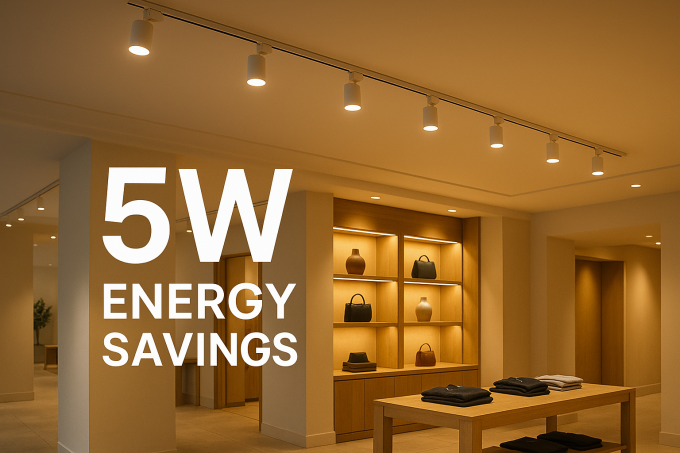
    Commercial facilities typically operate lighting for long hours. A hotel corridor may run lights 24/7. A restaurant might dim lights during service and brighten them during cleaning. Offices operate for consistent work hours, and retail stores rely heavily on lighting to highlight products. In all these scenarios, energy cost becomes a significant part of operational expenses.

    Modern GU10 LEDs address this with impressive efficiency advances:

    1. Low Wattage, High Output

    A typical high-end GU10 LED consumes between 4.5–6 watts, replacing 35W–50W halogens. According to the U.S. Department of Energy, LEDs consume up to 75% less energy and last 25x longer than incandescent and halogen lighting.
    DOE reference: https://www.energy.gov/energysaver/led-lighting

    2. Optimized Driver ICs

    Advanced constant-current drivers reduce wasted energy and stabilize lumen output. A well-engineered driver improves power factor and reduces harmonics, contributing to overall system efficiency.

    3. Superior Thermal Management

    Better heatsinks keep junction temperature lower, which preserves both lumen output and color stability. Overheated LEDs dim prematurely—a major concern for commercial customers who cannot afford inconsistent lighting.

    4. High Luminous Efficacy

    Premium GU10 LEDs now achieve 85–105 lm/W, making them competitive with integrated COB downlights in many applications.

    For a business operating hundreds or thousands of lamps, these savings accumulate quickly. Annual electricity savings alone often justify upgrading from older technologies.

    The Importance of Dimming Performance in Commercial Spaces
    Best GU10 LED Bulbs for Commercial Spaces: High-Efficiency and Dimmable Solutions  1

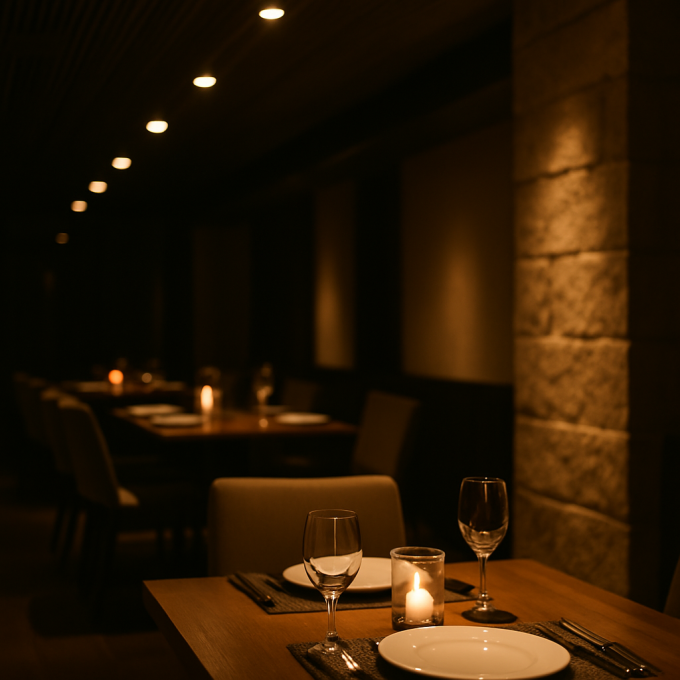
    Dimming might appear optional in some commercial environments, but in practice, it is essential for achieving the right ambiance and energy control.

    Restaurants and Hotels

    Atmosphere influences customer experience and perceived value. Poor dimming—especially flicker or sudden drop-offs—can ruin the effect.

    Retail and Galleries

    Dimming helps adjust contrast, highlight merchandise, and compensate for daylight.

    Conference and Office Areas

    Flexible illumination supports presentations, video conferencing, and productivity.

    However, dimming performance varies widely among GU10 suppliers. The main factors that determine quality include:

    1. Driver Design

    High-quality GU10 LEDs use trailing-edge dimming protocols compatible with modern dimmer switches used in Europe, the Middle East, and Asia. Poor drivers produce flicker, hum, or dropout.

    2. Low Flicker Rates

    Professional-grade LEDs maintain flicker below the thresholds recommended by the IEEE Standard 1789 for human comfort.
    Reference: https://standards.ieee.org

    3. Smooth Dimming Curve

    Commercial buyers require dimming from 100% down to at least 10%, ideally 5%, without color shift. Some premium GU10 LEDs maintain color integrity even at low dimming levels due to stable current regulation.

    4. Compatibility Testing

    Reliable manufacturers test bulbs with 20–40 dimmer models to ensure performance across regions. This avoids installation problems and costly on-site troubleshooting.

    Optical Performance: Beam Angles, Lenses, and Light Quality
    Best GU10 LED Bulbs for Commercial Spaces: High-Efficiency and Dimmable Solutions  2

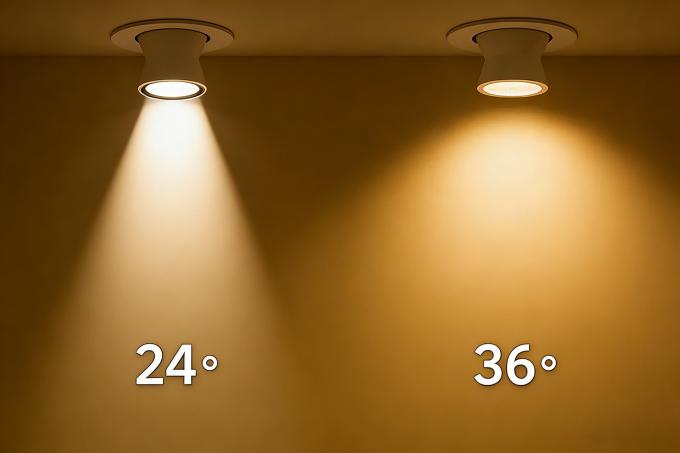
    In commercial lighting, optical control matters just as much as energy savings. A GU10 LED in a boutique must highlight products without creating glare. In a hotel, it must produce warm, inviting tones. Offices need wider distribution to avoid shadowed corners.

    Beam Angles

    Typical commercial GU10 LEDs offer:

    • 24° (accent lighting)

    • 36° (general spotlighting)

    • 60° (wide illumination)

    Narrow beams enhance focal points; wider beams create softer ambient lighting.

    Lens and Reflector Design

    Quality GU10 LEDs use precision-molded lenses or aluminum reflectors engineered to:

    • minimize glare

    • maintain uniformity

    • avoid color fringing

    • improve center-beam intensity

    Optics directly affect how customers perceive a space. Poor optical design causes harsh shadows or uneven illumination—problems that harm the overall environment.

    CRI and Color Consistency: The Hidden Performance Metrics Buyers Overlook

    Many commercial buyers focus on wattage and lumen output, but industry professionals know that CRI (Color Rendering Index) and color consistency determine how a space truly feels.

    High-quality GU10 LEDs now offer CRI 90+, with strong R9 values for richer reds. This is especially important in:

    • retail fashion

    • hospitality

    • high-end restaurants

    • galleries

    • any environment where accurate color matters

    The CIE (International Commission on Illumination) defines CRI measurement standards:
    https://cie.co.at

    Color Consistency

    Serious suppliers maintain tight 3-step or 4-step MacAdam ellipse tolerances, ensuring that every bulb looks visually identical—even across large installations.

    Low-cost products drift noticeably in color temperature over time, creating an unprofessional patchwork effect.

    Durability and Heat Management in Professional GU10 LEDs

    Commercial lighting operates for long hours, sometimes under extreme environmental conditions—enclosed fixtures, poor ventilation, or high ambient temperatures.

    Professional GU10 LEDs incorporate:

    • aluminum or composite heatsinks

    • temperature-resistant electronics

    • reinforced bases for mechanical stability

    • thermal fuse protection in high-end models

    These features allow them to maintain lumen output and color stability over thousands of hours. ENERGY STAR notes that well-designed LEDs maintain 70% of original lumens after 25,000 hours.
    Source: https://www.energystar.gov

    Certifications and Compliance That Matter to Commercial Buyers
    Best GU10 LED Bulbs for Commercial Spaces: High-Efficiency and Dimmable Solutions  3

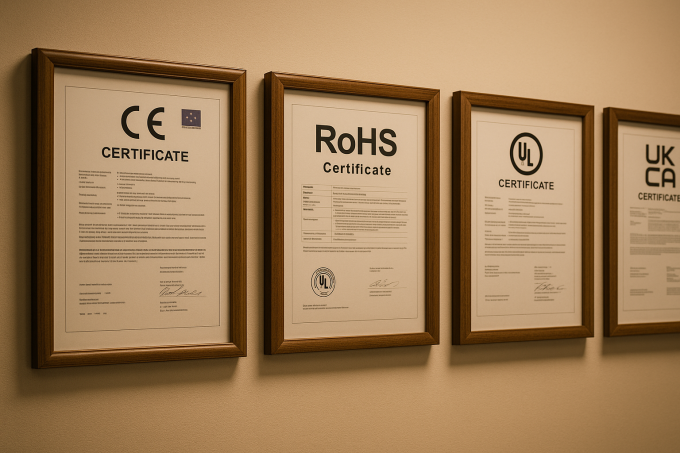
    When lighting products enter regulated markets, certifications ensure compliance and reliability.

    Key certifications include:

    • CE / RoHS (EU)

    • ER P (EU energy efficiency)

    • UKCA (United Kingdom)

    • UL / ETL (North America)

    • SASO (Saudi Arabia)

    • SIRIM (Malaysia)

    • CCC (China quality compliance)

    Commercial buyers should verify that the supplier can provide valid certificates and test reports (LM-79, LM-80), available from independent labs.
    LM-79/LM-80 standards: https://www.ies.org

    How to Evaluate a GU10 LED Supplier: What B2B Buyers Should Look For
    Best GU10 LED Bulbs for Commercial Spaces: High-Efficiency and Dimmable Solutions  4

    1. Production Capacity and Lead Times

    Factories with multiple automated assembly lines ensure consistent delivery schedules, especially important for contractors.

    2. Driver and Chip Quality

    Look for branded LED chips and IC-based drivers—these are the heart of reliability.

    3. Dimming Compatibility Test Reports

    A supplier that tests with multiple dimmer models shows commitment to quality.

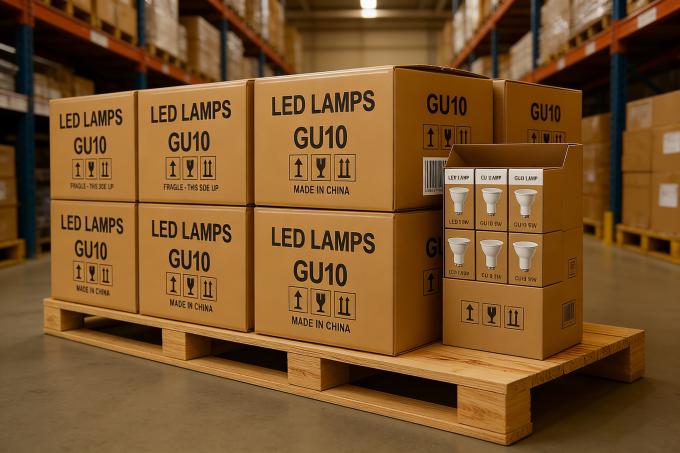
    4. Packaging and Shipping Stability

    Poor packaging leads to defects during transit; good suppliers use reinforced inner boxes and drop-tested cartons.

    5. Batch-to-Batch Color Consistency

    Consistent color matching is essential for repeat orders.

    6. Customization Options

    Branding, private label boxes, special CCT options, and color tuning help clients build product differentiation.

    Applications Where High-Efficiency Dimmable GU10 LEDs Shine

    Best GU10 LED Bulbs for Commercial Spaces: High-Efficiency and Dimmable Solutions  3

    Retail Stores & Boutiques

    Highlight merchandise with precision spot beams.

    Hotels & Hospitality

    Create warm, relaxing mood lighting with smooth dimming.

    Restaurants & Cafés

    Adjust ambiance throughout the day.

    Corporate Offices

    Maintain visual comfort with consistent color.

    Museums & Galleries

    High CRI ensures artwork is displayed accurately.

    Residential Projects by Contractors

    Even homes benefit from commercial-grade reliability.

    Why High-Quality GU10 LEDs Reduce Total Cost of Ownership

    While premium GU10 LEDs cost more upfront, they save money in:

    • energy bills

    • maintenance costs

    • replacement frequency

    • installation troubleshooting

    • warranty claims

    For wholesalers and lighting brands, premium products also reduce customer complaints—one of the biggest hidden costs in the industry.

    Final Thoughts

    Commercial lighting is not merely about choosing a bulb. It is about selecting stable, controllable, and consistent lighting tools that shape the customer experience and operational efficiency of a business. High-efficiency, dimmable GU10 LEDs represent a matured category that balances energy savings with refined light quality.

    For B2B buyers—wholesalers, lighting brands, and contractors—the strategic advantage lies in partnering with manufacturers who emphasize driver quality, optical precision, CRI stability, and tight production control. When these factors come together, the result is a lighting product capable of elevating every commercial space it illuminates.

    CTA — Ready to Source Commercial-Grade GU10 LED Solutions?

    If you need reliable, high-efficiency, dimmable GU10 LEDs with stable supply and customizable branding for wholesale or project use, I can help.

    Contact:

    [[email protected]]
    [www.tecolite.com]

    Let’s build lighting solutions that meet the performance standards your customers expect—every shipment, every batch.


  • Global Supply Chain Shifts in LED Manufacturing: How Production and Trade Are Being Reshaped

    Global Supply Chain Shifts in LED Manufacturing: How Production and Trade Are Being Reshaped

    .gtr-container-led-article-7f3d {
    font-family: Verdana, Helvetica, “Times New Roman”, Arial, sans-serif;
    color: #333;
    line-height: 1.6;
    padding: 15px;
    max-width: 100%;
    box-sizing: border-box;
    overflow-x: hidden;
    }

    .gtr-container-led-article-7f3d * {
    box-sizing: border-box;
    }

    .gtr-container-led-article-7f3d p {
    margin-bottom: 1em;
    text-align: left !important;
    font-size: 14px;
    }

    .gtr-container-led-article-7f3d a {
    color: #007bff;
    text-decoration: none;
    }

    .gtr-container-led-article-7f3d a:hover {
    text-decoration: underline;
    }

    .gtr-container-led-article-7f3d em {
    font-style: italic;
    font-size: 13px;
    color: #666;
    display: block;
    margin-top: -0.5em;
    margin-bottom: 0.5em;
    }

    .gtr-container-led-article-7f3d .gtr-title-h1 {
    font-size: 18px;
    font-weight: bold;
    margin-bottom: 1.2em;
    line-height: 1.3;
    text-align: left;
    }

    .gtr-container-led-article-7f3d .gtr-title-h2 {
    font-size: 17px;
    font-weight: bold;
    margin-top: 1.8em;
    margin-bottom: 1em;
    line-height: 1.4;
    text-align: left;
    }

    .gtr-container-led-article-7f3d .gtr-title-h3 {
    font-size: 16px;
    font-weight: bold;
    margin-top: 1.5em;
    margin-bottom: 0.8em;
    line-height: 1.5;
    text-align: left;
    }

    .gtr-container-led-article-7f3d ul,
    .gtr-container-led-article-7f3d ol {
    list-style: none !important;
    padding-left: 20px;
    margin-bottom: 1em;
    }

    .gtr-container-led-article-7f3d ul li {
    position: relative;
    padding-left: 20px;
    margin-bottom: 0.5em;
    font-size: 14px;
    list-style: none !important;
    }

    .gtr-container-led-article-7f3d ul li::before {
    content: “•” !important;
    position: absolute !important;
    left: 0 !important;
    color: #007bff;
    font-size: 1.2em;
    line-height: 1;
    }

    .gtr-container-led-article-7f3d ol {
    counter-reset: list-item;
    }

    .gtr-container-led-article-7f3d ol li {
    position: relative;
    padding-left: 25px;
    margin-bottom: 0.5em;
    font-size: 14px;
    list-style: none !important;
    }

    .gtr-container-led-article-7f3d ol li::before {
    content: counter(list-item) “.” !important;
    position: absolute !important;
    left: 0 !important;
    color: #007bff;
    text-align: right;
    width: 18px;
    line-height: 1.6;
    }

    .gtr-container-led-article-7f3d table {
    width: 100%;
    border-collapse: collapse !important;
    border-spacing: 0 !important;
    margin-bottom: 1.5em;
    font-size: 14px;
    border: 1px solid #ccc !important;
    }

    .gtr-container-led-article-7f3d th,
    .gtr-container-led-article-7f3d td {
    padding: 10px 12px !important;
    text-align: left !important;
    vertical-align: top !important;
    border: 1px solid #ccc !important;
    word-break: normal;
    overflow-wrap: normal;
    }

    .gtr-container-led-article-7f3d th {
    font-weight: bold !important;
    background-color: #f0f0f0;
    }

    .gtr-container-led-article-7f3d tbody tr:nth-child(even) {
    background-color: #f9f9f9;
    }

    .gtr-container-led-article-7f3d .gtr-table-wrapper {
    overflow-x: auto;
    margin-bottom: 1.5em;
    }

    .gtr-container-led-article-7f3d .gtr-section-separator {
    border-bottom: 1px solid #eee;
    margin: 2.5em 0;
    }

    @media (min-width: 768px) {
    .gtr-container-led-article-7f3d {
    padding: 25px 40px;
    max-width: 960px;
    margin: 0 auto;
    }

    .gtr-container-led-article-7f3d .gtr-title-h1 {
    font-size: 24px;
    }

    .gtr-container-led-article-7f3d .gtr-title-h2 {
    font-size: 20px;
    }

    .gtr-container-led-article-7f3d .gtr-title-h3 {
    font-size: 18px;
    }

    .gtr-container-led-article-7f3d .gtr-table-wrapper {
    overflow-x: visible;
    }
    }

    Global Supply Chain Shifts in LED Manufacturing: How Production and Trade Are Being Reshaped

    Global LED supply chains are entering a period of structural change. For more than a decade, LED manufacturing followed a relatively predictable pattern: China dominated component production and final assembly, while markets such as North America, Europe, the Middle East, and Southeast Asia served as consumption centers.

    Today, geopolitical uncertainties, rising labor costs, shifting trade policies, and post-pandemic supply chain rebalancing are reshaping where LED products are designed, manufactured, and shipped. For wholesalers, importers, contractors, and OEM/ODM buyers, understanding these shifts is essential for making stable sourcing decisions and securing long-term supply reliability.

    This article examines the key forces driving global change, how regional roles are evolving, and what procurement leaders can do to build more resilient LED supply networks.

    1. What Is Driving the Global Shift in LED Manufacturing?

    The last five years introduced unprecedented volatility in global supply chains. LED manufacturing—deeply dependent on cross-border flows of chips, phosphors, PCBs, drivers, and packaging—has been significantly affected.

    Global Supply Chain Shifts in LED Manufacturing: How Production and Trade Are Being Reshaped  0

    1.1 Geopolitical Tensions and Trade Policies

    Tariff policies and export regulations have reshaped cost structures.

    • The U.S.–China tariff rounds beginning in 2018 placed additional duties on a wide list of LED products and electronic components.
      Source: U.S. International Trade Commission
      https://www.usitc.gov/

    Export controls on semiconductor-related technologies, announced in 2022–2023, increased uncertainty for chip-level supply.
    Source: U.S. Department of Commerce
    https://www.commerce.gov/

    These measures have encouraged manufacturers to distribute production across multiple regions to reduce geopolitical exposure.

    1.2 Rising Labor Costs in Traditional LED Hubs

    Labor costs in China, Malaysia, and Thailand have steadily increased over the past decade.

    • China’s manufacturing wages grew by more than 80% between 2012 and 2022.
      Source: International Labour Organization
      https://www.ilo.org/

    Vietnam’s wages rose approximately 7–8% annually from 2015 to 2022.
    Source: Asian Development Bank
    https://www.adb.org/

    For labor-intensive LED assembly (e.g., bulb assembly, driver soldering, manual testing), these increases push companies to evaluate alternative hubs.

    1.3 Post-Pandemic Supply Chain Resilience

    COVID-19 highlighted the risks of geographic concentration.

    • Global container shipping prices surged 300–400% in 2021.
      Source: UNCTAD Maritime Transport Report
      https://unctad.org/

    Average lead times for electronic components extended from 6–8 weeks to 12–20+ weeks during peak disruption.
    Source: OECD Supply Chain Indicator
    https://www.oecd.org/

    This prompted LED brands, electrical distributors, and contractors to diversify sourcing to avoid future bottlenecks.

    1.4 Demand Shifts Toward Energy-efficient Technology

    Energy-efficiency policies worldwide (EU Ecodesign, DOE standards, Middle East ESMA regulations) have accelerated demand for high-performance LED products, increasing the need for more sophisticated supply chain structures.

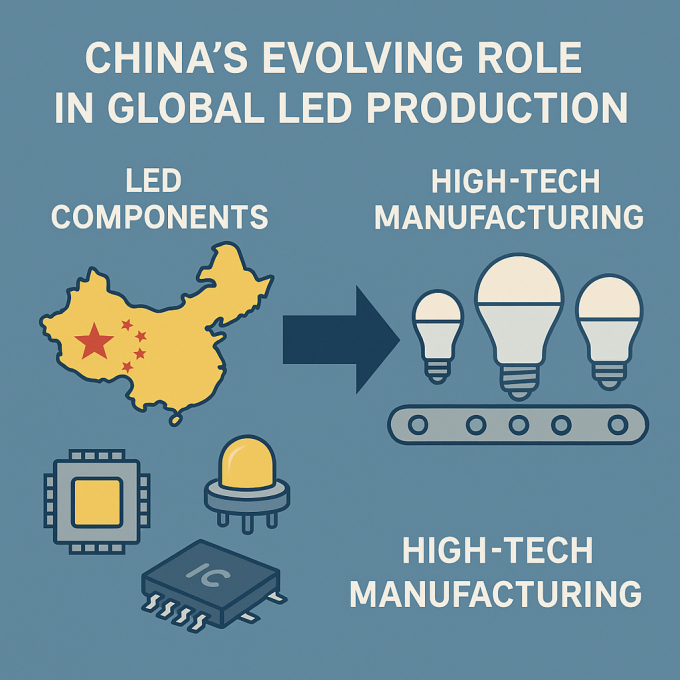
    2. China’s Evolving Role in Global LED Production

    China remains the center of global LED manufacturing, but its role is transitioning.

    Global Supply Chain Shifts in LED Manufacturing: How Production and Trade Are Being Reshaped  1

    2.1 Still the Global Backbone for LED Components

    China accounts for the majority of upstream LED component production:

    Segment China’s Share Source
    LED chips ~70% WSTS (World Semiconductor Trade Statistics)
    LED packages ~75% Statista LED Market Report
    Driver IC assembly 60–70% IC Insights

    Links:
    https://www.statista.com/
    https://www.icinsights.com/

    This dominance ensures that China will remain essential for high-value components such as COB modules, mid-power LEDs, and ICs.

    2.2 Shift From Low-cost Assembly to High-tech Manufacturing

    Policy initiatives such as Made in China 2025 encourage producers to move toward:

    • advanced packaging

    • mini/micro LED R&D

    • integrated driver technologies

    • automated SMT and COB lines

    As a result, some lower-margin assembly operations are migrating to Southeast Asia, leaving China focused on efficiency and technological leadership.

    2.3 Impact for Overseas Buyers

    For importers in Europe or the Middle East, China remains the primary source for:

    • LED chips and phosphors

    • driver ICs and PCBs

    • optical components and aluminum housings

    However, buyers increasingly pair Chinese components with final assembly in other regions to reduce tariff and logistics risks.

    3. Southeast Asia and India: The Emerging Alternative Hubs

    Southeast Asia and India are now key beneficiaries of supply chain diversification.

    Global Supply Chain Shifts in LED Manufacturing: How Production and Trade Are Being Reshaped  2

    3.1 Why Southeast Asia Is Growing

    Countries like Vietnam, Malaysia, and Thailand are becoming LED assembly hubs due to:

    • competitive wages

    • free trade agreements (ASEAN, RCEP)

    • proximity to Chinese component suppliers

    • government incentives for electronics manufacturing

    Vietnam’s electronics exports grew at a CAGR of 16% from 2010–2023, reflecting strong industrialization.
    Source: World Bank
    https://data.worldbank.org/

    In LED applications, Southeast Asia is now widely used for:

    • lighting assembly lines (A60, T8, panel lights)

    • basic SMT assembly

    • packaging and exporting into the U.S. and EU with reduced tariffs

    3.2 India’s Expanding Manufacturing Ecosystem

    India’s “Production Linked Incentive (PLI)” scheme supports domestic electronics manufacturing.

    India is strong in:

    • streetlights

    • basic bulbs and battens

    • government-funded energy-efficiency programs

    However, India still relies heavily on imported LED chips and driver components.

    3.3 How These Regions Compare

    Factor China Southeast Asia India
    Component ecosystem Very strong Moderate Limited
    Labor cost Medium-high Low-medium Low
    Export reliability High High Moderate
    Best for High-tech LEDs Mid-range lighting High-volume basic lighting

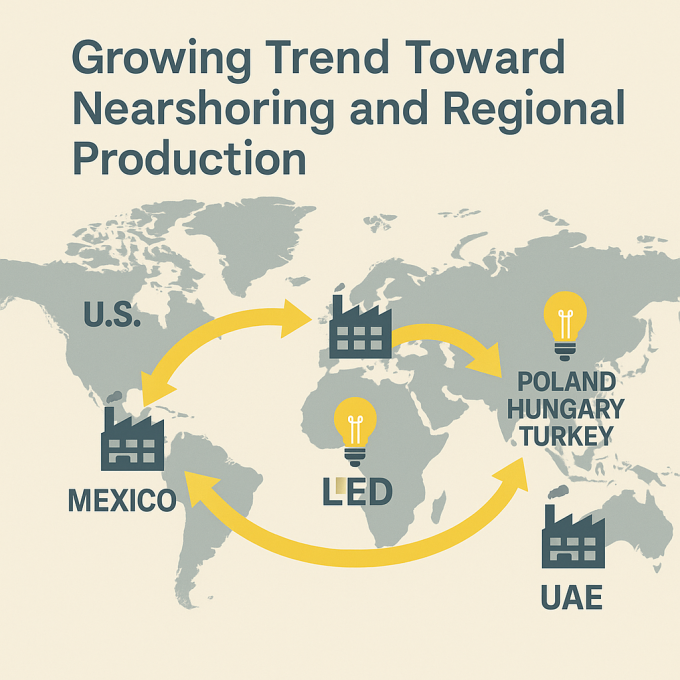
    4. Growing Trend Toward Nearshoring and Regional Production

    To reduce risks, many lighting companies now localize part of their production.

    Global Supply Chain Shifts in LED Manufacturing: How Production and Trade Are Being Reshaped  3

    4.1 Examples of Nearshoring

    • U.S. buyers shifting final assembly to Mexico or the U.S.

    • European brands producing bulk assembly in Poland, Hungary, or Turkey

    • Middle Eastern suppliers sourcing partially from the UAE and Turkey to shorten lead times

    Nearshoring has become attractive because:

    • shipping times decrease from 25–40 days to 5–10 days

    • tariff exposure is reduced

    • after-sales support improves

    • MOQs become more flexible

    4.2 Nearshoring Does Not Replace China

    Nearshoring often focuses on:

    • packaging

    • driver casing assembly

    • local certification

    • last-mile customization

    while still relying on Chinese upstream components.

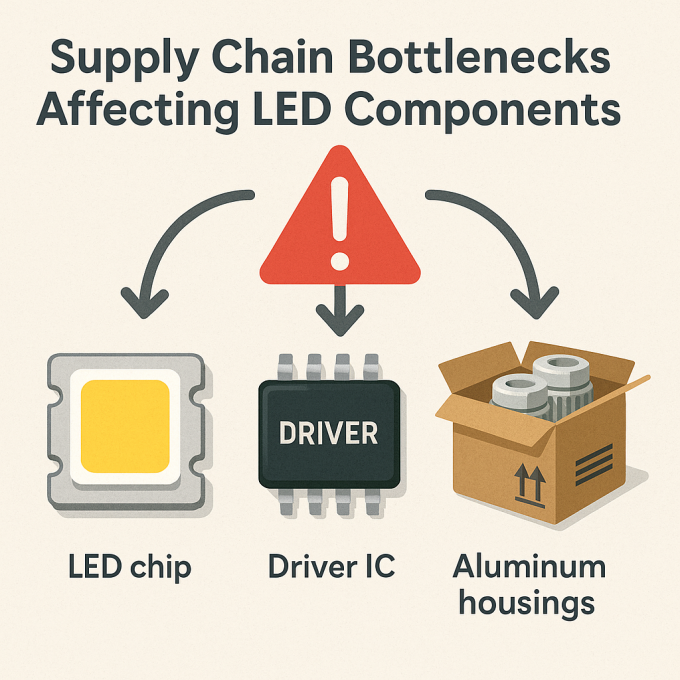
    5. Supply Chain Bottlenecks Affecting LED Components

    Global Supply Chain Shifts in LED Manufacturing: How Production and Trade Are Being Reshaped  4

    5.1 Driver IC Shortages

    Driver ICs remain a global bottleneck because semiconductors are shared across automotive, consumer electronics, and LED applications.

    • Global semiconductor demand increased 26% in 2021, causing shortages.
      Source: WSTS
      https://www.wsts.org/

    During peak shortages, lead times for driver ICs extended to:

    • 8–20 weeks for dimmable ICs

    • 12–30 weeks for smart-lighting ICs (Bluetooth, ZigBee, Wi-Fi)

    5.2 Logistics Disruptions

    Global freight remains volatile:

    • Container rates rose significantly during 2021–2022, then partially normalized in 2023–2024.
      Source: Drewry Shipping Index
      https://www.drewry.co.uk/

    Such fluctuations affect LED shipping costs and lead-time predictability.

    5.3 Raw Material Volatility

    Materials such as aluminum, copper, and rare earth phosphors experienced price volatility due to mining and geopolitical constraints.

    This affects:

    • heat-sink costs

    • PCB production

    • LED phosphor composition

    6. How These Shifts Are Reshaping Global LED Trade Flows

    6.1 Redistribution of Export Routes

    WTO trade data indicates:

    A corresponding increase in Southeast Asian re-exports, especially from Vietnam, Malaysia, and Thailand.

    6.2 Increased Complexity in Compliance

    Different regions enforce:

    • RoHS (EU)

    • ERP and Ecodesign (EU)

    • UL/ETL (U.S.)

    • SASO/ESMA (Middle East)

    This increases documentation and certification requirements for importers.

    6.3 Stable but More Distributed Supply

    Rather than relying on a single hub, supply is now balanced across:

    • China (components & advanced LEDs)

    • Southeast Asia (assembly)

    • India (high-volume basics)

    • Regional hubs (final assembly/customization)

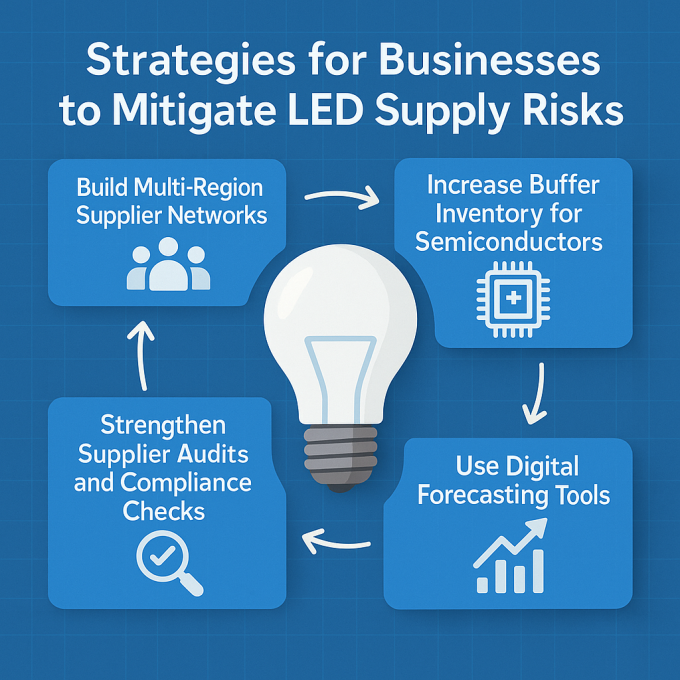
    7. Strategies for Businesses to Mitigate LED Supply Risks

    Global Supply Chain Shifts in LED Manufacturing: How Production and Trade Are Being Reshaped  5

    To navigate the new environment, organizations must adopt more robust procurement strategies.

    7.1 Build Multi-Region Supplier Networks

    Diversify by combining:

    • China for high-value components

    • Southeast Asia for tariff-optimized assembly

    • Regional hubs for fast delivery

    7.2 Increase Buffer Inventory for Semiconductors

    Keep 4–8 weeks of driver ICs for stable production during global fluctuations.

    7.3 Strengthen Supplier Audits and Compliance Checks

    Regular audits help validate:

    • production capacity

    • certification validity

    • environmental compliance

    • supply continuity plans

    7.4 Use Digital Forecasting Tools

    ERP and AI-based forecasting can help anticipate:

    • seasonal spikes

    • tariff policy changes

    • global freight volatility

    Conclusion

    The global LED supply chain is undergoing a broad reconfiguration shaped by geopolitical shifts, rising costs, regional incentives, and the need for resilience. China remains the backbone of LED components, but Southeast Asia, India, and nearshore markets now play growing roles in assembly and final production.

    For wholesalers, contractors, and procurement teams, the new landscape presents both challenges and opportunities. Organizations that diversify sourcing, deepen supplier partnerships, and apply data-driven forecasting will secure more stable, cost-effective, and resilient LED supply chains for the years ahead.

  • EU Eco-Design Directive: What LED Manufacturers Need to Know in 2025

    EU Eco-Design Directive: What LED Manufacturers Need to Know in 2025

    /* Unique root container for style isolation */
    .gtr-container-ledcomp123 {
    font-family: Verdana, Helvetica, “Times New Roman”, Arial, sans-serif;
    color: #333;
    line-height: 1.6;
    padding: 16px;
    max-width: 100%;
    box-sizing: border-box;
    }

    .gtr-container-ledcomp123 p {
        margin-bottom: 1em;
        text-align: left !important;
        font-size: 14px;
    }
    
    .gtr-container-ledcomp123 .gtr-main-title {
        font-size: 18px;
        font-weight: bold;
        margin-bottom: 1.5em;
        color: #0056b3;
        text-align: left;
    }
    
    .gtr-container-ledcomp123 .gtr-section-title {
        font-size: 18px;
        font-weight: bold;
        margin-top: 2em;
        margin-bottom: 1em;
        color: #0056b3;
        text-align: left;
    }
    
    .gtr-container-ledcomp123 .gtr-subsection-title {
        font-size: 16px;
        font-weight: bold;
        margin-top: 1.5em;
        margin-bottom: 0.8em;
        color: #007bff;
        text-align: left;
    }
    
    .gtr-container-ledcomp123 .gtr-sub-subsection-title {
        font-size: 14px;
        font-weight: bold;
        margin-top: 1em;
        margin-bottom: 0.5em;
        color: #555;
        text-align: left;
    }
    
    .gtr-container-ledcomp123 hr {
        border: none;
        border-top: 1px solid #e0e0e0;
        margin: 2em 0;
    }
    
    .gtr-container-ledcomp123 img {
        max-width: 100%;
        height: auto;
        display: block;
        margin: 1.5em auto;
    }
    
    .gtr-container-ledcomp123 ul {
        list-style: none !important;
        padding-left: 0;
        margin-left: 0;
        margin-bottom: 1em;
    }
    
    .gtr-container-ledcomp123 ul li {
    position: relative;
        padding-left: 20px;
        margin-bottom: 0.5em;
        font-size: 14px;
        text-align: left;
    list-style: none !important;
    

    }

    .gtr-container-ledcomp123 ul li::before {
        content: "•" !important;
        position: absolute !important;
        left: 0 !important;
        color: #007bff;
        font-size: 1.2em;
        line-height: 1;
    }
    
    .gtr-container-ledcomp123 ol {
        list-style: none !important;
        padding-left: 0;
        margin-left: 0;
        margin-bottom: 1em;
        counter-reset: list-item;
    }
    
    .gtr-container-ledcomp123 ol li {
    position: relative;
        padding-left: 25px;
        margin-bottom: 0.5em;
        font-size: 14px;
        text-align: left;
        counter-increment: none;
    list-style: none !important;
    

    }

    .gtr-container-ledcomp123 ol li::before {
        content: counter(list-item) "." !important;
        position: absolute !important;
        left: 0 !important;
        color: #007bff;
        font-weight: bold;
        width: 20px;
        text-align: right;
    }
    
    .gtr-container-ledcomp123 .gtr-table-wrapper {
        overflow-x: auto;
        margin-bottom: 1.5em;
    }
    
    .gtr-container-ledcomp123 table {
        width: 100%;
        border-collapse: collapse !important;
        border-spacing: 0 !important;
        margin: 0;
        font-size: 14px;
        min-width: 600px;
    }
    
    .gtr-container-ledcomp123 th,
    .gtr-container-ledcomp123 td {
        border: 1px solid #ccc !important;
        padding: 10px 12px !important;
        text-align: left !important;
        vertical-align: top !important;
        word-break: normal;
        overflow-wrap: normal;
    }
    
    .gtr-container-ledcomp123 th {
        background-color: #f0f0f0;
        font-weight: bold !important;
        color: #333;
    }
    
    .gtr-container-ledcomp123 tbody tr:nth-child(even) {
        background-color: #f9f9f9;
    }
    
    @media (min-width: 768px) {
        .gtr-container-ledcomp123 {
            padding: 24px 40px;
        }
    
        .gtr-container-ledcomp123 .gtr-main-title {
            font-size: 18px;
        }
    
        .gtr-container-ledcomp123 .gtr-section-title {
            font-size: 18px;
        }
    
        .gtr-container-ledcomp123 .gtr-subsection-title {
            font-size: 16px;
        }
    
        .gtr-container-ledcomp123 .gtr-sub-subsection-title {
            font-size: 14px;
        }
    
        .gtr-container-ledcomp123 table {
            min-width: auto;
        }
    
        .gtr-container-ledcomp123 .gtr-table-wrapper {
            overflow-x: visible;
        }
    }
    

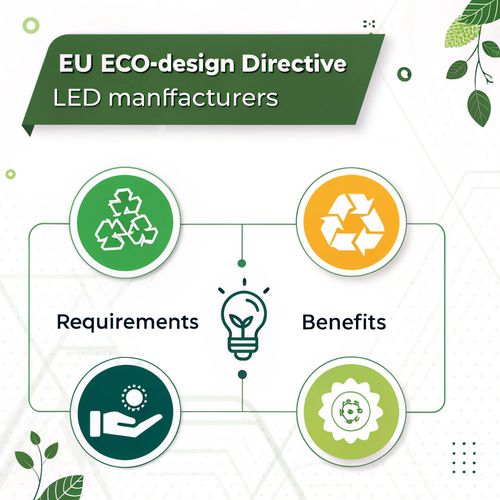
    EU Eco-Design Directive: What LED Manufacturers Need to Know in 2025

    Manufacturers across Asia and Europe are running against the clock. The European Union is entering a new regulatory phase, and the lighting category is one of the most tightly monitored segments under Ecodesign, Energy Labelling and EPREL.

    If you produce LED lamps or luminaires—and you plan to sell in the EU—meeting the updated requirements is no longer optional. Efficiency, flicker, lifetime, repairability and transparent documentation are now part of your market access passport.

    This guide explains what matters, what has changed, and how LED manufacturers can stay fully compliant while improving product quality and winning more B2B customers.

    Introduction — Why Ecodesign Matters More Than Ever

    The lighting industry is shifting quickly. Energy prices remain volatile, cities demand longer-lasting products, and buyers expect transparency far beyond the wattage and lumen numbers on a box. The EU Ecodesign and Energy Labelling rules serve one purpose: to ensure every light source sold in the region is efficient, durable, safe and responsibly documented.

    For LED manufacturers, this means the bar is rising:

    • Higher efficiency expectations

    • Stricter flicker control (Pst LM & SVM)

    • Better thermal, electronic and optical stability

    • Mandatory EPREL registration

    • Proven lifetime claims (L70/Bxx/Cx)

    • Repairability and material-efficiency requirements

    • Complete CE technical documentation

    The days of “LED = compliant by default” are long gone. The EU now evaluates performance and documentation just as seriously.

    What Exactly Is the EU Ecodesign Directive?

    The Ecodesign Directive (2009/125/EC) is the EU’s master framework for energy-related products. For lighting, it defines:

    ✓ Minimum performance thresholds

    (luminous efficacy, power factor, THD, flicker, standby power)

    ✓ Information obligations

    (datasheets, EPREL data, lifetime declarations)

    ✓ Material efficiency

    (repairability, replaceable parts, disassembly)

    EU Eco-Design Directive: What LED Manufacturers Need to Know in 2025  0

    Ecodesign works alongside:

    Energy Labelling Regulation

    Defines A–G efficiency classes and how they are measured.

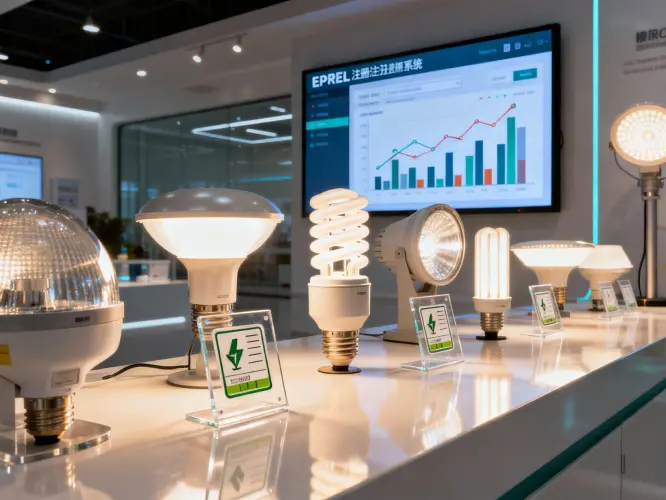
    EPREL (EU Product Registry for Energy Labelling)

    All LED products must be registered with accurate data before entering the EU market.

    CE Marking Requirements

    Every manufacturer must maintain a complete technical file, supported by accredited test reports.

    Together, these form the backbone of LED compliance.

    Core Requirements for LED Products (Current Rules)

    To be compliant today, LED manufacturers must meet these essential criteria:

    2.1 Efficiency

    • Minimum luminous efficacy depending on product type

    • Measured per LM-79 standards

    • Efficiency includes driver losses, not just LED chip output

    2.2 Flicker Performance

    Many LED failures in recent years stem from flicker issues. Ecodesign sets limits using industry-adopted metrics:

    • Pst LM ≤ 1.0 (short-term flicker)

    • SVM ≤ 0.4 (stroboscopic effect threshold)

    These must hold across dimming ranges and under various power conditions.

    2.3 Lifetime Claims (L70/Bxx/Cx)

    Manufacturers must declare:

    • L70 (time until lumen output drops to 70%)

    • Bxx (percentage of units allowed to fail)

    • Cz (catastrophic failure rate)

    These must be supported by TM-21 projections using LM-80 data, not estimates.

    2.4 Standby & Networked Standby

    • 0.5W for standard products

    • lower ceilings coming for smart/connected devices

    2.5 Replaceability & Repairability

    This is a growing focus:

    • Replaceable drivers

    • Replaceable control boards

    • Accessible screws (not sealed glue)

    • 7-year spare part availability recommended

    This aligns with Circular Economy rules.

    2025 Updates — What Will Change?

    The EU has signaled several directions for tightening rules. While final text may vary, patterns are clear.

    EU Eco-Design Directive: What LED Manufacturers Need to Know in 2025  1

    3.1 Stricter Flicker Enforcement

    The biggest focus area remains:

    • verifying Pst LM/SVM across more dimming types

    • validating behavior at “edge conditions” (low currents, PWM modes)

    3.2 Stronger EPREL Data Validation

    EPREL entries must:

    • match datasheets

    • match packaging

    • match DoC and CE files

    Discrepancies increasingly trigger market surveillance audits.

    3.3 Repairability & Material Efficiency

    Upcoming updates emphasize:

    • modular drivers

    • disassembly instructions

    • longer spare-part availability

    • clearer reporting in EPREL

    3.4 Standby Power Reduction for Smart LEDs

    Connected luminaires may face reduced standby budgets to curb energy waste.

    3.5 More Transparent Lifetime Claims

    The EU will push for:

    • harmonized lifetime tolerances

    • stricter justification of L70/Bxx/Cx

    • standardized datasheet structures

    Why These Regulations Matter for Manufacturers

    Regulation shouldn’t be seen as a burden—it is a competitive advantage when handled well.

    Market Access

    If your product is not compliant, it cannot legally enter the EU, even if the buyer wants it.

    Lower Warranty Costs

    Better drivers, stable electronics, and controlled thermal design cut failure rates dramatically.

    Stronger Brand Trust

    Buyers now prefer suppliers who provide:

    • clear test reports

    • transparent EPREL entries

    • traceable documentation

    Being compliant → winning tenders, retailers, and public sector customers.

    EPREL: What Manufacturers Must Do

    EPREL is no longer a formality—it is your public performance profile.

    You must register:

    • performance values

    • efficiency class

    • flicker metrics

    • lifetime declarations

    • product images

    • technical parameters

    • product variants

    • correction factors

    Common EPREL Mistakes

    Issue Impact
    Wrong lumen/wattage pairing Rejection / audit
    Datasheet ≠ EPREL values Non-compliance
    Missing lifetime data High audit risk
    Variant mismatches Product removal
    Incorrect standby values Penalties

    Tip: Create a single source of truth for all product data to ensure consistency.

    Step-by-Step Compliance Roadmap for LED Manufacturers
    6.1 Scope & Requirements

    Define product type, application, variants, and target markets.

    6.2 Engineering Design Targets

    Set internal design targets above minimums:

    • LM/W margin

    • Flicker margin

    • Thermal stability margin

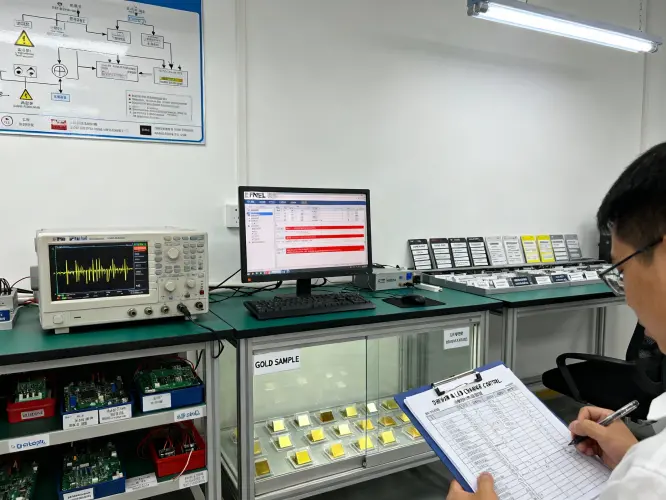
    6.3 Pre-Compliance Testing

    Test early with:

    • EVT samples

    • EMC screening

    • Thermal stability tests

    • Dimmer compatibility matrix

    6.4 Final Verification

    Conduct full accredited tests:

    • LM-79 photometry

    • Flicker (Pst LM, SVM)

    • Safety (EN 61347, EN 60598)

    • EMC (EN 55015)

    6.5 EPREL Registration

    Upload accurate, harmonized data.

    6.6 CE Technical File Compilation

    Includes:

    • Declaration of Conformity

    • Risk assessment

    • Test reports

    • Schematics, BOM

    • IFU (Instructions for Use)

    • Repairability instructions

    6.7 Post-Market Surveillance

    Monitor field data and service records to maintain compliance.

    Common Challenges (and How to Avoid Them)

    EU Eco-Design Directive: What LED Manufacturers Need to Know in 2025  2

    Challenge 1: Flicker Spikes at Low Dimming

    Solution: Validate with a wide dimmer matrix and stabilize low-current driver behavior.

    Challenge 2: Photometric Drift

    Solution: Specify LED binning + test at elevated temperatures.

    Challenge 3: Inconsistent Data Across Documents

    Solution: Maintain unified database for EPREL/datasheet/label values.

    Challenge 4: Component Substitutions

    Solution: Implement strict change-control procedures.

    Challenge 5: Packaging & Label Errors

    Solution: Use standardized templates aligned with regulations.

    How Compliance Becomes a Business Advantage

    EU Eco-Design Directive: What LED Manufacturers Need to Know in 2025  3

    When compliance is part of product culture, you gain:

    • Better tender eligibility

    • Higher trust from distributors & chain retailers

    • Lower failure rates

    • Stronger sustainability credentials

    • Premium brand positioning

    This is especially important as EU buyers increasingly prioritize ESG, lifecycle value and transparent documentation.

    1. Future Trends Beyond 2025

    The EU is moving toward deeper accountability across the product lifecycle.

    EU Eco-Design Directive: What LED Manufacturers Need to Know in 2025  4

    Digital Product Passport (DPP)

    Will require structured, traceable product data.

    Circular Economy Focus

    Modular, repairable, recyclable designs.

    CSRD Sustainability Reporting

    More traceable material-efficiency metrics.

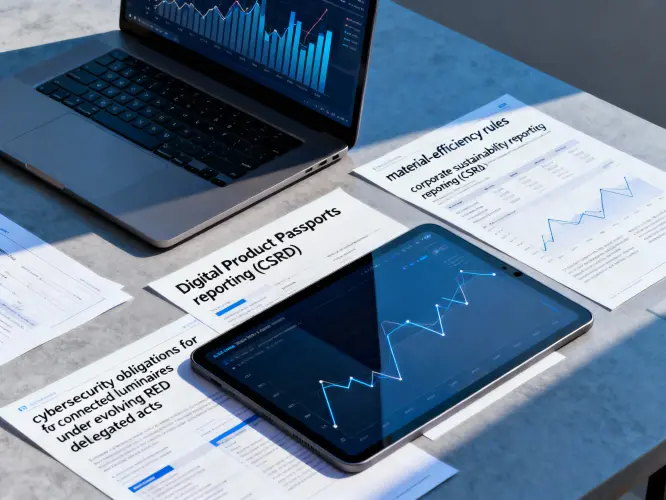
    Cybersecurity Rules for Connected Lighting

    Secure firmware, SBOMs, authenticated updates.

    Manufacturers who prepare now will avoid disruptions later.

    Conclusion — Prepare Early, Document Clearly, Design Smart

    EU Ecodesign is not just regulation—it is the new standard for quality, efficiency and trust in LED lighting. Manufacturers who invest early in compliance will enjoy smoother market access, fewer warranty issues, and a stronger reputation among buyers.

    By designing to the rulebook, validating performance early, and maintaining clean, consistent documentation, your LED portfolio will be ready not only for 2025—but for the next decade of lighting evolution.

  • Best LED Lighting Solutions for Modern Homes: A Practical Room-by-Room Guide

    Best LED Lighting Solutions for Modern Homes: A Practical Room-by-Room Guide

    .gtr-container-led789 {
    font-family: Verdana, Helvetica, “Times New Roman”, Arial, sans-serif;
    color: #333;
    line-height: 1.6;
    padding: 15px;
    max-width: 100%;
    box-sizing: border-box;
    }

    .gtr-container-led789 * {
      box-sizing: border-box;
    }
    
    .gtr-container-led789 p {
      margin-bottom: 1em;
      text-align: left !important;
      font-size: 14px;
    }
    
    .gtr-container-led789 strong {
      font-weight: bold;
    }
    
    .gtr-container-led789__main-title {
      font-size: 18px;
      font-weight: bold;
      margin-bottom: 1.5em;
      color: #0056b3;
      text-align: left;
    }
    
    .gtr-container-led789__section-title {
      font-size: 18px;
      font-weight: bold;
      margin-top: 2em;
      margin-bottom: 1em;
      color: #0056b3;
      text-align: left;
    }
    
    .gtr-container-led789__sub-section-title {
      font-size: 16px;
      font-weight: bold;
      margin-top: 1.5em;
      margin-bottom: 0.8em;
      color: #0056b3;
      text-align: left;
    }
    
    .gtr-container-led789__separator {
      border-top: 1px solid #ddd;
      margin: 2em 0;
    }
    
    .gtr-container-led789 ul,
    .gtr-container-led789 ol {
      list-style: none !important;
      margin: 1em 0;
      padding: 0;
    }
    
    .gtr-container-led789 ul li {
    position: relative;
      padding-left: 20px;
      margin-bottom: 0.5em;
      font-size: 14px;
      text-align: left !important;
    list-style: none !important;
    

    }

    .gtr-container-led789 ul li::before {
      content: "•" !important;
      position: absolute !important;
      left: 0 !important;
      color: #007bff;
      font-size: 1.2em;
      line-height: 1;
      top: 0;
    }
    
    .gtr-container-led789 ol {
      counter-reset: list-item;
    }
    
    .gtr-container-led789 ol li {
    position: relative;
      padding-left: 25px;
      margin-bottom: 0.5em;
      font-size: 14px;
      text-align: left !important;
    list-style: none !important;
    

    }

    .gtr-container-led789 ol li::before {
      content: counter(list-item) "." !important;
      position: absolute !important;
      left: 0 !important;
      width: 20px;
      text-align: right;
      color: #333;
      font-weight: bold;
      top: 0;
    }
    
    .gtr-container-led789 .gtr-table-wrapper {
      overflow-x: auto;
      margin: 1.5em 0;
    }
    
    .gtr-container-led789 table {
      width: 100%;
      border-collapse: collapse !important;
      border-spacing: 0 !important;
      margin: 0 !important;
      font-size: 14px;
      border: 1px solid #ccc !important;
    }
    
    .gtr-container-led789 th,
    .gtr-container-led789 td {
      padding: 8px 12px !important;
      text-align: left !important;
      vertical-align: top !important;
      border: 1px solid #ccc !important;
      word-break: normal !important;
      overflow-wrap: normal !important;
    }
    
    .gtr-container-led789 th {
      font-weight: bold !important;
      background-color: #f0f0f0;
      color: #333;
    }
    
    .gtr-container-led789 tbody tr:nth-child(even) {
      background-color: #f9f9f9;
    }
    
    .gtr-container-led789 img {
      margin: 1.5em 0;
    }
    
    @media (min-width: 768px) {
      .gtr-container-led789 {
        padding: 30px;
        max-width: 960px;
        margin: 0 auto;
      }
    }
    

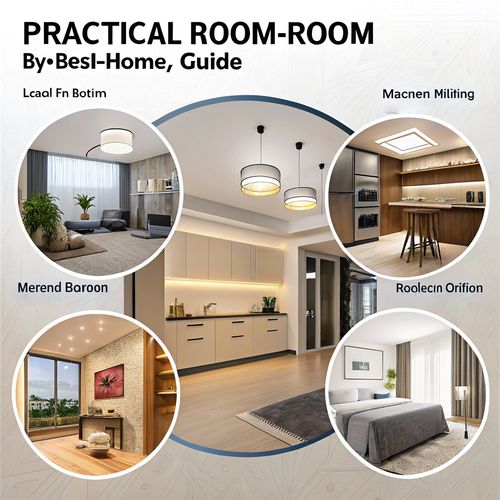
    Best LED Lighting Solutions for Modern Homes: A Practical Room-by-Room Guide

    Most homes today suffer from the same lighting problems—dark corners, inconsistent color, harsh shadows, and high electricity bills. Good interior design can’t compensate for bad lighting. And as more homeowners demand comfort, energy savings, and modern aesthetics, LED lighting has become the clear standard for 2025 and beyond.

    The best LED solutions combine layered lighting, high CRI color quality, the right color temperature (Kelvin) for each room, precise beam angles, and smart or dimmable controls. When deployed properly, they make a home feel more spacious, more relaxing, and more premium—without changing furniture or layout.

    Whether you’re a homeowner upgrading room by room, or a retailer/installer looking to standardize your inventory, this guide distills the essentials into clear steps and real-world recommendations.

    Why Modern Homes Choose LED Lighting

    LEDs today aren’t just “brighter and cheaper to run.” The real benefit is control—of atmosphere, colors, comfort, and energy.

    Best LED Lighting Solutions for Modern Homes: A Practical Room-by-Room Guide  0

    1. Real Energy Savings

    LED bulbs produce far more light per watt than incandescent or halogen lamps.

    • Typical LED efficacy: 80–120 lm/W

    • Halogen: 15–25 lm/W

    According to the U.S. Department of Energy[^1], switching to LEDs can reduce lighting electricity use by 75–90%.

    1. Better Visual Comfort

    High-quality LEDs avoid common issues:

    • flicker

    • color shift

    • heat buildup

    • harsh brightness

    Look for these specs:

    • CRI ≥ 90 for natural colors

    • Flicker ≤ 10% (IEEE 1789 guidelines)

    • Stable drivers for smooth dimming

    1. Long Life, Fewer Replacements

    LEDs typically last 15,000–50,000 hours depending on model and thermal design. Good heat management is key—avoid cheap lamps in airtight fixtures.

    1. Smart Control Options

    LEDs pair naturally with:

    • dimmers

    • motion sensors

    • smart home platforms

    • time-of-day lighting (cool in morning, warm in evening)

    This is especially attractive for homes and for retailers installing standardized systems.

    Benefit What Homeowners Experience What Retailers/Installers Gain
    Efficiency Lower electricity bills Easier upsell, lower return rate
    Color Quality More premium feel Reduced complaints
    Long Life Fewer replacements Lower maintenance cost
    Control Mood lighting + automation Stronger project value

    Types of LED Bulbs & Where They Work Best

    Choosing LEDs isn’t just “A19 vs GU10.” The bulb shape determines the spread of light, shadows, atmosphere—and whether a room feels flat or luxurious.

    Best LED Lighting Solutions for Modern Homes: A Practical Room-by-Room Guide  1

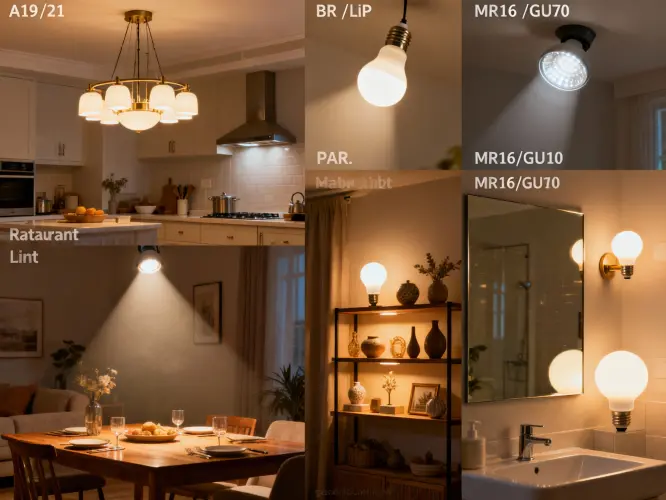
    A19 / A21 – General Lamps (Bedrooms, Living Rooms)

    • Wide 230° beam for soft ambient light

    • Ideal for floor lamps, bedside lamps, table lamps

    • Warm-dim versions recreate halogen mood (down to 2200K)

    Best for: cozy areas, reading nooks, bedrooms

    BR30 / BR40 – Recessed Downlights (Living Rooms, Hallways)

    • Wide 100–120° beam

    • Designed for recessed cans to spread light evenly

    • Low glare, good for multi-fixture ceilings

    Best for: living rooms, corridors, TV rooms

    PAR20 / PAR30 / PAR38 – Focused Lighting (Kitchens, Artwork, High Ceilings)

    • Narrower 15–40° beam, stronger brightness

    • Great for spotlighting countertops, art walls, dining tables

    Best for: kitchens, dining areas, accent lighting

    MR16 / GU10 – Precision Spotlights (Accent, Retail-Like Displays)

    • 10–36° beam, excellent for highlighting objects

    • Often used in tracks or small recessed fixtures

    Best for: display shelves, artwork, kitchen task zones

    G25 Globes – Bathroom & Vanity Lighting

    • Omni-directional glow for face-friendly illumination

    • Avoid harsh shadows; ideal around mirrors

    Best for: bathrooms, dressing areas

    How to Choose the Right Color Temperature (Kelvin)

    Color temperature shapes mood. Too warm feels sleepy; too cool feels sterile. The trick is choosing by activity, not by “room label.”

    Best LED Lighting Solutions for Modern Homes: A Practical Room-by-Room Guide  2

    Kelvin Guide

    • 2200–2700K – warm, cozy, intimate

    • 3000–3500K – clean, balanced, natural

    • 4000–5000K – bright, crisp, task-oriented

    Room-by-Room Recommendations

    Room Ideal CCT Why It Works Recommended Bulb
    Living Room 2700–3000K Relaxing, warm BR30 + A19
    Kitchen 3500–4000K Bright for prep PAR30/PAR20
    Dining Room 2700K Cozy mood Warm-dim pendants
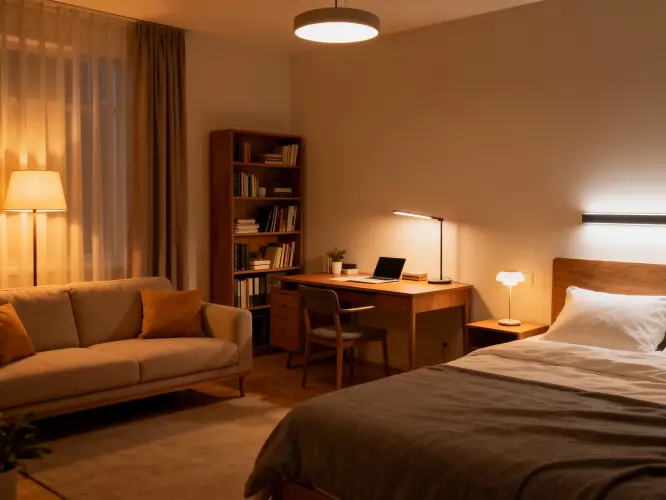
    Bedroom 2700K + 2200K dimming Evening relaxation A19 warm-dim
    Bathroom 3000–3500K Skin tone accuracy G25 + ceiling flush
    Home Office 3500–4000K Focus & clarity PAR20 task lights

    Don’t Mix Extremes

    Avoid using 2700K and 5000K in the same sightline. This looks visually chaotic.

    Consider Warm-Dim or Smart Lighting

    Warm-dim bulbs automatically shift from 3000K → 2200K when dimmed, mimicking candlelight—great for evening comfort.

    Room-by-Room LED Lighting Design Blueprint

    This section delivers the “install-ready” guidance your readers want—especially valuable for retailers, installers, and renovation contractors.

    Living Room

    Goal: Cozy + flexible
    Recommended Setup:

    • BR30 recessed lights (ambient)

    • A19 warm-dim lamps (table/floor)

    • PAR20 or GU10 accents for artwork

    Pro Tip:
    Use CRI > 90 to reveal natural wood and fabric texture.

    Kitchen

    Goal: Bright, safe, shadow-free
    Recommended Setup:

    • PAR30 task beams on counters

    • BR30 general ambient

    • Under-cabinet linear LEDs

    Beam Angles:

    • Counters: 25–40°

    • Ambient: 100–120°

    Bedroom

    Goal: Calm, restful, low glare
    Recommended Setup:

    • A19 warm-dim for bedside

    • BR30 in recessed cans if needed

    • Accent lighting for artwork or shelving

    Best CCT: 2700K → 2200K at night

    Bathroom

    Goal: Clear visibility without harshness

    • G25 globes around the mirror

    • 3000–3500K overhead lights

    • Look for CRI 90+ to reproduce skin tones correctly

    Home Office

    Goal: Focus + reduced eye strain
    Recommended Setup:

    • PAR20 task lights

    • 3500–4000K lighting

    • Flicker-free, stable drivers

    Buying Guide: How to Choose the Best LED for Any Home

    This is where 90% 的读者会做购买决策,所以非常重要.

    Checklist

    • ✓ Choose CRI 90+

    • ✓ Decide the right Kelvin per room

    • ✓ Match beam angle to ceiling height

    • ✓ Confirm dimmability + compatibility

    • ✓ Prefer brands with thermal-certified designs

    • ✓ For installers: standardize SKUs by room type

    Minimum Technical Specs to Look For

    Spec Good Value
    CRI ≥ 90
    Power Factor ≥ 0.9
    Flicker < 10%
    Beam Angle Based on room use
    Warranty 2–5 years

    Tecolite LED Recommendations (Light Brand Integration)

    Tecolite’s high-CRI home lighting line is designed specifically for living, dining, kitchen, and residential projects.

    Include models such as:

    • Tecolite BR30 Series — soft ambient, low glare

    • Tecolite PAR20/PAR30 — crisp task lighting

    • Tecolite GU10 / MR16 — precision accent beams

    • Tecolite A19 Warm-Dim — ideal for bedrooms and living rooms

    For retailers and installers, Tecolite’s tight binning (≤ 3 MacAdam steps) ensures color consistency across large projects.

    Common Mistakes to Avoid

    • ❌ Mixing too many CCT values in the same area

    • ❌ Using narrow beams for general lighting

    • ❌ Buying low-CRI LEDs (skin looks gray)

    • ❌ Installing non-dimmable LEDs on dimmer circuits

    • ❌ Ignoring thermal ratings (“not safe for enclosed fixtures”)

    Conclusion

    LED lighting isn’t simply about efficiency—it’s about creating spaces that look better, feel better, and function better. With the right combination of beam angle, color temperature, CRI, and layered lighting, any modern home can feel more premium and more comfortable.

    Retailers, wholesalers, and installers who standardize on high-quality LED SKUs will reduce returns, improve client satisfaction, and streamline procurement. With reliable product lines like the Tecolite BR, PAR, GU10, and A19 series, it’s easy to build consistent lighting solutions room by room.

  • How Thermal Simulation Software Improves LED Heat Management

    How Thermal Simulation Software Improves LED Heat Management

    .gtr-container-ledsim789 {
    font-family: Verdana, Helvetica, “Times New Roman”, Arial, sans-serif;
    color: #333;
    line-height: 1.6;
    padding: 15px;
    box-sizing: border-box;
    }

        .gtr-container-ledsim789__title {
            font-size: 18px;
            font-weight: bold;
            margin-bottom: 15px;
            color: #0056b3;
            text-align: left;
        }
    
        .gtr-container-ledsim789__subtitle {
            font-size: 14px;
            font-style: italic;
            margin-bottom: 20px;
            color: #555;
            text-align: left;
        }
    
        .gtr-container-ledsim789__section-title {
            font-size: 18px;
            font-weight: bold;
            margin-top: 25px;
            margin-bottom: 15px;
            color: #0056b3;
            text-align: left;
            border-bottom: 1px solid #eee;
            padding-bottom: 5px;
        }
    
        .gtr-container-ledsim789__subsection-title {
            font-size: 16px;
            font-weight: bold;
            margin-top: 20px;
            margin-bottom: 10px;
            color: #007bff;
            text-align: left;
        }
    
        .gtr-container-ledsim789 p {
            font-size: 14px;
            margin-bottom: 10px;
            text-align: left !important;
            word-break: normal;
            overflow-wrap: normal;
        }
    
        .gtr-container-ledsim789 strong {
            font-weight: bold;
            color: #000;
        }
    
        .gtr-container-ledsim789 em {
            font-style: italic;
            color: #666;
        }
    
        .gtr-container-ledsim789__divider {
            border-top: 1px solid #ddd;
            margin: 25px 0;
        }
    
        .gtr-container-ledsim789__list,
        .gtr-container-ledsim789__ordered-list {
            list-style: none !important;
            padding-left: 0 !important;
            margin-left: 0 !important;
            margin-bottom: 15px;
        }
    
        .gtr-container-ledsim789__list li,
        .gtr-container-ledsim789__ordered-list li {
            position: relative !important;
            padding-left: 25px !important;
            margin-bottom: 8px !important;
            font-size: 14px;
            text-align: left !important;
        }
    
        .gtr-container-ledsim789__list li::before {
            content: "•" !important;
            position: absolute !important;
            left: 0 !important;
            color: #007bff !important;
            font-size: 1.2em !important;
            line-height: 1.6 !important;
            font-weight: bold !important;
        }
    
        .gtr-container-ledsim789__ordered-list {
            counter-reset: list-item !important;
        }
    
        .gtr-container-ledsim789__ordered-list li::before {
            content: counter(list-item) "." !important;
            position: absolute !important;
            left: 0 !important;
            color: #007bff !important;
            font-weight: bold !important;
            text-align: right !important;
            width: 20px !important;
            line-height: 1.6 !important;
        }
    
        .gtr-container-ledsim789__table-wrapper {
            overflow-x: auto;
            margin-top: 20px;
            margin-bottom: 20px;
        }
    
        .gtr-container-ledsim789__table {
            width: 100%;
            border-collapse: collapse !important;
            border-spacing: 0 !important;
            font-size: 14px;
            min-width: 600px;
        }
    
        .gtr-container-ledsim789__table th,
        .gtr-container-ledsim789__table td {
            border: 1px solid #ccc !important;
            padding: 10px !important;
            text-align: left !important;
            vertical-align: top !important;
            word-break: normal !important;
            overflow-wrap: normal !important;
        }
    
        .gtr-container-ledsim789__table th {
            background-color: #f0f0f0;
            font-weight: bold !important;
            color: #333;
        }
    
        .gtr-container-ledsim789__table tbody tr:nth-child(even) {
            background-color: #f9f9f9;
        }
    
        @media (min-width: 768px) {
            .gtr-container-ledsim789 {
                padding: 25px 50px;
            }
    
            .gtr-container-ledsim789__table {
                min-width: auto;
            }
    
            .gtr-container-ledsim789__table-wrapper {
                overflow-x: visible;
            }
        }
    

    How Thermal Simulation Software Improves LED Heat Management

    Why modern LED teams use virtual thermal modeling to avoid overheating failures, shorten development cycles, and build more reliable lighting products.

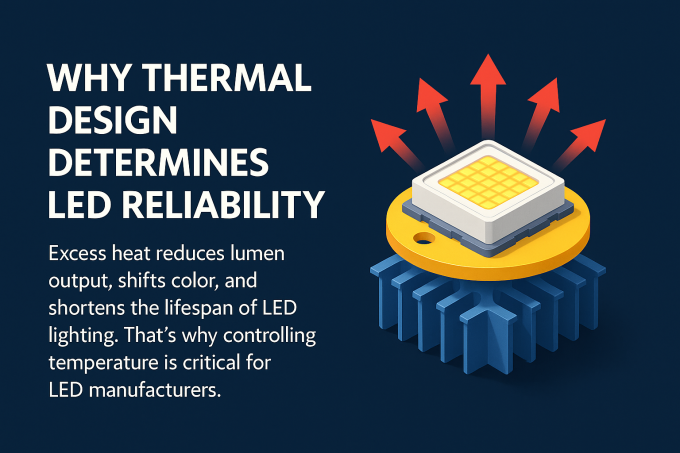
    Introduction — Why Thermal Design Determines LED Reliability

    How Thermal Simulation Software Improves LED Heat Management  0

    In LED manufacturing, every lumen depends on temperature.
    Excess heat degrades lumen output, shifts chromaticity, accelerates phosphor aging, stresses drivers, and shortens overall lifetime. A junction that runs just 10°C hotter can cut L70 life roughly in half.

    Because margins are tight and schedules are unforgiving, relying only on physical prototypes introduces costly redesign loops. Thermal simulation software changes the equation: engineers can predict heat flow, verify temperature limits, and optimize the heat path long before tooling or assembly begins.

    Thermal design ensures the LED’s junction temperature stays within targets set by L70, chromaticity stability, and driver protection. Controlling heat early prevents warranty issues, color drift complaints, and field failures that damage brand reputation.

    Why Thermal Simulation Matters for LED Manufacturers

    Simulation replaces guesswork with data. It reveals hotspots, quantifies temperature margins, and compares design alternatives without building multiple prototypes. This accelerates program decisions, avoids over-engineering, and reduces quality risk.

    Most LED thermal issues start at predictable choke points:

    • Die attach area and package substrate

    • TIM layer and contact interfaces

    • MCPCB / IMS board design

    • Driver placement

    • Enclosure vents, airflow, and orientation

    Simulation uncovers how each affects real-world performance.

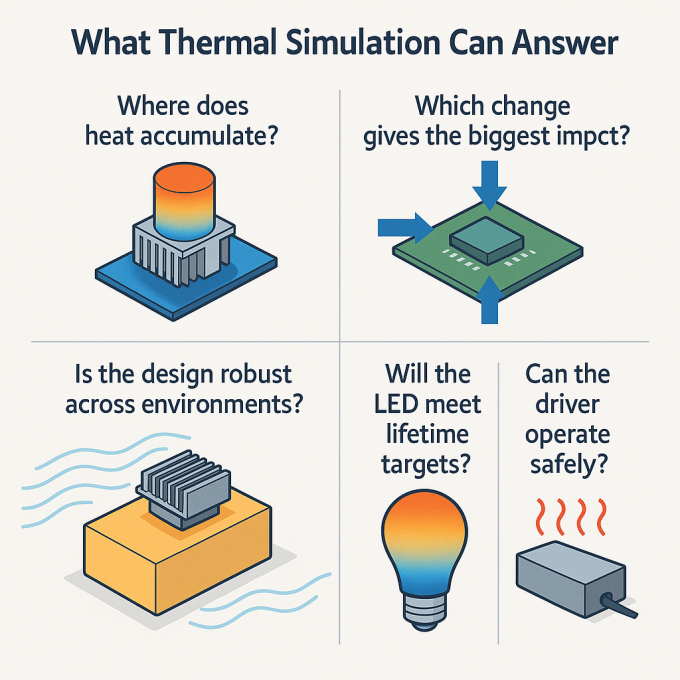
    What Thermal Simulation Can Answer

    How Thermal Simulation Software Improves LED Heat Management  1

    • Where does heat accumulate?
      Identify the weakest links—TIM thickness, insufficient vias, stagnant air pockets, or undersized heat sinks.

    Which change gives the biggest impact?
    Quickly test if adding vias, increasing copper, or modifying fin spacing improves thermal resistance.

    • Is the design robust across environments?
      Validate performance at 25°C, 40°C, and 55°C; evaluate vertical vs. horizontal mounting; simulate dust buildup.

    Will the LED meet lifetime targets?
    Check junction temperature margins for L70 and chromaticity stability.

    • Can the driver operate safely?
      Evaluate case temperature under load to avoid derating or shutdown.

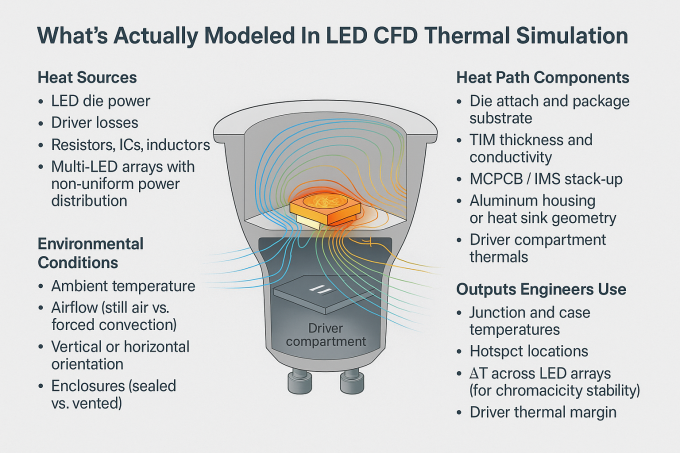
    What’s Actually Modeled in LED CFD Thermal Simulation

    How Thermal Simulation Software Improves LED Heat Management  2

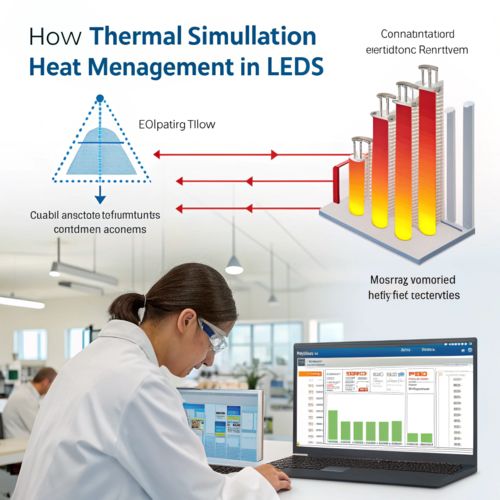
    Modern CFD tools simulate conjugate heat transfer—the interaction between heat conduction in solids and convection/radiation in air. For LED systems, this includes:

    1. Heat Sources

    • LED die power

    • Driver losses

    • Resistors, ICs, inductors

    • Multi-LED arrays with non-uniform power distribution

    2. Heat Path Components

    • Die attach and package substrate

    • TIM thickness and conductivity

    • MCPCB stack-up (dielectric thickness, copper weight)

    • Aluminum housing or heat sink geometry

    • Driver compartment thermals

    3. Environmental Conditions

    • Ambient temperature

    • Airflow (still air vs. forced convection)

    • Vertical or horizontal orientation

    • Enclosures (sealed vs. vented)

    4. Outputs Engineers Use

    • Junction and case temperatures

    • Hotspot locations

    • ΔT across LED arrays (for chromaticity stability)

    • Driver thermal margin

    • Temperature drop at each interface

    • Heat-sink efficiency and airflow pattern

    A Practical Simulation-Driven Design Workflow

    A disciplined workflow reduces risk and accelerates development. High-performing LED teams follow this cycle:

    Step 1 — Define Requirements

    Translate photometric and reliability targets into thermal limits:

    • Junction temperature requirement from L70

    • Case temperature limits for the driver

    • Board temperature limit for components

    Step 2 — Build a Minimal Viable Thermal Model

    Include only geometry that affects heat flow meaningfully:

    • LED package blocks

    • MCPCB layers

    • TIM

    • Heat-sink fins

    • Enclosure and vents

    This keeps solve times reasonable and encourages rapid iteration.

    Step 3 — Validate With a Quick Physical Test

    Use a simple test fixture and thermocouples or IR imaging to calibrate:

    • Contact resistances

    • Material emissivity

    • TIM performance

    Once correlation is within 3–5°C, the model becomes trustworthy across variants.

    Step 4 — Run a Design of Experiments (DoE)

    Vary:

    • Copper thickness

    • Via arrays

    • TIM conductivity

    • Fin spacing

    • Vent area

    • Housing thickness

    Run simulations in batches, then fit a response surface to see which parameters matter most.

    Step 5 — Confirm Robustness

    Simulate worst-case scenarios:

    • Hot ambient (45–55°C)

    • Sealed fixtures

    • Dust-reduced airflow

    • LED bin variations

    • Full output + dimming cycles

    Document margins before handing over to tooling.

    How Thermal Simulation Benefits Distributors and ODM Customers

    Distributors and ODM clients face customer complaints, returns, and the risk of failed installations. Simulation gives them confidence in the product.

    Key Benefits
    1. Faster Technical Approval

    Clear derating curves and installation limits allow engineers to approve new SKUs faster.

    2. Lower RMA Rates

    Thermal hotspots often cause early failures.
    Better designs mean fewer replacements and lower warranty cost.

    3. Easier System Integration

    ODM teams can plug validated thermal models into their housings without recreating the analysis.

    4. Transparent Product Performance

    Providing temperature maps and limits increases trust and differentiates you from “generic” manufacturers.

    Deliverables That Strengthen B2B Partnerships

    Top-tier LED suppliers deliver more than just a datasheet. Include:

    1. Executive Thermal Summary (Non-technical)

    • Safe operating area

    • Mounting orientation limits

    • Key temperature margins

    2. Full Technical Thermal Report

    • Junction and case temperatures

    • Interface temperature drops

    • Simulation model and assumptions

    • Correlation data

    3. Installation Guide

    • Maximum ambient temperature

    • Ventilation requirements

    • Thermal interface material recommendations

    4. Derating Curves

    For example:

    • Output vs. ambient temperature

    • Driver current vs. case temperature

    5. CAD and Simulation Packages

    Help partners integrate your LED module into their own enclosures.

    Common Thermal Mistakes and How Simulation Prevents Them

    Mistake Consequence How Simulation Helps
    Over-reliance on MCPCB Hot drivers, uneven color Visualizes hotspots across the entire assembly
    “Oversized heat sink” mentality Wasted material cost Right-sizes the heat sink based on real loads
    Ignoring convection limits Case temps exceed spec in sealed fixtures Simulates sealed vs. vented performance
    No bin variation modeling Color drift Includes worst-case LED bins in thermal model
    Driver placed near LED array Derating and shutdown Identifies thermal coupling early

    30-Day Adoption Plan for LED Manufacturers

    A simple rollout plan for teams new to simulation:

    Week 1 — Build the Foundation

    • Define junction, case, and board temp limits

    • Create standard power-load profiles

    • Prepare a minimal LED system CAD

    Week 2 — Correlate the Model

    • Build a test mule

    • Measure real temperatures

    • Tune contact resistances and emissivity

    Week 3 — Optimize Using DoE

    • Run variations of copper, vias, vents

    • Fit a response surface

    • Select optimal configuration

    Week 4 — Package Deliverables

    • Executive summary

    • Thermal report

    • Derating curves

    • Integration guidelines

    • Simulation model for partners

    Conclusion — Make Thermal Simulation Part of Your Standard LED Development

    Thermal simulation transforms LED development from trial-and-error into a predictable, data-driven process. Manufacturers gain faster development cycles, confident design decisions, lower BOM cost, and reduced field failures.

    By validating a minimal model once, reusing templates across product families, and sharing results with distributors and ODM clients, you elevate both engineering quality and commercial impact.

    When thermal margins stop being unknowns, product reliability becomes repeatable—and that’s where true LED competitiveness begins.

  • The True Cost of Weak Quality Control in LED Manufacturing

    The True Cost of Weak Quality Control in LED Manufacturing

    .gtr-container-qcwz7x {
    font-family: Verdana, Helvetica, “Times New Roman”, Arial, sans-serif;
    color: #333;
    line-height: 1.6;
    padding: 15px;
    max-width: 100%;
    box-sizing: border-box;
    }

    .gtr-container-qcwz7x p {
        font-size: 14px;
        margin-bottom: 1em;
        text-align: left !important;
        word-break: normal;
        overflow-wrap: normal;
    }
    
    .gtr-container-qcwz7x strong {
        font-weight: bold;
    }
    
    .gtr-container-qcwz7x em {
        font-style: italic;
    }
    
    .gtr-container-qcwz7x .gtr-main-title {
        font-size: 18px;
        font-weight: bold;
        margin-bottom: 1em;
        color: #0056b3;
        text-align: left !important;
    }
    
    .gtr-container-qcwz7x .gtr-subtitle {
        font-size: 14px;
        font-style: italic;
        margin-bottom: 1.5em;
        color: #555;
        text-align: left !important;
    }
    
    .gtr-container-qcwz7x .gtr-section-title {
        font-size: 18px;
        font-weight: bold;
        margin-top: 2em;
        margin-bottom: 1em;
        color: #0056b3;
        border-bottom: 1px solid #ccc;
        padding-bottom: 0.5em;
        text-align: left !important;
    }
    
    .gtr-container-qcwz7x .gtr-subsection-title {
        font-size: 16px;
        font-weight: bold;
        margin-top: 1.5em;
        margin-bottom: 0.8em;
        color: #333;
        text-align: left !important;
    }
    
    .gtr-container-qcwz7x ul,
    .gtr-container-qcwz7x ol {
        margin: 1em 0;
        padding-left: 25px;
        text-align: left !important;
    }
    
    .gtr-container-qcwz7x li {
        list-style: none !important;
        position: relative;
        margin-bottom: 0.5em;
        padding-left: 15px;
        text-align: left !important;
    }
    
    .gtr-container-qcwz7x ul li::before {
        content: "•" !important;
        position: absolute !important;
        left: 0 !important;
        color: #0056b3;
        font-weight: bold;
        font-size: 1.2em;
        line-height: 1;
    }
    
    .gtr-container-qcwz7x ol li {
    counter-increment: none;
    list-style: none !important;
    

    }

    .gtr-container-qcwz7x ol li::before {
        content: counter(list-item) "." !important;
        position: absolute !important;
        left: 0 !important;
        color: #0056b3;
        font-weight: bold;
        text-align: right;
        width: 20px;
        margin-left: -25px;
    }
    
    .gtr-container-qcwz7x .gtr-case-study {
        border: 1px solid #ddd !important;
        padding: 15px;
        margin-top: 2em;
        margin-bottom: 2em;
        border-collapse: collapse;
    }
    
    .gtr-container-qcwz7x .gtr-case-study-item {
        display: flex;
        flex-direction: column;
        margin-bottom: 10px;
    }
    
    .gtr-container-qcwz7x .gtr-case-study-item strong {
        color: #0056b3;
        margin-bottom: 5px;
    }
    
    @media (min-width: 768px) {
        .gtr-container-qcwz7x {
            max-width: 960px;
            margin: 20px auto;
            padding: 30px;
        }
    
        .gtr-container-qcwz7x .gtr-main-title {
            font-size: 24px;
        }
    
        .gtr-container-qcwz7x .gtr-section-title {
            font-size: 20px;
        }
    
        .gtr-container-qcwz7x .gtr-subsection-title {
            font-size: 18px;
        }
    
        .gtr-container-qcwz7x .gtr-case-study {
            padding: 25px;
        }
    }
    

    The True Cost of Weak Quality Control in LED Manufacturing

    Why Poor QC Damages Profit, Projects, and Brand Trust Across the Entire Lighting Supply Chain

    Many LED buyers believe they are reducing cost by choosing cheaper factories. In reality, weak quality control (QC) is far more expensive than any initial price difference. Poor QC leads to failures, color mismatches, flicker complaints, RMA spikes, and even legal compliance issues—problems that ripple across your entire business.

    This article explains the hidden financial, operational, and reputational losses caused by weak QC, and how B2B buyers can protect themselves.

    Why Strong QC Determines LED Profitability

    LED lighting is a system—not a single component. Real quality requires consistency across:

    • LED chip binning

    • Driver stability, PF, THD, ripple control

    • Thermal management

    • Optical consistency

    • Compliance documents (CE, RoHS, ERP, EPREL)

    Weak QC means tiny errors compound into massive field failures. Inconsistent bins, cheap drivers, and poor assembly practices silently destroy product reliability.

    Even small QC failures escalate quickly when scaled across warehouses, hotel projects, retail chains, and national distributors.

    The Hidden Cost of Weak QC

    Weak QC seems “cheap” initially, but creates massive hidden overhead.

    2.1 Direct Financial Losses

    • High RMA/return rate

    • Replacement units and new shipments

    • Extra logistics and labor

    • Scrapped inventory

    A container return can cost 20%–40% of total order value.

    2.2 Indirect Losses

    • Customer complaints that impact brand trust

    • Delays in hotel/retail renovation projects

    • Loss of distributor partnerships

    • Need to discount defective batches

    Indirect losses often exceed 5–10 times the direct replacement cost.

    2.3 Long-Term Damage

    • Disqualification from government/enterprise tenders

    • Negative marketplace reviews

    • Higher warranty reserves

    • Long-term brand damage

    Weak QC destroys confidence—and confidence is the foundation of B2B lighting sales.

    Technical Failures That Come from Weak QC
    3.1 Driver Component Downgrades

    Low-end factories often substitute drivers with cheaper capacitors, ICs, or MOSFETs.

    Common symptoms:

    • Flicker visible to human eye

    • Fails IEEE 1789 or EU ERP flicker limits

    • Audible buzzing

    • Shutdown when the lamp gets hot

    Driver failures alone cause 50%–70% of LED field failures.

    3.2 Inconsistent LED Binning

    Poor bin control results in:

    • Different whites across a hotel room

    • Green/pink tint issues

    • Premature color drift after warm-up

    Professional factories maintain:

    • Traceable bin records

    • 2–3 MacAdam consistency

    • Verified batch documentation

    3.3 Poor Thermal Management

    Weak PCB design and low-cost MCPCBs cause:

    • Fast lumen drop

    • Chromaticity shift

    • Driver overheating

    Every 10°C increase in junction temperature can cut LED lifetime in half.

    3.4 Insufficient Aging Tests

    Factories trying to save cost skip or shorten:

    • High-temperature aging

    • Load testing

    • Hot/cold cycles

    • Dimmer compatibility tests

    • Flicker and surge tests

    Without aging, defective units cannot be filtered out before shipment.

    Operational Risks for Distributors and Project Buyers

    Weak QC affects your business beyond defective lamps.

    4.1 Inventory Risk

    With weak QC:

    • RMA volume increases

    • Stock becomes unsellable

    • You must write off batches

    4.2 Project Execution Risk

    For contractors and lighting designers:

    • A single bad batch can delay a hotel or retail rollout

    • Penalty fees and reinstallation costs skyrocket

    • Client confidence drops immediately

    4.3 Compliance Risk

    Many cheap factories fail:

    • CE

    • RoHS

    • ERP efficiency standards

    • EPREL listing requirements

    If audited, the importer is legally responsible—not the manufacturer.

    Red Flags of a Weak QC Supplier

    Watch for these warning signs:

    • Price is much lower than market average

    • No real LM-79 or LM-80 reports

    • No dedicated aging line

    • Inconsistent CCT or CRI between batches

    • Poor driver sourcing stability

    • No clear QC SOP

    • No traceable binning system

    • Incorrect ERP or CE documentation

    • EPREL data does not match datasheets

    • Over-polished samples, but weak mass production

    If a supplier triggers three or more red flags, they are a high-risk partner.

    What Strong QC Looks Like

    Professional LED factories follow a complete and transparent quality process.

    6.1 A Complete QC Workflow

    A real factory performs step-by-step inspections, including incoming inspection, SMT and AOI checks, thermal evaluation, driver testing, aging under load, photometric verification, and final outgoing inspection.

    6.2 Advanced Testing Capability

    Reliable suppliers must have:

    • Integrating sphere with calibrated spectrometer

    • Flicker testing equipment

    • Thermal imaging tools

    • LM-79 photometric laboratory access

    • Surge and ESD test capability

    • Long aging racks

    6.3 Traceability & Documentation

    Strong QC factories provide:

    • LED bin codes

    • Driver lot tracking

    • Batch-level QR code traceability

    • CE technical file

    • ERP & EPREL documentation

    • RoHS & REACH declarations

    Good QC protects the buyer, the installer, and the final end user.

    Real Case Study: The High Price of Cheap LEDs

    A European distributor purchased 12,000 low-cost GU10 LEDs.

    The disaster:

    • High flicker (failed ERP measurement)

    • Driver capacitors bursting after heat soak

    • Visible CCT inconsistencies

    • 9.1% RMA rate

    • Entire retail chain rejected the batch

    Final financial damage:

    Replacement Cost: €18,000

    Return Logistics: €6,500

    Customer Contract: Loss of customer contract

    Brand Damage: Permanent brand damage

    The “cheap” supplier ended up being four times more expensive.

    Final Takeaway: Strong QC Is Your Best ROI

    Weak QC silently kills your lighting business. It leads to:

    • Poor customer experience

    • Higher RMA and warranty cost

    • Project delays

    • Lost tenders

    • Damaged brand reputation

    Strong QC protects:

    • Your margin

    • Your customers

    • Your long-term business model

    For distributors, contractors, importers, and OEM/ODM clients, the question is not:

    “How cheap is the supplier?”
    but
    “How strong and traceable is their QC?”

    If you choose based on QC—not just price—you will win in long-term profitability, stability, and customer trust.

  • The Carbon Footprint of LED Lighting: Understanding Impact and How to Reduce It

    The Carbon Footprint of LED Lighting: Understanding Impact and How to Reduce It

    .gtr-container-ledfootprint789 {
    font-family: Verdana, Helvetica, “Times New Roman”, Arial, sans-serif;
    color: #333;
    line-height: 1.6;
    padding: 15px;
    box-sizing: border-box;
    max-width: 100%;
    overflow-x: hidden;
    }

    .gtr-container-ledfootprint789 p {
        font-size: 14px;
        margin-bottom: 1em;
        text-align: left !important;
    }
    
    .gtr-container-ledfootprint789 strong {
        font-weight: bold;
        color: #0056b3;
    }
    
    .gtr-container-ledfootprint789 .gtr-main-title {
        font-size: 18px;
        font-weight: bold;
        margin-bottom: 1.5em;
        color: #003366;
        text-align: left;
    }
    
    .gtr-container-ledfootprint789 .gtr-section-title {
        font-size: 18px;
        font-weight: bold;
        margin-top: 2em;
        margin-bottom: 1em;
        color: #0056b3;
        text-align: left;
    }
    
    .gtr-container-ledfootprint789 .gtr-subsection-title {
        font-size: 16px;
        font-weight: bold;
        margin-top: 1.5em;
        margin-bottom: 0.8em;
        color: #007bff;
        text-align: left;
    }
    
    .gtr-container-ledfootprint789 ul {
        list-style: none !important;
        padding-left: 20px !important;
        margin-bottom: 1em;
    }
    
    .gtr-container-ledfootprint789 ul li {
    position: relative;
        padding-left: 20px;
        margin-bottom: 0.5em;
        font-size: 14px;
        text-align: left;
    list-style: none !important;
    

    }

    .gtr-container-ledfootprint789 ul li::before {
        content: "•" !important;
        position: absolute !important;
        left: 0 !important;
        color: #007bff;
        font-size: 1.2em;
        line-height: 1.6;
    }
    
    .gtr-container-ledfootprint789 ol {
        list-style: none !important;
        padding-left: 25px !important;
        margin-bottom: 1em;
        counter-reset: list-item;
    }
    
    .gtr-container-ledfootprint789 ol li {
    position: relative;
        padding-left: 25px;
        margin-bottom: 0.5em;
        font-size: 14px;
        text-align: left;
        counter-increment: none;
    list-style: none !important;
    

    }

    .gtr-container-ledfootprint789 ol li::before {
        content: counter(list-item) "." !important;
        position: absolute !important;
        left: 0 !important;
        color: #007bff;
        font-weight: bold;
        width: 20px;
        text-align: right;
        line-height: 1.6;
    }
    
    .gtr-container-ledfootprint789 .gtr-table-wrapper {
        width: 100%;
        overflow-x: auto;
        margin-bottom: 1.5em;
    }
    
    .gtr-container-ledfootprint789 table {
        width: 100%;
        border-collapse: collapse !important;
        border-spacing: 0 !important;
        margin-bottom: 0;
        min-width: 600px;
    }
    
    .gtr-container-ledfootprint789 table,
    .gtr-container-ledfootprint789 th,
    .gtr-container-ledfootprint789 td {
        border: 1px solid #ccc !important;
        padding: 10px !important;
        text-align: left !important;
        vertical-align: top !important;
        font-size: 14px;
        word-break: normal;
        overflow-wrap: normal;
    }
    
    .gtr-container-ledfootprint789 th {
        font-weight: bold;
        color: #003366;
        background-color: transparent !important;
    }
    
    @media (min-width: 768px) {
        .gtr-container-ledfootprint789 {
            padding: 30px 50px;
            max-width: 960px;
            margin: 0 auto;
        }
    
        .gtr-container-ledfootprint789 .gtr-main-title {
            font-size: 24px;
        }
    
        .gtr-container-ledfootprint789 .gtr-section-title {
            font-size: 20px;
        }
    
        .gtr-container-ledfootprint789 .gtr-subsection-title {
            font-size: 18px;
        }
    
        .gtr-container-ledfootprint789 table {
            min-width: auto;
        }
    }
    

    The Carbon Footprint of LED Lighting: Understanding Impact and How to Reduce It

    For over a decade, LED technology has been promoted as the most energy-efficient lighting option available. And while this remains true, the conversation in the lighting industry is shifting. Buyers—especially in commercial, industrial, and public-sector projects—are no longer satisfied with “energy savings” alone. They now want to understand the total carbon footprint of LED lighting across its entire lifecycle.

    From manufacturing and transportation to daily electricity use and end-of-life processing, LEDs produce far less carbon emissions than halogen, CFL, or fluorescent lighting. But “less” does not mean “none.” Understanding where emissions occur helps businesses make responsible procurement decisions, improve ESG reporting, reduce Scope 2 emissions, and build more sustainable lighting portfolios.

    This guide breaks down the full carbon impact of LED lighting and provides actionable strategies for distributors, wholesalers, OEM/ODM buyers, and project designers who want to reduce environmental footprint while maintaining performance and cost efficiency.

    What Does “Carbon Footprint” Mean for LED Lighting?

    The carbon footprint of a lighting product refers to the total greenhouse gas emissions generated across every stage of its life. For LEDs, this usually includes:

    1.1 Raw Material Extraction

    • Aluminum heat sinks

    • Copper wiring

    • Electronic components (drivers, resistors, ICs)

    • Plastics and lenses

    • Packaging materials

    These steps require mining, refining, and processing—activities with significant energy consumption.

    1.2 Manufacturing & Assembly

    LED chips and drivers require precision semiconductor fabrication, PCB production, SMT reflow, and quality testing. These processes generate emissions through electricity usage and factory operations.

    1.3 Transportation & Logistics

    Shipping LED products—often from Asia to global markets—contributes to carbon impact through fuel consumption.

    1.4 Operation During Lifetime

    This is where LEDs outperform every other lighting technology.
    Lower wattage = lower electricity demand = lower carbon emissions from power plants.

    1.5 End-of-Life Processing

    LEDs contain electronic components requiring proper recycling under WEEE and related frameworks.

    Key insight:
    More than 80–90% of the carbon footprint of traditional lighting comes from usage (electricity).
    For LEDs, that operational percentage drops significantly, so manufacturing-stage emissions matter more compared with legacy lamps.

    How LEDs Compare to Halogen, Fluorescent, and CFL in Carbon Impact

    Commercial buyers often ask: “How much lower is the LED footprint compared to other lighting?”

    Here’s a simplified comparison based on lifecycle assessments (LCAs) from recognized agencies (e.g., European Commission, DOE Lighting Program):

    Lighting Type Typical Lifetime Energy Use (per 1,000 hours) Relative CO₂ Impact Key Notes
    Halogen 1,000 h Very high Highest Short life + high wattage
    Incandescent 1,000 h Extremely high Extremely high Considered obsolete
    CFL 6,000–10,000 h Medium Medium Contains mercury
    Fluorescent (T8/T5) 15,000–30,000 h Medium-low Medium-low Requires ballast
    LED 25,000–50,000 h Very low Lowest High efficacy + long life

    A well-designed LED can reduce carbon emissions by up to 80–90% vs halogen and 40–60% vs fluorescent lighting.

    This massive reduction is driven by:

    • Higher lumens per watt

    • Dramatically longer lifetime

    • Reduced maintenance and replacements

    • Compatibility with smart lighting controls

    Understanding the LED Lifecycle Carbon Contributions

    The Carbon Footprint of LED Lighting: Understanding Impact and How to Reduce It  0

    To optimize carbon reduction, businesses need to know where emissions come from.

    3.1 Manufacturing (20–40% of total impact)

    Modern LED production is increasingly efficient, but carbon sources include:

    • Wafer fabrication (energy intensive)

    • LED chip packaging

    • Driver assembly

    • Heat-sink machining and extrusion

    • PCB laminate creation

    Energy mix in the manufacturing region heavily influences this, making sourcing transparency important for ESG reporting.

    3.2 Operational Energy Use (50–70% of total impact)

    The Carbon Footprint of LED Lighting: Understanding Impact and How to Reduce It  1

    For most commercial users—hotels, offices, retail, warehouses—daily use hours are high.
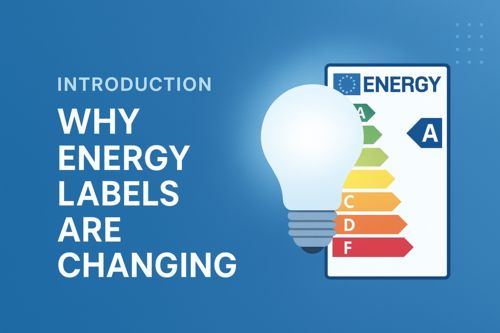
    Even small wattage differences compound significantly across large installations.
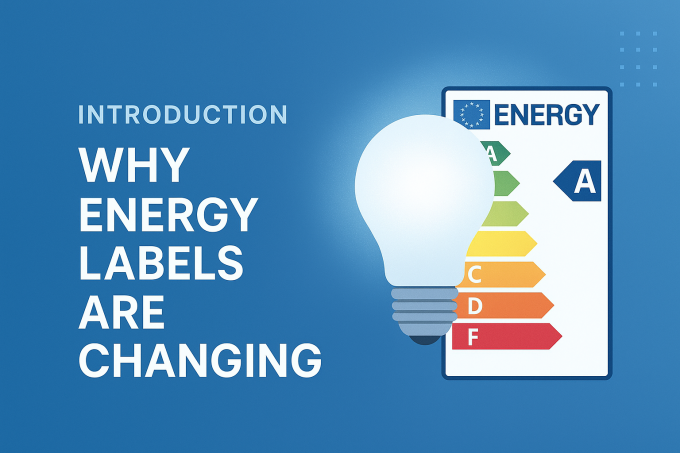
    Example:
    Replacing 1,000 halogen GU10 (50W) with 1,000 LED GU10 (5W):

    • Total wattage drop: 50,000W → 5,000W

    • Annual runtime: 10 hours/day

    • Annual electricity saved: ~164,250 kWh

    • CO₂ saved (global average grid): ~100 metric tons per year

    For corporate buyers, this directly impacts Scope 2 reduction initiatives.

    3.3 Transport (5–10%)

    Reducing shipment frequency, consolidating orders, and localizing final assembly can reduce transport-related emissions.

    3.4 End-of-Life (1–3%)

    LEDs do not contain mercury, making them safer than CFLs.
    However, drivers and electronics require responsible recycling.

    1. Major Factors Influencing LED Carbon Footprint in Real Projects

    Even the same wattage LED bulb can produce different carbon footprints depending on design and performance quality.

    The Carbon Footprint of LED Lighting: Understanding Impact and How to Reduce It  2

    4.1 Luminous Efficacy (lm/W)

    Higher efficiency means lower energy consumption.
    Top modern LEDs achieve:

    • Standard bulbs: 100–150 lm/W

    • Commercial luminaires: 120–180 lm/W

    For B2B buyers, efficacy is the most important spec driving carbon reduction.

    4.2 Driver Efficiency

    High-quality drivers waste less energy as heat.
    Driver efficiency range:

    • Poor quality: 75–80%

    • Mid-range: 85%

    • High quality: 90–95%

    An efficient driver reduces heat stress and improves longevity (fewer replacements → lower carbon).

    4.3 Thermal Management

    Poor thermal design leads to faster lumen depreciation and premature failure.
    Better heat sinks reduce:

    • Early color shift

    • Driver overheating

    • Warranty claims

    • Replacement emissions

    4.4 Dimming & Controls

    Smart controls lower energy usage by 20–60% via:

    • Occupancy sensors

    • Daylight harvesting

    • Scheduling

    • Adaptive dimming

    4.5 Lifetime & Real-World Reliability

    Rated lifetime is irrelevant if products fail prematurely.

    Poor QC increases carbon waste due to:

    • Replacements

    • Additional shipments

    • Extra manufacturing volume

    • Inconsistent CCT leading to replacement

    • Excess maintenance travel miles

    • Higher scrap rates in production

    High-reliability LEDs maintain carbon reductions for their entire lifecycle.

    How Businesses Can Reduce the Carbon Footprint of LED Lighting

    Here are practical steps for distributors, OEM/ODM buyers, and project planners to cut carbon impact while maintaining profitability.

    The Carbon Footprint of LED Lighting: Understanding Impact and How to Reduce It  3

    5.1 Choose LEDs with Verified Performance Data

    Look for products with:

    • LM-79 photometric reports

    • LM-80 + TM-21 lifetime projections

    • Flicker evaluation (Pst LM, SVM)

    • Power factor ≥ 0.9

    • High driver efficiency

    • Clear warranty transparency

    Cheap LEDs often have inflated specs or missing test data, masking hidden carbon costs.

    5.2 Prioritize Luminaires with Recyclable Aluminum and Low-Plastic Designs

    Aluminum heat-sinks are fully recyclable, while plastics contribute more to embodied carbon.

    Request:

    • Recycled aluminum content

    • Reduced polycarbonate volume

    • Replaceable LED modules/drivers

    Modular repairable designs drastically reduce e-waste.

    5.3 Optimize Lighting Layout Instead of Over-Lighting Spaces

    The biggest carbon waste in commercial lighting is overspecification.

    Use:

    • Beam angles appropriate for task lighting

    • High-efficacy luminaires to reduce quantity

    • Wall washing to improve perceived brightness

    • Lighting simulation (Dialux, Relux) to avoid excess fixtures

    A well-designed layout can cut fixture count by 20–40%.

    5.4 Implement Smart Controls in All Medium-to-Large Installations

    Controls have the highest ROI in carbon reduction.

    Applications:

    • Office open-plan areas

    • Hotel corridors and guest rooms

    • Underground parking structures

    • Retail window displays

    • Factories with variable operation hours

    Expect 20–60% energy reduction immediately.

    5.5 Source from Manufacturers with Strong Quality Control

    Weak QC increases carbon footprint via:

    • Early driver failures

    • Fast lumen depreciation

    • Inconsistent CCT leading to replacement

    • Excess maintenance travel miles

    • Higher scrap rates in production

    Ask your supplier for:

    • Incoming QC processes

    • Aging tests (8–12 hours standard)

    • Temperature/humidity validation

    • Driver stress testing

    • Batch traceability

    • EPREL (EU) or DLC/UL (US) compliance

    Better QC = lower long-term carbon waste.

    5.6 Ask for Carbon Transparency from Suppliers

    Leading manufacturers provide:

    • Material composition data

    • Energy usage per batch

    • ISO 14001 environmental management

    • Lifecycle assessment (LCA) reports

    • Recycled content percentages

    European buyers increasingly demand this for ESG reporting.

    1. Calculating LED Carbon Footprint in Real Projects (B2B Guide)

    For corporate lighting upgrades, carbon reporting usually includes:

    The Carbon Footprint of LED Lighting: Understanding Impact and How to Reduce It  4

    1. Total wattage before vs. after
    2. Expected annual usage hours
    3. Local or regional CO₂ per kWh
    4. Fixture replacement frequency
    5. Smart control savings

    Example (hotel project):
    300 guest rooms × 8 GU10 halogens → GU10 5W LEDs

    • Total halogen load: 300 × 8 × 50W = 120,000W

    • LED load: 12,000W

    • Annual runtime: 12h/day

    • Annual savings: ~472,000 kWh

    • CO₂ reduction (Europe grid average): ~188 metric tons/year

    This is equivalent to planting over 8,500 trees annually.

    The Future of Low-Carbon LED Lighting

    The next generation of sustainable lighting includes:

    7.1 Ultra-High Efficacy LEDs (200–230 lm/W)

    Reducing operational emissions even further.

    7.2 Driverless AC-LED Designs

    Lower component count, smaller PCB footprint, reduced material impact.

    7.3 Modular & Repairable Fixtures

    Extended product lifecycles = lower embodied carbon.

    7.4 Recycled Aluminum and Bio-Plastics

    Improving material circularity.

    7.5 Renewable-Energy LED Manufacturing

    Factories powered by solar/wind dramatically reduce embodied energy.

    7.6 Smart Building Integration

    AI-driven adaptive lighting systems that reduce unnecessary illumination.

    Conclusion: LEDs Are Low-Carbon—But Smart Choices Make Them Even Better

    LED lighting is already the most sustainable mainstream lighting technology.
    But true carbon reduction requires more than switching from halogen to LED.

    B2B buyers, distributors, and project designers can significantly cut carbon impact by choosing:

    • High-efficacy LEDs

    • Efficient drivers

    • Recyclable materials

    • Smart control strategies

    • Reliable manufacturers with strong QC

    • Modular or repairable luminaire designs

    Lighting isn’t just an operational expense—it’s a measurable part of every company’s ESG and sustainability story. A thoughtful LED procurement strategy can reduce both emissions and long-term costs while improving visual comfort and maintaining performance.

  • Voice-Controlled LED Lighting: Redefining Smart User Experience

    Voice-Controlled LED Lighting: Redefining Smart User Experience

    .gtr-container-vcl789 {
    font-family: Verdana, Helvetica, “Times New Roman”, Arial, sans-serif;
    color: #333;
    line-height: 1.6;
    padding: 15px;
    max-width: 100%;
    box-sizing: border-box;
    }

        .gtr-container-vcl789 .gtr-vcl789-main-title {
            font-size: 18px;
            font-weight: bold;
            margin-bottom: 1.5em;
            text-align: left;
            color: #0056b3;
        }
    
        .gtr-container-vcl789 .gtr-vcl789-section-title {
            font-size: 16px;
            font-weight: bold;
            margin-top: 2em;
            margin-bottom: 1em;
            text-align: left;
            color: #007bff;
        }
    
        .gtr-container-vcl789 .gtr-vcl789-subsection-title {
            font-size: 15px;
            font-weight: bold;
            margin-top: 1.5em;
            margin-bottom: 0.8em;
            text-align: left;
            color: #555;
        }
    
        .gtr-container-vcl789 p {
            font-size: 14px;
            margin-bottom: 1em;
            text-align: left !important;
            word-break: normal;
            overflow-wrap: break-word;
        }
    
        .gtr-container-vcl789 em {
            font-style: italic;
            color: #666;
        }
    
        .gtr-container-vcl789 .gtr-vcl789-divider {
            border-top: 1px solid #eee;
            margin: 2em 0;
        }
    
        .gtr-container-vcl789 ul {
            list-style: none !important;
            padding-left: 20px;
            margin-bottom: 1em;
        }
    
        .gtr-container-vcl789 ul li {
    position: relative;
            padding-left: 20px;
            margin-bottom: 0.5em;
            font-size: 14px;
            text-align: left;
    list-style: none !important;
    

    }

        .gtr-container-vcl789 ul li::before {
            content: "•" !important;
            position: absolute !important;
            left: 0 !important;
            color: #007bff;
            font-size: 1.2em;
            line-height: 1;
            top: 0.1em;
        }
    
        .gtr-container-vcl789 ol {
            list-style: none !important;
            padding-left: 25px;
            margin-bottom: 1em;
            counter-reset: list-item;
        }
    
        .gtr-container-vcl789 ol li {
    position: relative;
            padding-left: 25px;
            margin-bottom: 0.5em;
            font-size: 14px;
            text-align: left;
            counter-increment: none;
    list-style: none !important;
    

    }

        .gtr-container-vcl789 ol li::before {
            content: counter(list-item) "." !important;
            position: absolute !important;
            left: 0 !important;
            color: #333;
            font-weight: bold;
            width: 20px;
            text-align: right;
            line-height: 1;
            top: 0.1em;
        }
    
        .gtr-container-vcl789 p strong,
        .gtr-container-vcl789 li strong,
        .gtr-container-vcl789 .gtr-vcl789-subsection-title strong {
    font-weight: bold;
    list-style: none !important;
    

    }

        @media (min-width: 768px) {
            .gtr-container-vcl789 {
                padding: 30px 50px;
                max-width: 960px;
                margin: 0 auto;
            }
    
            .gtr-container-vcl789 .gtr-vcl789-main-title {
                font-size: 24px;
                margin-bottom: 2em;
            }
    
            .gtr-container-vcl789 .gtr-vcl789-section-title {
                font-size: 20px;
                margin-top: 2.5em;
                margin-bottom: 1.2em;
            }
    
            .gtr-container-vcl789 .gtr-vcl789-subsection-title {
                font-size: 18px;
                margin-top: 2em;
                margin-bottom: 1em;
            }
    
            .gtr-container-vcl789 p,
            .gtr-container-vcl789 ul li,
            .gtr-container-vcl789 ol li {
                font-size: 15px;
            }
        }
    

    Voice-Controlled LED Lighting: Redefining Smart User Experience

    Smart lighting has entered a new phase. What began as simple app-controlled bulbs has evolved into a voice-driven ecosystem where users interact with lighting through natural conversation—not interfaces. For B2B buyers, this shift is more than a consumer trend; it is a fundamental change in how lighting is deployed, managed, and experienced in residential, hospitality, commercial, and retail environments.

    Voice-controlled LED lighting is reshaping expectations for comfort, accessibility, and automation. It reduces friction for end users, simplifies facility management, and unlocks new value for distributors and OEM/ODM suppliers who want to differentiate their product lines. This article explores how voice-controlled LED technology works, what benefits it delivers, its integration challenges, and how businesses can adopt the trend strategically.

    Voice-Controlled LED Lighting: Redefining Smart User Experience  0

    Why Voice Control Matters in the Future of Smart Lighting

    End users no longer want to open apps, browse menus, or search through smartphone settings to adjust the lights. They want hands-free interactions—smooth, natural, intuitive.

    For professionals in lighting, the shift matters for three reasons:

    1) Human-centric control becomes the default

    • Voice removes barriers for elderly users, children, and guests unfamiliar with technology.

    • Lighting becomes immediate: “Alexa, brighten the living room to 60%.”

    • Environments respond to mood and tasks with minimal user effort.

    2) Strong demand from property developers & hospitality

    Hotels, rental apartments, and smart home developers want:

    • fewer physical switches

    • faster onboarding for tenants

    • reduced support tickets

    Voice control drastically increases perceived value at low marginal cost.

    3) Ecosystem partners influence brand competitiveness

    Products that integrate with Alexa, Google, Siri, or SmartThings enjoy:

    • higher acceptance during procurement

    • fewer returns caused by incompatibility

    • stronger long-term ecosystem loyalty

    For B2B buyers, compatibility ≠ luxury—it is now a requirement.

    How Voice-Controlled LED Lighting Works (Technical Overview)

    Voice-controlled LED bulbs rely on a combination of hardware and software layers. Understanding this framework helps distributors and OEM clients make informed sourcing decisions.

    2.1 Core Components

    • LED light source
      – High-efficiency SMD LEDs
      – Proper heat management to maintain lumen maintenance and color stability

    Smart driver + connectivity module
    – Wi-Fi, Bluetooth Mesh, or Zigbee
    – Often based on Tuya, Philips Hue, or proprietary chipsets

    • Cloud integration layer
      – Enables voice commands to translate into device actions
      – Handles synchronization, automation, and over-the-air updates

    Voice assistant platform
    – Amazon Alexa
    – Google Assistant
    – Apple Siri HomeKit
    – Samsung SmartThings

    Each component affects performance, latency, reliability, and long-term support.

    Supported Voice Ecosystems: What Buyers Must Know

    Not all voice-enabled light bulbs behave the same. Understanding each ecosystem helps B2B buyers prevent costly mismatches.

    3.1 Amazon Alexa

    • Widest global adoption

    • Seamless switching, dimming, color control

    • Strong support for routines and multi-device grouping

    • Preferred by rental homes and hospitality applications

    3.2 Google Assistant

    • Strong in smart home automation

    • Smooth control of brightness, CCT, and scenes

    • Often bundled in Android-based smart TVs (hotel rooms, apartments)

    3.3 Apple HomeKit / Siri

    • Most strict certification requirements

    • Best security architecture

    • Limited but growing adoption in premium homes and luxury hotels

    3.4 Samsung SmartThings

    • Popular for multi-device integrations and apartment projects

    • Strong in UAE, US, and South Korea

    B2B takeaway:

    Always confirm which ecosystem your buyers or partners require before selecting a connectivity platform. Certification leads times can reach 2–4 months.

    Key Benefits for B2B Customers

    Voice-controlled LED lighting is not just a consumer convenience—it has measurable commercial value.

    Benefit 1: Simplifying SKU Management

    One voice-enabled SKUs can replace:

    • standard LED bulbs

    • app-only smart bulbs

    • switch-dimmable bulbs

    This reduces warehouse pressure and eliminates inventory fragmentation.

    Example:
    A wholesaler supplying 200+ hotels consolidated 12 SKUs down to 4 by adopting a unified voice-compatible platform.

    Benefit 2: Enhanced User Satisfaction in Hospitality & Retail

    Guest experience improves significantly when lighting requires no onboarding.

    “Turn down the lights.”
    “Change the mood to warm.”
    “Set a romantic scene.”

    Hotels and rental properties use voice-controlled LEDs to:

    • reduce front-desk support

    • boost ratings on platforms like Booking/Airbnb

    • improve accessibility for international guests

    Benefit 3: Better Accessibility in Smart Living Spaces

    Voice lighting supports:

    • elderly residents

    • visually impaired users

    • mobility-limited individuals

    This aligns with global trends in “age-friendly housing” and government incentives for accessible technology.

    Benefit 4: Energy Efficiency Through Scheduling

    Voice platforms automate:

    • occupancy routines

    • time-based dimming

    • daylight compensation

    This reduces wasted energy in:

    • offices

    • retail stores

    • shared residential spaces

    Benefit 5: Upsell Potential for Distributors and OEMs

    Selling voice-controlled LEDs increases:

    • average order value

    • brand differentiation

    • cross-sell with smart plugs, sensors, and switches

    Smart lighting is among the highest-margin categories in many regions.

    Technology Considerations When Choosing Voice-Controlled LEDs

    Voice-Controlled LED Lighting: Redefining Smart User Experience  1

    For OEM/ODM clients and bulk procurement specialists, filtering products by performance is essential.

    5.1 Connectivity Type
    Wi-Fi

    • Most common

    • Best for small spaces

    • Higher bandwidth load

    Zigbee / Matter

    • More stable in multi-room or large buildings

    • Low failure rate

    • Excellent group control

    Bluetooth Mesh

    • Best for cost-sensitive applications

    • Works well for localized control systems

    5.2 Flicker & Dimming Performance

    Poor driver design = flicker complaints.

    Best-in-class LEDs use:

    • high-frequency PWM

    • constant current drivers

    • deep dimming down to 1–5%

    This is essential for:

    • filming environments

    • retail stores

    • offices

    • hospitality

    5.3 Color Accuracy and CCT Flexibility

    B2B buyers should focus on:

    • CRI 90 or higher

    • dedicated warm white LEDs (RGBW, RGBWW chips)

    • stable chromaticity over time

    Lighting with poor color mixing often causes:

    • washed-out whites

    • inconsistent tones

    • customer dissatisfaction

    5.4 Data Security and Privacy

    Enterprises must choose suppliers that support:

    • encrypted communication

    • GDPR-compliant cloud handling

    • over-the-air firmware updates

    • clear privacy policy

    Low-quality imports are the most vulnerable to cybersecurity flaws.

    Applications Across Industries

    Voice-Controlled LED Lighting: Redefining Smart User Experience  2

    Voice-controlled LED lighting is expanding beyond residential environments.

    Hospitality (Hotels, Airbnb, Serviced Apartments)
    Benefits:

    • Better guest reviews

    • Universal usability

    • Attractive “premium experience” for minimal investment

    Typical Use:

    • Bedside lamps

    • Accent lighting

    • Bathroom mirrors

    • Living room scenes

    Commercial Offices
    Benefits:

    • Hands-free control during meetings

    • Voice-activated scenes for presentations

    • Energy reduction through automation

    Retail Spaces
    Benefits:

    • Quick scene changes

    • Enhanced product presentation

    • Branding consistency across multiple stores

    Healthcare & Assisted Living
    Benefits:

    • Accessibility

    • Staff efficiency

    • Simplified night-time routines

    Common Challenges and How to Avoid Them

    Voice-Controlled LED Lighting: Redefining Smart User Experience  3

    1. Network Congestion

    Use Zigbee or Matter for projects with 50+ devices.

    2. Mixed Ecosystems

    Standardize on one protocol per project.

    3. User Training

    Place simple instruction cards in hotels or rentals.

    4. Inconsistent Firmware

    Choose brands with:

    • OTA updates

    • transparent version control

    • regular maintenance

    5. Compatibility Misunderstandings

    Always confirm platform certification:
    “Works with Alexa / Google / Siri / SmartThings.”

    Why Distributors and OEM Clients Should Invest in Voice-Controlled LED Platforms

    Voice-Controlled LED Lighting: Redefining Smart User Experience  4

    Voice control is not a trend—it is becoming the default UI for smart homes and smart buildings.

    Investing early allows distributors and OEM clients to:

    • future-proof their product catalog

    • partner with ecosystem leaders

    • build long-term recurring customers

    • reduce churn and returns

    • sell value, not just price

    In competitive lighting markets, ecosystems drive loyalty more than wattage or price ever will.

    Conclusion

    Voice-controlled LED lighting represents the next frontier of user-centered illumination. For B2B customers—whether wholesalers, retailers, project contractors, or OEM/ODM brands—the opportunity is substantial. These systems elevate user experience, reduce operational complexities, and enable scalable smart-lighting deployments.

    Lighting is no longer passive infrastructure. With voice control, it becomes responsive, intuitive, and integral to the modern smart environment.

    Businesses that adapt early will lead the next wave of smart lighting adoption across regions and industries.

  • Architectural Lighting Design with Shadows: Mastering Light Contrast through LED Spotlights

    Architectural Lighting Design with Shadows: Mastering Light Contrast through LED Spotlights

    /* Unique root class for encapsulation /
    .gtr-container-7f8d9e {
    font-family: Verdana, Helvetica, “Times New Roman”, Arial, sans-serif;
    color: #333;
    line-height: 1.6;
    padding: 20px;
    max-width: 100%;
    box-sizing: border-box;
    overflow-x: hidden; /
    Prevent horizontal scroll from padding on small screens */
    }

    /* Typography */
    .gtr-container-7f8d9e p {
        font-size: 14px;
        margin-bottom: 1em;
        text-align: left !important;
        word-break: normal; /* Ensure words don't break unnaturally */
        overflow-wrap: normal;
    }
    
    .gtr-container-7f8d9e em {
        font-style: italic;
        color: #555;
    }
    
    .gtr-container-7f8d9e strong {
        font-weight: bold;
        color: #222;
    }
    
    /* Custom Titles - replacing h1, h3 */
    .gtr-container-7f8d9e .gtr-main-title {
        font-size: 18px; /* Max 18px for titles */
        font-weight: bold;
        margin-bottom: 15px;
        color: #0056b3; /* A professional blue for main title */
        text-align: left;
    }
    
    .gtr-container-7f8d9e .gtr-section-heading {
        font-size: 18px; /* Max 18px for titles */
        font-weight: bold;
        margin-top: 30px;
        margin-bottom: 15px;
        color: #0056b3;
        text-align: left;
    }
    
    .gtr-container-7f8d9e .gtr-subsection-heading {
        font-size: 16px; /* Slightly smaller than section heading */
        font-weight: bold;
        margin-top: 25px;
        margin-bottom: 10px;
        color: #333;
        text-align: left;
    }
    
    /* Dividers - replacing hr */
    .gtr-container-7f8d9e .gtr-divider {
        border: none;
        border-top: 1px solid #eee;
        margin: 30px 0;
    }
    
    /* Lists */
    .gtr-container-7f8d9e ul,
    .gtr-container-7f8d9e ol {
        margin: 0 0 1em 0;
        padding: 0;
        list-style: none !important; /* Remove default list style */
    }
    
    .gtr-container-7f8d9e li {
    font-size: 14px;
        margin-bottom: 0.5em;
        padding-left: 20px; /* Space for custom marker */
        position: relative;
        text-align: left !important;
    list-style: none !important;
    

    }

    /* Unordered list custom marker */
    .gtr-container-7f8d9e ul li::before {
        content: "•" !important;
        color: #0056b3; /* Custom bullet color */
        font-size: 1.2em;
        position: absolute !important;
        left: 0 !important;
        top: 0;
        line-height: inherit;
    }
    
    /* Ordered list custom marker */
    .gtr-container-7f8d9e ol li {
    counter-reset: none !important; /* Ensure counter resets correctly */
        counter-increment: none; /* Increment for each list item */
    list-style: none !important;
    

    }

    .gtr-container-7f8d9e ol li::before {
        content: counter(list-item) "." !important;
        color: #0056b3; /* Custom number color */
        font-weight: bold;
        position: absolute !important;
        left: 0 !important;
        top: 0;
        width: 18px; /* Fixed width for alignment */
        text-align: right;
        line-height: inherit;
    }
    
    /* Responsive adjustments */
    @media (min-width: 768px) {
        .gtr-container-7f8d9e {
            padding: 40px;
            max-width: 960px; /* Max width for PC for better readability */
            margin: 0 auto; /* Center the component */
        }
    
        .gtr-container-7f8d9e .gtr-main-title {
            font-size: 24px; /* Slightly larger for PC */
            margin-bottom: 20px;
        }
    
        .gtr-container-7f8d9e .gtr-section-heading {
            font-size: 20px; /* Slightly larger for PC */
            margin-top: 40px;
            margin-bottom: 20px;
        }
    
        .gtr-container-7f8d9e .gtr-subsection-heading {
            font-size: 18px; /* Slightly larger for PC */
            margin-top: 30px;
            margin-bottom: 15px;
        }
    
        .gtr-container-7f8d9e p,
        .gtr-container-7f8d9e li {
            font-size: 15px; /* Slightly larger for PC */
        }
    }
    

    Architectural Lighting Design with Shadows: Mastering Light Contrast through LED Spotlights

    How modern LEDs shape depth, drama, and visual hierarchy in architectural spaces

    Architectural spaces are defined not only by materials and geometry, but by how light interacts with them. And among all lighting techniques, shadows are the most underestimated design tool. When controlled well, shadows bring depth, guide attention, reveal texture, and elevate spaces from “lit” to “designed.”

    Today, LED spotlights—with precise beam angles, advanced optics, and high CRI performance—give lighting designers unprecedented control over contrast and shadow modeling. This article unpacks how shadows work, how LED technology shapes them, and how professionals can use contrast to create premium architectural experiences.

    Why Shadows Matter in Architectural Lighting

    Many lighting plans focus on lux levels, but lux alone cannot create atmosphere. Shadows create hierarchy and meaning.

    What shadows contribute to a space

    • Depth: Objects appear dimensional, not flat

    • Texture definition: Stone, concrete, fabric, and wood gain tactile presence

    • Visual hierarchy: Light draws attention; shadow reduces noise

    • Mood & drama: Contrast shapes emotional tone

    • Architectural storytelling: Highlights structure, recesses, rhythm

    Without shadows, spaces feel flat, overlit, and without identity. With controlled shadowing, the same space feels curated and intentional.

    The Science Behind Shadows: How Light Behaves

    Architectural Lighting Design with Shadows: Mastering Light Contrast through LED Spotlights  0

    To design shadows, you must understand the physics.

    1. Beam angle determines shadow sharpness

    • Narrow beams (10°–15°):
      Produce high-contrast, crisp-edged shadows
      Ideal for sculptures, textured walls, feature elements

    Medium beams (24°–36°):
    Balanced shadows, softer edges
    Good for living rooms, hotel lobbies, retail highlights

    • Wide beams (60°–120°):
      Minimal shadows; used for ambient illumination

    2. Distance affects shadow scale

    • Close to an object → small, sharp shadow

    • Far from an object → larger, softer shadow

    3. Surface texture changes shadow clarity

    • Smooth marble: crisp shadow edges

    • Wood grain: shadows reveal depth in the texture

    • Concrete: creates organic shadow gradients

    • Fabric: absorbs edges and reduces contrast

    4. Reflectance of materials

    Higher reflectance = weaker shadows
    Lower reflectance = stronger shadows

    Examples:

    • White wall → subtle shadows

    • Grey/stone wall → medium contrast

    • Dark textured wall → dramatic shadows

    5. CCT & CRI influence the emotional tone

    • 2700–3000K: warm and intimate shadow gradients

    • 3500K: neutral commercial tone

    • 4000–5000K: crisp, high-definition shadows

    • CRI ≥ 90: accurate detailing on materials

    How LED Spotlights Transform Shadow Control

    Architectural Lighting Design with Shadows: Mastering Light Contrast through LED Spotlights  1

    Traditional halogen spotlights created beautiful shadows but lacked consistency and efficiency. LEDs now outperform them through optical precision and stability.

    1. Precise LED optics

    Modern LEDs use:

    • TIR lenses

    • Hybrid reflectors

    • Faceted optical cups

    These deliver:

    • Tight beam tolerance (
  • Energy Label 2.0: Understanding the New Efficiency Standards for Light

    Energy Label 2.0: Understanding the New Efficiency Standards for Light

    /* Unique root container for style isolation */
    .gtr-container-e7f8g9h0 {
    font-family: Verdana, Helvetica, “Times New Roman”, Arial, sans-serif;
    color: #333;
    line-height: 1.6;
    padding: 20px;
    max-width: 960px;
    margin: 0 auto;
    box-sizing: border-box;
    }

    /* Typography and Text Alignment */
    .gtr-container-e7f8g9h0 p {
        font-size: 14px;
        margin-bottom: 1em;
        text-align: left !important;
    }
    
    .gtr-container-e7f8g9h0 strong {
        font-weight: bold;
    }
    
    .gtr-container-e7f8g9h0 em {
        font-style: italic;
    }
    
    .gtr-container-e7f8g9h0 a {
        color: #007bff;
        text-decoration: none;
    }
    
    .gtr-container-e7f8g9h0 a:hover {
        text-decoration: underline;
    }
    
    /* Headings */
    .gtr-container-e7f8g9h0 .gtr-main-title {
        font-size: 18px;
        font-weight: bold;
        margin-bottom: 1.5em;
        color: #0056b3;
        text-align: left;
    }
    
    .gtr-container-e7f8g9h0 .gtr-section-title {
        font-size: 18px;
        font-weight: bold;
        margin-top: 2em;
        margin-bottom: 1em;
        color: #0056b3;
        text-align: left;
    }
    
    .gtr-container-e7f8g9h0 .gtr-subsection-title {
        font-size: 16px;
        font-weight: bold;
        margin-top: 1.5em;
        margin-bottom: 0.8em;
        color: #0056b3;
        text-align: left;
    }
    
    /* Separator */
    .gtr-container-e7f8g9h0 .gtr-separator {
        border: none;
        border-top: 1px solid #eee;
        margin: 2em 0;
    }
    
    /* Blockquote */
    .gtr-container-e7f8g9h0 blockquote {
        border-left: 4px solid #007bff;
        padding: 10px 20px;
        margin: 1.5em 0;
        background-color: #f8f9fa;
        font-style: italic;
        color: #555;
    }
    
    /* Tables */
    .gtr-container-e7f8g9h0 .gtr-table-wrapper {
        width: 100%;
        overflow-x: auto;
        margin: 1.5em 0;
    }
    
    .gtr-container-e7f8g9h0 table {
        width: 100%;
        border-collapse: collapse !important;
        border-spacing: 0 !important;
        margin: 0 !important;
        font-size: 14px;
        min-width: 600px; /* Ensure horizontal scroll on small screens if content is wide */
    }
    
    .gtr-container-e7f8g9h0 th,
    .gtr-container-e7f8g9h0 td {
        border: 1px solid #ccc !important;
        padding: 10px !important;
        text-align: left !important;
        vertical-align: top !important;
        word-break: normal; /* Prevent breaking words */
        overflow-wrap: normal; /* Prevent breaking words */
    }
    
    .gtr-container-e7f8g9h0 th {
        font-weight: bold !important;
        background-color: #e9ecef;
        color: #333;
    }
    
    .gtr-container-e7f8g9h0 tbody tr:nth-child(even) {
        background-color: #f2f2f2;
    }
    
    /* Lists */
    .gtr-container-e7f8g9h0 ul,
    .gtr-container-e7f8g9h0 ol {
        list-style: none !important;
        padding-left: 0;
        margin-left: 0;
        margin-bottom: 1em;
    }
    
    .gtr-container-e7f8g9h0 li {
    position: relative;
        padding-left: 25px;
        margin-bottom: 0.5em;
        text-align: left;
    list-style: none !important;
    

    }

    .gtr-container-e7f8g9h0 ul li::before {
        content: "•" !important;
        position: absolute !important;
        left: 0 !important;
        color: #007bff;
        font-size: 1.2em;
        line-height: 1;
        top: 0;
    }
    
    .gtr-container-e7f8g9h0 ol li::before {
        content: counter(list-item) "." !important;
        position: absolute !important;
        left: 0 !important;
        width: 20px;
        text-align: right;
        color: #007bff;
        font-weight: bold;
        top: 0;
    }
    
    /* Call to Action */
    .gtr-container-e7f8g9h0 .gtr-call-to-action {
        margin-top: 2em;
        padding: 20px;
        border: 1px solid #007bff;
        text-align: center;
        background-color: #eaf5ff;
    }
    
    .gtr-container-e7f8g9h0 .gtr-call-to-action p {
        margin-bottom: 1em;
    }
    
    .gtr-container-e7f8g9h0 .gtr-call-to-action .gtr-button {
        display: inline-block;
        padding: 10px 20px;
        background-color: #007bff;
        color: #fff;
        text-decoration: none;
        border-radius: 4px;
        font-weight: bold;
        transition: background-color 0.3s ease;
    }
    
    .gtr-container-e7f8g9h0 .gtr-call-to-action .gtr-button:hover {
        background-color: #0056b3;
        text-decoration: none;
    }
    
    /* Responsive adjustments for PC */
    @media (min-width: 768px) {
        .gtr-container-e7f8g9h0 {
            padding: 40px;
        }
    
        .gtr-container-e7f8g9h0 .gtr-main-title {
            font-size: 24px;
        }
    
        .gtr-container-e7f8g9h0 .gtr-section-title {
            font-size: 20px;
        }
    
        .gtr-container-e7f8g9h0 .gtr-subsection-title {
            font-size: 18px;
        }
    
        .gtr-container-e7f8g9h0 table {
            min-width: auto; /* Allow table to shrink if content fits */
        }
    }
    

    Introduction: Why Energy Labels Are Changing

    Energy Label 2.0: Understanding the New Efficiency Standards for Light  0

    In 2021, the European Union introduced a major revision to its energy labeling system for lighting products — commonly known as Energy Label 2.0. This update, which officially came into force under Regulation (EU) 2019/2015 and Delegated Regulation (EU) 2019/2015, completely reshaped how energy efficiency is measured and displayed on lighting products sold in Europe.

    For B2B lighting manufacturers, importers, and distributors, understanding Energy Label 2.0 isn’t just a compliance issue — it’s a competitive advantage. The new framework rewards true efficiency, transparency, and innovation.

    If you manufacture or distribute GU10, MR16, or AR111 LED bulbs, these changes directly affect how your products are tested, labeled, and marketed across the EU and U.K.

    What Is Energy Label 2.0?

    Energy Label 2.0 is the new version of the EU energy efficiency label designed to help consumers and professionals compare products more easily. The key change is a return to the simple A–G scale, removing the confusing “A++” and “A+++” grades introduced under the previous directive.

    “The rescaled label will leave the top A class empty at first to encourage further technological progress,” explains the European Commission (source).

    The update applies to all light sources placed on the EU market — including LED bulbs, integrated luminaires, and spotlights.

    Why the Change?

    Between 2010 and 2020, LED technology improved dramatically. Most modern LEDs achieved A+ or A++ ratings under the old system, leaving little room for differentiation. As a result, the label lost its usefulness to both buyers and policymakers.

    Energy Label 2.0 aims to:

    • Rebalance efficiency ratings to reflect current LED performance.

    • Promote innovation by reserving Class A for future products.

    • Simplify consumer understanding of energy efficiency.

    • Enhance transparency with scannable QR codes linking to official product data.

    This reform aligns lighting with the EU’s broader sustainability goals under the European Green Deal and Ecodesign Directive.

    The New A–G Efficiency Scale

    The new label uses a linear energy efficiency index (EEI) to calculate a lamp’s performance based on luminous flux (lumens) and power input (watts).

    Class Efficiency Index (EEI) Description Example (typical LED)
    A EEI < 0.10 Best available tech (future-proof) Very few products (top 1–2 %)
    B 0.10 ≤ EEI < 0.125 Excellent efficiency Premium LED modules
    C 0.125 ≤ EEI < 0.150 Above average Most current high-quality LEDs
    D 0.150 ≤ EEI < 0.200 Average efficiency Mid-range LEDs
    E–G EEI ≥ 0.200 Low efficiency Legacy products, CFLs, halogens

    According to the LightingEurope position paper (2021), “A luminaire that was previously A++ might now fall into Class C under the new scale.” (LightingEurope)

    This doesn’t mean the product became less efficient — the scale was tightened to future-proof the labeling system.

    QR Codes and the EPREL Database

    One of the most visible changes under Energy Label 2.0 is the QR code printed on every packaging label. Scanning this code links directly to the product’s technical file stored in the European Product Registry for Energy Labelling (EPREL).

    The EPREL database provides:

    • Verified energy performance data (luminous flux, lifetime, CRI, power factor, etc.)

    • Regulatory documentation and testing results.

    • Traceability for authorities and B2B buyers.

    Manufacturers are legally required to upload this data before placing the product on the EU market.
    (European Commission EPREL portal)

    This transparency benefits both compliance officers and procurement teams, who can now verify efficiency claims directly from the EU’s official registry.

    Impact on Common LED Bulb Types (GU10, MR16, AR111)

    The most common LED retrofit bulbs — GU10, MR16, and AR111 — are heavily affected by the rescale. Under the new system, even premium bulbs that achieved A++ ratings previously may now appear as Class C or D.

    Bulb Type Typical Power (W) Luminous Flux (lm) Typical New Rating Old Rating Equivalent
    GU10 5 W LED 5 W 350–400 lm Class C–D A++
    MR16 6 W LED 6 W 450–500 lm Class C A+
    AR111 15 W LED 15 W 1,200–1,500 lm Class B–C A++

    (Data compiled from product listings of Signify, Osram, and Tecolite sample tests, 2024.)

    This “downgrading” can surprise buyers if not properly communicated. It’s essential for brands to educate customers that the new label doesn’t mean poorer performance — it reflects the stricter 2021 standards.

    Testing and Compliance: What Manufacturers Need to Do

    To comply with Energy Label 2.0, manufacturers and importers must perform the following steps before launching or re-certifying products:

    • Test the product using harmonized standards such as EN 15193-1 and IEC 62612 for LED lamps.

    Calculate the EEI based on total power and measured light output.

    • Register the product in the EPREL database and upload supporting test data.

    Print the new label with:

    A–G rating

    • QR code

    • Energy consumption per 1,000 hours (kWh/1000 h)

    Remove outdated labels (A+++, A++, A+) from packaging or websites after the transition deadline.

    The European Commission set the transition period to end in March 2023, after which non-compliant labels are prohibited. (European Commission, 2023 guidance)

    Broader Market Implications for B2B Buyers

    For distributors and project specifiers, Energy Label 2.0 brings greater clarity — but also a need to retrain sales teams and update catalogs.

    Key Business Impacts

    • Product portfolio alignment: Some SKUs may need retesting or redesign to reach Class B or C.

    • Marketing updates: Visual labels and datasheets must be refreshed to avoid misleading efficiency claims.

    • Procurement transparency: Buyers can verify claims through EPREL, fostering fair competition.

    • Market differentiation: Brands with higher-class LEDs (Class B or better) will stand out.

    • End-user confidence: Clearer, simpler labels help reduce confusion and improve purchase trust.

    EU Ecodesign Requirements Working Alongside Label 2.0

    Energy Label 2.0 works hand-in-hand with the Ecodesign Regulation (EU 2019/2020), which defines minimum performance thresholds for products to enter the EU market.

    This regulation sets requirements on:

    • Efficacy (lm/W)

    • Power factor

    • Lifetime (L70 ≥ 50,000 h typical)

    • Flicker and stroboscopic effects

    • Standby and network power consumption

    According to the European Commission, these combined measures will “save the equivalent of 150 TWh of electricity annually by 2030 — roughly equal to the annual consumption of Sweden.” (EU Commission energy efficiency statement, 2021)

    This underscores the strategic intent: energy labels are not just marketing tools, but policy instruments driving measurable reductions in energy use and emissions.

    Comparing Old vs. New Label Design

    Feature Old Label (pre-2021) New Label (Energy Label 2.0)
    Rating Scale A+++ to E A to G
    Database Connection None Linked via QR to EPREL
    Information Format Luminous flux & power Luminous flux, power, energy consumption per 1,000 h
    Scope Lamps & luminaires separately All light sources combined
    Purpose Promote efficiency Simplify understanding & drive innovation

    New labels must follow a standardized format and include a QR code on the top right corner, an A–G bar scale, and energy usage metrics below.

    How Tecolite and Other Manufacturers Are Adapting

    At Tecolite, as a specialized LED bulb manufacturer focused on GU10, MR16, and AR111 product lines, adapting to the new standard meant re-engineering optical and electrical designs to achieve higher efficacy per watt while maintaining color quality (CRI ≥ 90) and beam precision.

    Key initiatives include:

    • Upgrading driver ICs for >90% efficiency and lower thermal loss.

    • Optimizing aluminum and ceramic housings to enhance heat dissipation (reducing junction temperature by 8–10 °C).

    • Conducting independent photometric testing under accredited EN IEC 62612 labs.

    • Registering all models under EPREL, ensuring transparency and traceability for European distributors.

    By taking these steps early, Tecolite ensures full compliance and strengthens its position as a trusted OEM partner for energy-efficient lighting.

    Practical Tips for Distributors and OEM Buyers

    If you distribute or private-label LED bulbs, here’s what you should do:

    • Verify EPREL entries: Check the QR code and verify your supplier’s registration.

    • Align marketing materials: Ensure packaging, datasheets, and website visuals display the correct A–G label.

    • Reassess your portfolio: Prioritize bulbs rated Class B or C to stay competitive in tenders and green-procurement programs.

    • Educate your customers: Train sales reps and installers to explain that “C” today is equivalent to “A++” before.

    • Leverage sustainability messaging: Highlight reduced lifecycle cost and environmental impact in your proposals.

    The U.K. Perspective

    Post-Brexit, the United Kingdom retained a version of the EU energy label, now branded as the UK Energy Label, governed by the Department for Energy Security and Net Zero (DESNZ).

    While the framework mirrors the EU’s system, products must be registered in the UK Energy Label Service (UKEL) database rather than EPREL.
    (UK Government Energy Labelling Guidance)

    Manufacturers selling into both regions must therefore maintain two databases and ensure labeling accuracy for each market.

    Looking Ahead: The Future of Energy Efficiency in Lighting

    The next decade will bring further tightening of standards as LEDs approach theoretical efficiency limits. The European Commission plans to review the label thresholds every 10 years, adjusting the criteria as technology evolves.

    Emerging trends include:

    • Adaptive lighting systems that optimize energy use dynamically.

    • Smart control integration measured under real-use conditions.

    • Circular economy design, emphasizing repairability and recyclability.

    • Environmental footprint labeling beyond energy metrics (material content, CO₂ lifecycle).

    For lighting manufacturers, continuous improvement and transparency will remain central to brand value.

    Conclusion: Energy Label 2.0 as an Opportunity, Not a Burden

    Energy Label 2.0 reshapes how the lighting industry communicates performance and sustainability. While the transition requires effort — from testing to packaging redesign — it ultimately benefits quality-focused manufacturers and informed buyers.

    For professional distributors and OEM clients, partnering with a manufacturer that proactively complies and invests in R&D ensures regulatory peace of mind, competitive product ratings, and long-term trust in the marketplace.

    Call to Action

    At Tecolite, we specialize in producing high-performance GU10, MR16, and AR111 LED bulbs engineered to meet the latest Energy Label 2.0 and Ecodesign standards.

    If you’re a distributor, OEM brand, or project contractor seeking EPREL-registered, high-efficiency lighting solutions with customizable specifications, contact our technical sales team today.

    Visit tecolite.com to explore our professional LED product lines and discover how Tecolite can power your next sustainable lighting project.