/* Unique root container for style isolation */
.gtr-container-ledcomp123 {
font-family: Verdana, Helvetica, “Times New Roman”, Arial, sans-serif;
color: #333;
line-height: 1.6;
padding: 16px;
max-width: 100%;
box-sizing: border-box;
}
.gtr-container-ledcomp123 p {
    margin-bottom: 1em;
    text-align: left !important;
    font-size: 14px;
}

.gtr-container-ledcomp123 .gtr-main-title {
    font-size: 18px;
    font-weight: bold;
    margin-bottom: 1.5em;
    color: #0056b3;
    text-align: left;
}

.gtr-container-ledcomp123 .gtr-section-title {
    font-size: 18px;
    font-weight: bold;
    margin-top: 2em;
    margin-bottom: 1em;
    color: #0056b3;
    text-align: left;
}

.gtr-container-ledcomp123 .gtr-subsection-title {
    font-size: 16px;
    font-weight: bold;
    margin-top: 1.5em;
    margin-bottom: 0.8em;
    color: #007bff;
    text-align: left;
}

.gtr-container-ledcomp123 .gtr-sub-subsection-title {
    font-size: 14px;
    font-weight: bold;
    margin-top: 1em;
    margin-bottom: 0.5em;
    color: #555;
    text-align: left;
}

.gtr-container-ledcomp123 hr {
    border: none;
    border-top: 1px solid #e0e0e0;
    margin: 2em 0;
}

.gtr-container-ledcomp123 img {
    max-width: 100%;
    height: auto;
    display: block;
    margin: 1.5em auto;
}

.gtr-container-ledcomp123 ul {
    list-style: none !important;
    padding-left: 0;
    margin-left: 0;
    margin-bottom: 1em;
}

.gtr-container-ledcomp123 ul li {
position: relative;
    padding-left: 20px;
    margin-bottom: 0.5em;
    font-size: 14px;
    text-align: left;
list-style: none !important;
}
.gtr-container-ledcomp123 ul li::before {
content: "â¢" !important;
position: absolute !important;
left: 0 !important;
color: #007bff;
font-size: 1.2em;
line-height: 1;
}
.gtr-container-ledcomp123 ol {
list-style: none !important;
padding-left: 0;
margin-left: 0;
margin-bottom: 1em;
counter-reset: list-item;
}
.gtr-container-ledcomp123 ol li {
position: relative;
padding-left: 25px;
margin-bottom: 0.5em;
font-size: 14px;
text-align: left;
counter-increment: none;
list-style: none !important;
}
.gtr-container-ledcomp123 ol li::before {
    content: counter(list-item) "." !important;
    position: absolute !important;
    left: 0 !important;
    color: #007bff;
    font-weight: bold;
    width: 20px;
    text-align: right;
}

.gtr-container-ledcomp123 .gtr-table-wrapper {
    overflow-x: auto;
    margin-bottom: 1.5em;
}

.gtr-container-ledcomp123 table {
    width: 100%;
    border-collapse: collapse !important;
    border-spacing: 0 !important;
    margin: 0;
    font-size: 14px;
    min-width: 600px;
}

.gtr-container-ledcomp123 th,
.gtr-container-ledcomp123 td {
    border: 1px solid #ccc !important;
    padding: 10px 12px !important;
    text-align: left !important;
    vertical-align: top !important;
    word-break: normal;
    overflow-wrap: normal;
}

.gtr-container-ledcomp123 th {
    background-color: #f0f0f0;
    font-weight: bold !important;
    color: #333;
}

.gtr-container-ledcomp123 tbody tr:nth-child(even) {
    background-color: #f9f9f9;
}

@media (min-width: 768px) {
    .gtr-container-ledcomp123 {
        padding: 24px 40px;
    }

    .gtr-container-ledcomp123 .gtr-main-title {
        font-size: 18px;
    }

    .gtr-container-ledcomp123 .gtr-section-title {
        font-size: 18px;
    }

    .gtr-container-ledcomp123 .gtr-subsection-title {
        font-size: 16px;
    }

    .gtr-container-ledcomp123 .gtr-sub-subsection-title {
        font-size: 14px;
    }

    .gtr-container-ledcomp123 table {
        min-width: auto;
    }

    .gtr-container-ledcomp123 .gtr-table-wrapper {
        overflow-x: visible;
    }
}
EU Eco-Design Directive: What LED Manufacturers Need to Know in 2025
Manufacturers across Asia and Europe are running against the clock. The European Union is entering a new regulatory phase, and the lighting category is one of the most tightly monitored segments under Ecodesign, Energy Labelling and EPREL.
If you produce LED lamps or luminaires—and you plan to sell in the EU—meeting the updated requirements is no longer optional. Efficiency, flicker, lifetime, repairability and transparent documentation are now part of your market access passport.
This guide explains what matters, what has changed, and how LED manufacturers can stay fully compliant while improving product quality and winning more B2B customers.
Introduction — Why Ecodesign Matters More Than Ever
The lighting industry is shifting quickly. Energy prices remain volatile, cities demand longer-lasting products, and buyers expect transparency far beyond the wattage and lumen numbers on a box. The EU Ecodesign and Energy Labelling rules serve one purpose: to ensure every light source sold in the region is efficient, durable, safe and responsibly documented.
For LED manufacturers, this means the bar is rising:
- Higher efficiency expectations
-
Stricter flicker control (Pst LM & SVM)
-
Better thermal, electronic and optical stability
-
Mandatory EPREL registration
-
Proven lifetime claims (L70/Bxx/Cx)
-
Repairability and material-efficiency requirements
-
Complete CE technical documentation
The days of “LED = compliant by default” are long gone. The EU now evaluates performance and documentation just as seriously.
What Exactly Is the EU Ecodesign Directive?
The Ecodesign Directive (2009/125/EC) is the EU’s master framework for energy-related products. For lighting, it defines:
â Minimum performance thresholds
(luminous efficacy, power factor, THD, flicker, standby power)
â Information obligations
(datasheets, EPREL data, lifetime declarations)
â Material efficiency
(repairability, replaceable parts, disassembly)
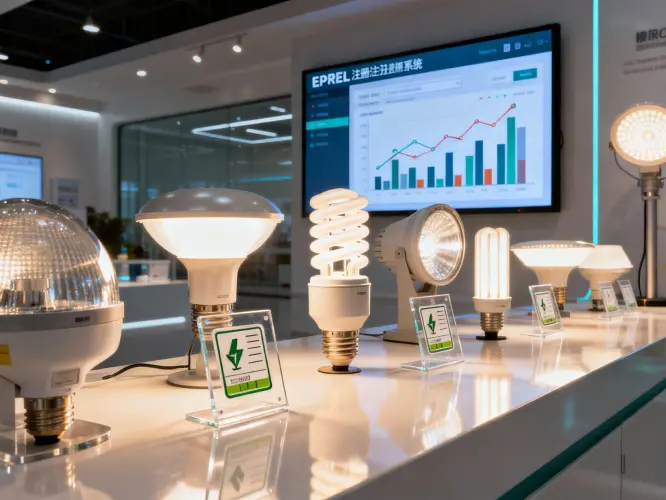
Ecodesign works alongside:
Energy Labelling Regulation
Defines A–G efficiency classes and how they are measured.
EPREL (EU Product Registry for Energy Labelling)
All LED products must be registered with accurate data before entering the EU market.
CE Marking Requirements
Every manufacturer must maintain a complete technical file, supported by accredited test reports.
Together, these form the backbone of LED compliance.
Core Requirements for LED Products (Current Rules)
To be compliant today, LED manufacturers must meet these essential criteria:
2.1 Efficiency
- Minimum luminous efficacy depending on product type
-
Measured per LM-79 standards
-
Efficiency includes driver losses, not just LED chip output
2.2 Flicker Performance
Many LED failures in recent years stem from flicker issues. Ecodesign sets limits using industry-adopted metrics:
- Pst LM ≤ 1.0 (short-term flicker)
-
SVM ≤ 0.4 (stroboscopic effect threshold)
These must hold across dimming ranges and under various power conditions.
2.3 Lifetime Claims (L70/Bxx/Cx)
Manufacturers must declare:
- L70 (time until lumen output drops to 70%)
-
Bxx (percentage of units allowed to fail)
-
Cz (catastrophic failure rate)
These must be supported by TM-21 projections using LM-80 data, not estimates.
2.4 Standby & Networked Standby
- ≤ 0.5W for standard products
-
lower ceilings coming for smart/connected devices
2.5 Replaceability & Repairability
This is a growing focus:
- Replaceable drivers
-
Replaceable control boards
-
Accessible screws (not sealed glue)
-
7-year spare part availability recommended
This aligns with Circular Economy rules.
2025 Updates — What Will Change?
The EU has signaled several directions for tightening rules. While final text may vary, patterns are clear.
3.1 Stricter Flicker Enforcement
The biggest focus area remains:
- verifying Pst LM/SVM across more dimming types
-
validating behavior at “edge conditions” (low currents, PWM modes)
3.2 Stronger EPREL Data Validation
EPREL entries must:
- match datasheets
-
match packaging
-
match DoC and CE files
Discrepancies increasingly trigger market surveillance audits.
3.3 Repairability & Material Efficiency
Upcoming updates emphasize:
- modular drivers
-
disassembly instructions
-
longer spare-part availability
-
clearer reporting in EPREL
3.4 Standby Power Reduction for Smart LEDs
Connected luminaires may face reduced standby budgets to curb energy waste.
3.5 More Transparent Lifetime Claims
The EU will push for:
- harmonized lifetime tolerances
-
stricter justification of L70/Bxx/Cx
-
standardized datasheet structures
Why These Regulations Matter for Manufacturers
Regulation shouldn’t be seen as a burden—it is a competitive advantage when handled well.
Market Access
If your product is not compliant, it cannot legally enter the EU, even if the buyer wants it.
Lower Warranty Costs
Better drivers, stable electronics, and controlled thermal design cut failure rates dramatically.
Stronger Brand Trust
Buyers now prefer suppliers who provide:
- clear test reports
-
transparent EPREL entries
-
traceable documentation
Being compliant → winning tenders, retailers, and public sector customers.
EPREL: What Manufacturers Must Do
EPREL is no longer a formality—it is your public performance profile.
You must register:
- performance values
-
efficiency class
-
flicker metrics
-
lifetime declarations
-
product images
-
technical parameters
-
product variants
-
correction factors
Common EPREL Mistakes
| Issue | Impact |
|---|---|
| Wrong lumen/wattage pairing | Rejection / audit |
| Datasheet ≠ EPREL values | Non-compliance |
| Missing lifetime data | High audit risk |
| Variant mismatches | Product removal |
| Incorrect standby values | Penalties |
Tip: Create a single source of truth for all product data to ensure consistency.
Step-by-Step Compliance Roadmap for LED Manufacturers
6.1 Scope & Requirements
Define product type, application, variants, and target markets.
6.2 Engineering Design Targets
Set internal design targets above minimums:
- LM/W margin
-
Flicker margin
-
Thermal stability margin
6.3 Pre-Compliance Testing
Test early with:
- EVT samples
-
EMC screening
-
Thermal stability tests
-
Dimmer compatibility matrix
6.4 Final Verification
Conduct full accredited tests:
- LM-79 photometry
-
Flicker (Pst LM, SVM)
-
Safety (EN 61347, EN 60598)
-
EMC (EN 55015)
6.5 EPREL Registration
Upload accurate, harmonized data.
6.6 CE Technical File Compilation
Includes:
- Declaration of Conformity
-
Risk assessment
-
Test reports
-
Schematics, BOM
-
IFU (Instructions for Use)
-
Repairability instructions
6.7 Post-Market Surveillance
Monitor field data and service records to maintain compliance.
Common Challenges (and How to Avoid Them)
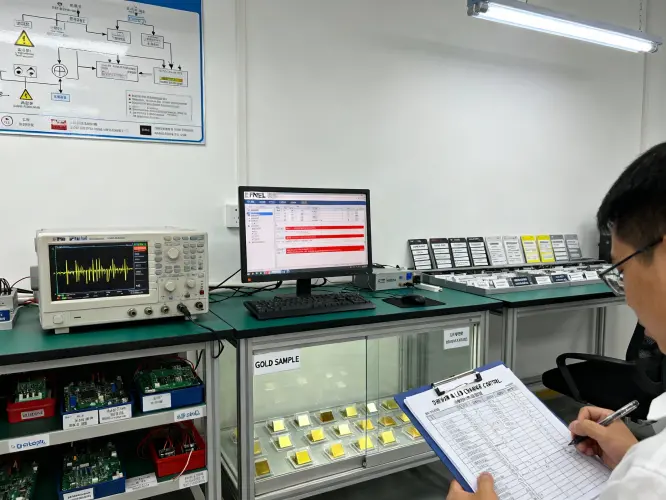
Challenge 1: Flicker Spikes at Low Dimming
Solution: Validate with a wide dimmer matrix and stabilize low-current driver behavior.
Challenge 2: Photometric Drift
Solution: Specify LED binning + test at elevated temperatures.
Challenge 3: Inconsistent Data Across Documents
Solution: Maintain unified database for EPREL/datasheet/label values.
Challenge 4: Component Substitutions
Solution: Implement strict change-control procedures.
Challenge 5: Packaging & Label Errors
Solution: Use standardized templates aligned with regulations.
How Compliance Becomes a Business Advantage

When compliance is part of product culture, you gain:
- Better tender eligibility
-
Higher trust from distributors & chain retailers
-
Lower failure rates
-
Stronger sustainability credentials
-
Premium brand positioning
This is especially important as EU buyers increasingly prioritize ESG, lifecycle value and transparent documentation.
- Future Trends Beyond 2025
The EU is moving toward deeper accountability across the product lifecycle.

Digital Product Passport (DPP)
Will require structured, traceable product data.
Circular Economy Focus
Modular, repairable, recyclable designs.
CSRD Sustainability Reporting
More traceable material-efficiency metrics.
Cybersecurity Rules for Connected Lighting
Secure firmware, SBOMs, authenticated updates.
Manufacturers who prepare now will avoid disruptions later.
Conclusion — Prepare Early, Document Clearly, Design Smart
EU Ecodesign is not just regulation—it is the new standard for quality, efficiency and trust in LED lighting. Manufacturers who invest early in compliance will enjoy smoother market access, fewer warranty issues, and a stronger reputation among buyers.
By designing to the rulebook, validating performance early, and maintaining clean, consistent documentation, your LED portfolio will be ready not only for 2025—but for the next decade of lighting evolution.
Leave a Reply