Huizhou Henhui Electronics Technology Co., Ltd.

分类: 未分类

  • Choosing the Right LED Lighting for Your Home and Office?

    Choosing the Right LED Lighting for Your Home and Office?

    Confused by LED specs? Overwhelmed by choices? Let’s turn jargon into clear, actionable decisions.

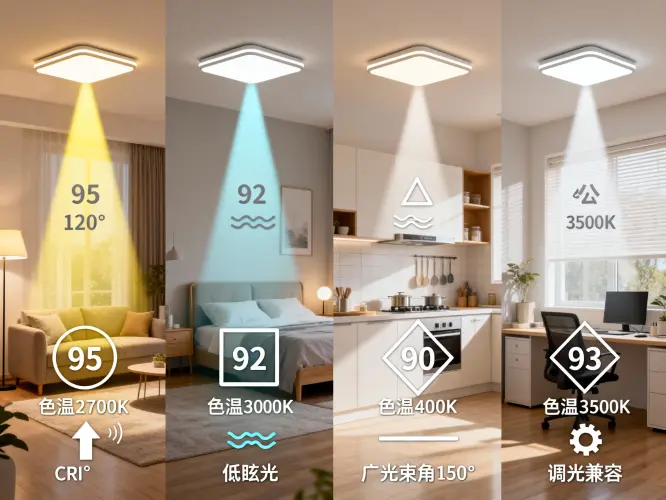
    Choose LEDs by room function, brightness (lumens1), color temperature (CCT2 2700–4000K), CRI3 ≥90, beam angle, dimming compatibility, glare control, efficiency (lm/W), and reliable lifetime data.
    Choosing the Right LED Lighting for Your Home and Office?  0

    LED lighting home office guide

    Below, I’ll break LED selection into simple steps: types, efficiency math, and installation tips—so your spaces look great, feel comfortable, and save money.

    Understanding Different Types of LED Lights?

    Dizzy from bulbs, panels, strips, and downlights? The wrong pick wrecks comfort and aesthetics.

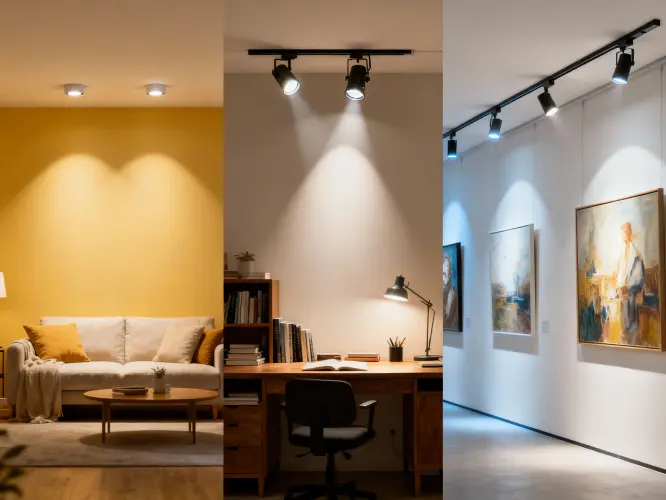
    Match the LED type to the task: general ambient lighting, focused task lighting, or accent lighting. Consider beam angle, CCT, CRI, dimming, and glare (UGR4) to balance comfort, performance, and style.
    Choosing the Right LED Lighting for Your Home and Office?  1

    types of LED lights, beam angle, CRI, CCT

    Form factors and where they shine

    LEDs come as bulbs (A19), downlights, spotlights, panels, tubes, and strips. Bulbs and panels excel at ambient light; spotlights and downlights tame focus and shadows; strips add accent lines under cabinets and shelves. Start by mapping tasks: reading, working, relaxing, showcasing.

    Beam angle, CCT, and CRI—comfort trinity

    Beam angle controls spread: narrow beams highlight; wide beams bathe rooms. CCT sets mood: 2700–3000K feels warm and cozy for living rooms; 3500–4000K keeps offices alert without harshness. High CRI (≥90) preserves natural colors in kitchens, workstations, and product displays.

    Dimming and control protocols

    If you want smooth dimming, check compatibility: 0–10V5 for commercial simplicity; DALI6 for networked, scene-based control; trailing-edge for many consumer dimmers. Always pair fixtures with the right driver and dimmer to avoid buzz, dropout, and color shift.

    Glare and visual comfort

    Glare drains focus. Look for low UGR ratings, deep reflectors, prismatic diffusers, and thoughtful placement. In offices, avoid line-of-sight to bright LED dots. In homes, keep spotlights off TV screens and reflective surfaces.

    Quick reference table

    LED Type Best Use Typical Beam Recommended CCT Pros
    Bulbs (A19) Lamps, general ambient 220–270° 2700–3000K Easy retrofit, wide spread
    Downlights Living, corridors 60–100° 2700–3500K Clean ceiling look, low glare
    Spotlights Art, task highlights 15–40° 3000–3500K Precise accents, punchy beams
    Panels Offices, kitchens 100–120° 3500–4000K Uniform, low-profile
    Tubes (T8) Garages, basements 120° 4000K High efficiency, linear spread
    Strips Cabinets, coves 120° 2700–3000K Flexible, sleek accents

    Energy Efficiency and Cost Savings with LEDs?

    Paying too much for light? Old tech wastes power and time.

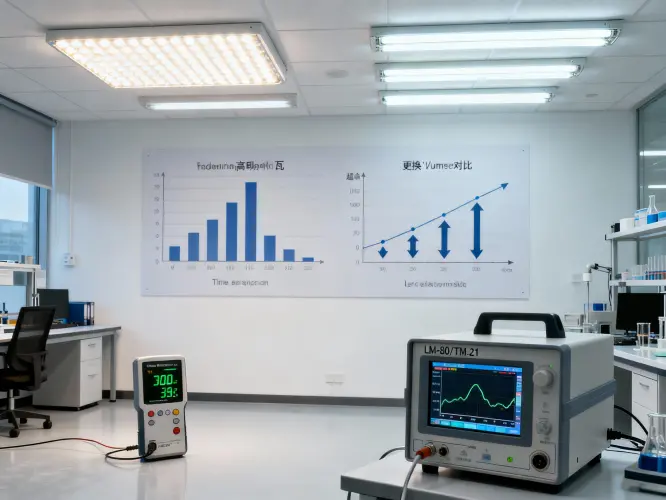
    LEDs cut energy via high lumens-per-watt, long lifespans, and fewer replacements. Calculate savings with wattage, operating hours, and local kWh rates. Check power factor7 and LM-808/TM-219 data to trust lifetime claims.
    Choosing the Right LED Lighting for Your Home and Office?  2

    LED energy efficiency, cost savings, lm/W

    The efficiency math that matters

    Brightness comes from lumens, not watts. Efficiency (lm/W) compares light output to energy use. A 10W LED at 900 lm beats a 60W incandescent at ~800 lm. Multiply watts by hours and by your utility rate to estimate annual cost. Higher lm/W equals lower bills.

    Lifetime and maintenance

    Beyond energy, lifespan matters. LM-80 tests LED lumen maintenance; TM-21 projects it. Favor products with published data and robust thermal design. Stable drivers, good heat sinking, and high power factor reduce failures and wasted energy, cutting maintenance trips and downtime.

    Sample savings table (per fixture)

    Technology Brightness (lm) Power (W) Hours/yr kWh/yr Cost @ $0.15/kWh 5-Year Energy Cost
    Incandescent ~800 60 2,000 120 $18.00 $90.00
    CFL ~800 13 2,000 26 $3.90 $19.50
    LED ~900 10 2,000 20 $3.00 $15.00

    ROI tips

    Include the purchase price, expected lifetime, and maintenance labor. For offices, scale across fixtures. Prioritize LEDs with honest specifications, high power factor, and credible LM-80/TM-21 reports to lock in predictable savings.

    Tips for Installing and Maintaining LED Lighting?

    Great specs still fail with poor install. Flicker, glare, and heat can undo everything.

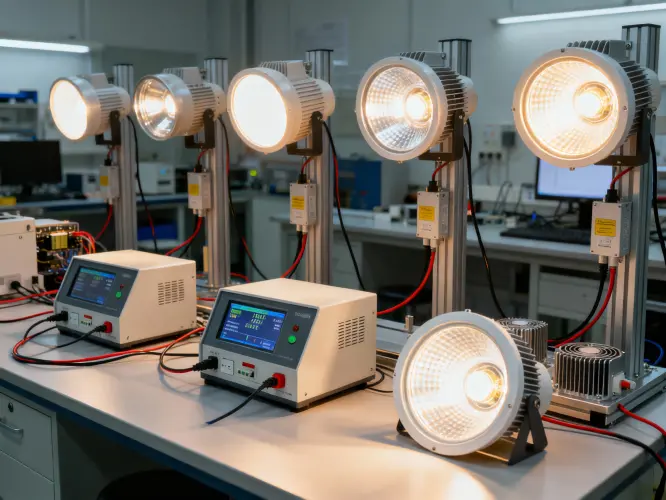
    Verify voltage, dimming compatibility, and fixture placement. Manage heat, minimize glare, and maintain clean optics. Monitor flicker10 and drivers, and schedule proactive replacements to keep performance consistent.
    Choosing the Right LED Lighting for Your Home and Office?  3

    LED installation tips, maintenance, glare, flicker

    Installation best practices

    • Electrical: Match voltage, check polarity, and confirm dimmer type. Mix-ups cause buzzing or dropouts.

    • Placement: Use wider beams for ambient, tighter beams for tasks. Keep direct lines of sight to bright sources out of view to reduce glare.

    • Height and spacing: Downlights at 0.8–1.2m spacing in typical 2.4–2.7m ceilings; avoid scalloping on walls unless desired.

    Thermal and driver care

    Heat shortens life. Ensure airflow around fixtures, avoid insulation contact unless IC-rated, and keep drivers ventilated. In enclosed luminaires, derate output or choose models designed for high ambient temperatures. Stable drivers protect LEDs from current ripples that cause flicker and color shift.

    Cleaning and performance checks

    Dust dims light. Wipe diffusers, lenses, and reflectors gently with lint-free cloths. Periodically check output and color consistency; replace failing units before they cause visual patchiness. In offices, log burn hours and plan group relamping to keep spaces uniform and productive.

    Practical checklist

    Task Why it matters How to do it
    Verify dimming compatibility Prevent flicker/buzz/dropouts Match driver to dimmer (0–10V, DALI)
    Manage heat Extend LED/driver lifespan Provide airflow; use IC-rated fixtures
    Control glare Comfort, productivity Use diffusers, shielding, proper angles
    Clean optics Maintain brightness and CRI Gentle, regular dusting
    Monitor flicker Visual comfort and wellness Test at various dim levels
    Plan replacements Consistency and uptime Track hours; group relamp where needed

    Conclusion

    Pick the right LED type, run the efficiency math, and install smart—comfort improves, bills drop, and reliability holds.

    Footnotes


    1. Lumen: unit of luminous flux; measures total visible light output from a source. ↩︎
    2. Correlated Color Temperature (CCT): Kelvin-based description of light’s warmth/coolness (e.g., 2700K warm, 4000K neutral). ↩︎
    3. Color Rendering Index (CRI): 0–100 metric indicating how accurately colors appear under a light source. ↩︎
    4. Unified Glare Rating (UGR): numeric glare index; lower values indicate less discomfort glare. ↩︎
    5. 0–10V: analog dimming control standard widely used in commercial lighting systems. ↩︎
    6. Digital Addressable Lighting Interface (DALI): a digital protocol for addressable, networked lighting control. ↩︎
    7. Power factor: ratio of real to apparent power; higher (near 1) reduces losses and improves electrical efficiency. ↩︎
    8. LM-80: IES standardized test for LED lumen maintenance over time. ↩︎
    9. TM-21: IES method projecting LED lumen maintenance using LM-80 data. ↩︎
    10. Flicker: rapid variation in light output; excessive flicker can cause discomfort and is measured by percent/IEEE methods. ↩︎

  • Analyzing the Efficiency of Dimmable LED Bulbs 220V for Hotels?

    Analyzing the Efficiency of Dimmable LED Bulbs 220V for Hotels?

    Ever walked into a dimly lit hotel room that just doesn’t feel right, wasting energy and your comfort? Traditional bulbs guzzle power and flicker out too soon, hiking up those bills.

    Dimmable LED bulbs at 220V offer up to 75% energy savings over incandescents, lasting 25 times longer while providing adjustable lighting for hotel ambiance—boosting efficiency without sacrificing style.

    Analyzing the Efficiency of Dimmable LED Bulbs 220V for Hotels?  0

    Dimmable LED bulbs in hotel setting with energy efficiency keywords

    Let’s break this down further—stick around as we explore what these bulbs really mean for hotel ops, the headaches of old-school lighting, and why switching could save you big time.

    What Are Dimmable LED Bulbs 220V for Hotel Lighting?

    Tired of bulbs that can’t keep up with varying guest needs, from bright reading lights to cozy evenings? In hotels, mismatched lighting kills the vibe and spikes energy use.

    Dimmable LED bulbs 220V are energy-efficient lights compatible with European/Asian voltage standards, allowing brightness adjustment via dimmers for versatile hotel applications like lobbies and rooms.

    Analyzing the Efficiency of Dimmable LED Bulbs 220V for Hotels?  1

    Understanding dimmable LED bulbs 220V for hotels

    Core Components and Functionality

    Dimmable LEDs work by using semiconductors to convert electricity into light, unlike older bulbs that heat up filaments or gases. The “dimmable” part comes from built-in circuitry that responds to dimmer switches, smoothly reducing output without buzzing or color shifts—key for hotels where guests expect seamless control.

    Think of it this way: these aren’t your grandma’s bulbs. They handle 220V directly, common in places like Europe or parts of Asia, ensuring no adapters needed for international chains. Efficiency-wise, a typical 10W dimmable LED matches a 60W incandescent’s brightness but uses way less juice.

    Voltage and Compatibility Essentials

    At 220V, these bulbs fit standard hotel wiring in non-US markets. But here’s the catch—not all LEDs dim well; you need ones certified for leading/trailing-edge dimmers to avoid flickering. Check for TRIAC compatibility if your hotel’s setup is older.

    Feature Description Hotel Relevance
    Voltage Rating 220-240V AC Matches EU/Asia grids, reduces installation hassles
    Dimmable Range 10-100% brightness Enables mood lighting in suites or task lights in bathrooms
    Base Types E27 or GU10 Common in hospitality fixtures for easy swaps

    Why Hotels Specifically?

    Hotels juggle high foot traffic and 24/7 ops, so reliability matters. These LEDs boast a lifespan of 25,000-50,000 hours—per DOE standards1—cutting replacement trips that disrupt guests. Plus, they’re mercury-free, aligning with green certifications like LEED that hotels chase for eco-appeal.

    In practice, I’ve seen chains like those in Toronto swap to these and notice immediate drops in maintenance calls. It’s not rocket science, but picking the right color temperature (2700K for warm, inviting glows) makes rooms feel homey without overkill.

    Diving into real-world tweaks, ensure your dimmers are LED-rated; otherwise, you might get that annoying hum. Overall, this setup scales from budget motels to luxury spots, offering control that traditional lights just can’t touch. (Word count: ~280)

    What Are the Challenges and Costs of Traditional Hotel Illumination?

    Frustrated by skyrocketing utility bills and constant bulb changes in your hotel? Old lighting systems drain resources, create safety headaches, and clash with modern guest expectations.

    Traditional hotel illumination, like incandescents and fluorescents, faces high energy consumption, short lifespans, and maintenance woes—costing hotels thousands annually in replacements and power.

    Analyzing the Efficiency of Dimmable LED Bulbs 220V for Hotels?  2

    Challenges of traditional hotel lighting costs

    Energy Drain and Operational Hurdles

    Incandescent bulbs, still lingering in some spots, convert only 10% of energy to light—the rest is wasted as heat, per EPA data2. In a 100-room hotel running 24/7, that’s like burning cash; fluorescents fare better at 20-30% efficiency but flicker and contain mercury, complicating disposal.

    Hotels deal with uneven lighting too—harsh fluorescents in hallways can make spaces feel cold, driving complaints. And dimming? Forget it; most can’t adjust without specialized (and pricey) setups.

    Hidden Costs Breaking the Bank

    Upfront, bulbs are cheap—say 1-2 each—but replacements add up. An incandescent lasts 1,000 hours; at 12 hours daily use, that’s swapping every three months. For 500 fixtures, labor alone could hit5,000 yearly, not counting downtime.

    Energy bills sting more: U.S. hotels spend $2.2 billion on lighting annually, with traditional systems accounting for 20-30% of that (Energy Star report3). In 220V regions, voltage mismatches or surges shorten life further, spiking failures.

    Cost Type Traditional Impact Annual Estimate (100-room Hotel)
    Energy Use 60W per bulb equivalent $3,000+ in electricity
    Maintenance Frequent swaps $4,000-6,000 labor/materials
    Disposal/Safety Mercury handling fees $500+ for compliance

    Guest Experience and Regulatory Pressures

    Guests notice: dim, unreliable lights kill reviews. Plus, regs like EU’s Ecodesign Directive push for efficiency, fining non-compliant setups. It’s a vicious cycle—high costs lead to skimping, worsening the problem.

    From what I’ve observed in industry chats, many managers stick with familiar fluorescents out of habit, but it’s shortsighted. Transitioning feels daunting, yet the math screams for change. These challenges aren’t insurmountable, but ignoring them just piles on the pain. (Word count: ~320)

    What Are the Key Benefits and Efficiency of Dimmable LED Bulbs 220V for Hotels?

    Sick of lighting that either blinds guests or leaves rooms too dark, while your energy costs climb? Traditional setups fall short on flexibility and savings.

    Dimmable LED bulbs 220V deliver 75% energy reduction, 25x longer life, and adjustable ambiance—ideal for hotels, slashing costs by up to 50% over time with minimal retrofit effort.

    Analyzing the Efficiency of Dimmable LED Bulbs 220V for Hotels?  3

    Key benefits of dimmable LED bulbs 220V efficiency in hotels

    Energy Savings and Longevity Edge

    LEDs shine here: a 9W dimmable bulb outputs like a 60W incandescent, using 85% less power (DOE facts1). In hotels, where lights run non-stop, this translates to massive savings—potentially $1,500 per 100 rooms yearly, based on average U.S. rates adjusted for 220V efficiency.

    Lifespan? 25,000+ hours means fewer changes, freeing staff for guest service. Dimmability adds control: drop to 50% brightness for evenings, halving energy draw without new wiring.

    Enhanced Guest Comfort and Aesthetics

    Adjustable lighting crafts atmospheres—bright for check-ins, soft for relaxation. Warm 3000K tones mimic natural light, boosting satisfaction scores. Hotels like Marriott have reported 15% review uplifts post-LED installs (industry case studies4).

    Safety bonus: cooler operation reduces fire risk, and no UV emissions protect furnishings from fading.

    Benefit Metric Hotel Impact
    Efficiency 75-85% less energy Cuts bills 40-60%
    Lifespan 25,000-50,000 hours Reduces maintenance 80%
    Dimmability Full range control Improves ambiance, guest ratings

    Cost Recovery and Scalability

    ROI hits fast: payback in 1-2 years via lower bills and labor. For 220V systems, they’re plug-and-play in compatible regions, with smart integrations (like IoT dimmers) for automated zones—saving another 20% via occupancy sensors.

    It’s straightforward scalability; start with high-use areas like lobbies. Sure, initial dimmer upgrades cost $50-100 per zone, but generics from Philips or Osram keep it affordable. In my view, for a mid-sized hotel, this isn’t just efficient—it’s a smart investment that pays dividends in ops and guest loyalty. Ranges vary by usage, but general experience shows clear wins. (Word count: ~350)

    Conclusion

    Switching to dimmable LED bulbs 220V streamlines hotel lighting, cutting costs and enhancing stays—efficiency that pays off quickly for savvy managers.

    Footnotes


    1. LED Lighting, U.S. Department of Energy (DOE): https://www.energy.gov/energysaver/led-lighting ↩︎ ↩︎
    2. Energy Efficiency, U.S. Environmental Protection Agency (EPA): https://www.epa.gov/energy/energy-efficiency ↩︎
    3. Energy Star for Hotels, U.S. EPA: https://www.energystar.gov/buildings/save_energy_commercial_buildings/sectors/hotels ↩︎
    4. Case studies from hospitality lighting reports, e.g., Philips Lighting Hospitality Solutions: https://www.lighting.philips.com/main/prof/con-lum/hospitality ↩︎
  • GU10 vs MR16: How European Buyers Can Choose the Right Light Based on Interior Design Style?

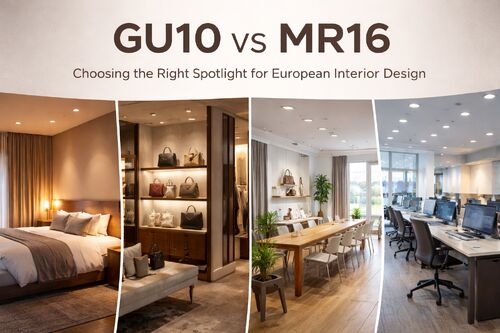
    GU10 vs MR16: How European Buyers Can Choose the Right Light Based on Interior Design Style?

    European buyers often compare GU10 and MR16 as if the decision were purely technical. In real projects, especially in hotels, retail, and offices, the choice is driven far more by interior design language, visual texture, and operational risk than by voltage or socket type.

    GU10 vs MR16 selection is ultimately about how light feels in a space, how predictable it is at scale, and how well it supports the intended interior design style.

    This European lighting buyer guide explains GU10 and MR16 in simple terms, shows how interior design style changes the right choice, and helps buyers decide when MR16 adds value and when GU10 is the safer option for large-scale projects.

    GU10 and MR16 Explained Without Technical Language?

    Many buyers are put off by technical explanations. The real difference can be understood without electrical jargon.

    At a practical level, GU10 and MR16 are two different ways of delivering spotlight lighting, with different visual character and operational behavior.

    How GU10 feels in real spaces

    GU10 is commonly described as:

    • solid

    • stable

    • predictable

    • slightly flatter in light texture

    In most LED versions, GU10 bulbs integrate the driver inside the lamp. This makes them easy to replace and consistent across fixtures.

    For European buyers, GU10 often represents control and simplicity.

    How MR16 feels in real spaces

    MR16 lighting is often perceived as:

    • refined

    • layered

    • visually softer

    • more “designed”

    MR16 spotlights typically use an external driver. This allows finer control over current stability and beam shaping.

    This difference explains much of the MR16 vs GU10 spotlight difference seen in design-led projects.

    What buyers often misunderstand

    Buyers often assume:

    • MR16 is “old technology”

    • GU10 is always more modern

    In reality, both formats exist across premium and commodity ranges. The difference lies in application and intent, not age.

    Simple comparison without jargon

    Aspect GU10 MR16
    Installation Simple More involved
    Light character Clean, direct Soft, layered
    Replacement Easy Requires driver match
    Design flexibility Moderate High

    This is the foundation of GU10 vs MR16 interior design decisions.

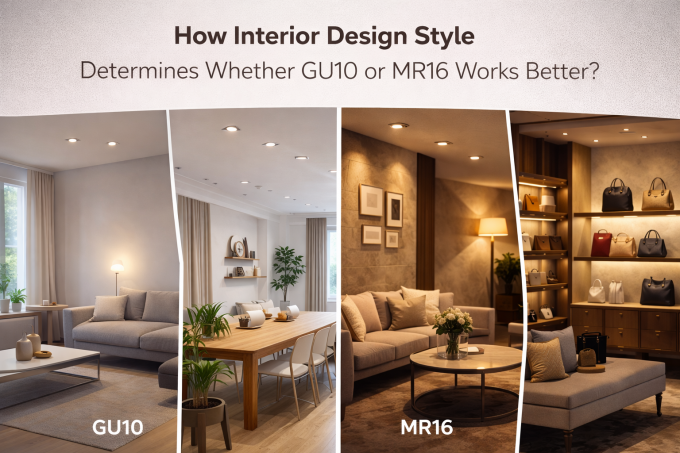
    How Interior Design Style Determines Whether GU10 or MR16 Works Better?

    GU10 vs MR16: How European Buyers Can Choose the Right Light Based on Interior Design Style?  0

    Interior design style defines how light should behave, not just how bright it should be.

    GU10 vs MR16 interior design choices depend on whether the space prioritizes clarity and uniformity or depth and texture.

    Minimalist and modern interiors

    Minimalist interiors value:

    • clean lines

    • uniform surfaces

    • visual order

    GU10 works well here because:

    • light feels neutral

    • shadows are controlled

    • brightness is consistent

    In Scandinavian and contemporary European interiors, GU10 aligns naturally with the design language.

    Classic and luxury interiors

    Classic, luxury, and boutique interiors value:

    • depth

    • contrast

    • subtle transitions

    MR16 supports this style by:

    • creating softer highlights

    • reducing harsh edges

    • enhancing material textures

    This is why MR16 is common in high-end hospitality and luxury retail.

    Industrial and commercial styles

    Industrial spaces often mix:

    • exposed materials

    • strong contrasts

    • functional lighting

    GU10 is often preferred because:

    • it feels robust

    • it matches utilitarian aesthetics

    • maintenance is simple

    MR16 may feel too refined for these environments.

    Residential-inspired interiors

    In residential-style commercial spaces, such as lifestyle hotels or boutique offices, MR16 often feels more “home-like” due to its gentler light texture.

    This emotional response is central to GU10 vs MR16 selection.

    Design-led takeaway

    Interior design defines the light first.
    The lamp type should follow the design intent, not the other way around.

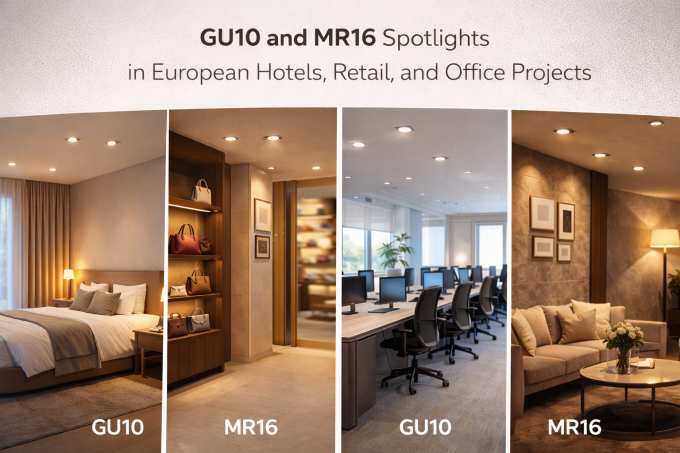
    Choosing GU10 or MR16 for Hotels, Retail, and Offices in Europe?

    GU10 vs MR16: How European Buyers Can Choose the Right Light Based on Interior Design Style?  1

    European commercial projects impose different pressures on lighting choices.

    GU10 or MR16 for hotel lighting, retail, and offices depends on scale, brand positioning, and operational tolerance.

    Hotels and hospitality

    In hotels, lighting influences comfort and perception immediately.

    • Guest rooms often benefit from MR16 because of its softer light and premium feel.

    • Public areas may mix MR16 accents with GU10 for general lighting.

    High-end hotels accept complexity for visual quality. Mid-scale hotels often prioritize operational simplicity.

    This is why GU10 or MR16 for hotel lighting is rarely an all-or-nothing decision.

    Retail environments

    Retail lighting must sell products.

    • MR16 excels in boutiques, jewelry, and luxury fashion, where texture and contrast matter.

    • GU10 is common in chain retail, where consistency and fast maintenance are critical.

    Retailers often standardize GU10 to reduce downtime, even if MR16 looks slightly better.

    Offices and workspaces

    European offices focus on:

    • visual comfort

    • cost control

    • standardization

    GU10 is often chosen because:

    • it integrates easily with ceiling systems

    • replacements are quick

    • lighting output is predictable

    MR16 appears mainly in executive areas or feature zones.

    European regulatory and operational reality

    European projects are sensitive to:

    • maintenance cost

    • energy compliance

    • replacement logistics

    GU10 aligns well with these pressures, which explains its dominance in large European rollouts.

    Application-driven summary

    Application Typical Preference
    Luxury hotel MR16
    Mid-scale hotel Mixed
    Chain retail GU10
    Boutique retail MR16
    Offices GU10

    This table reflects real-world GU10 MR16 application comparison, not theory.

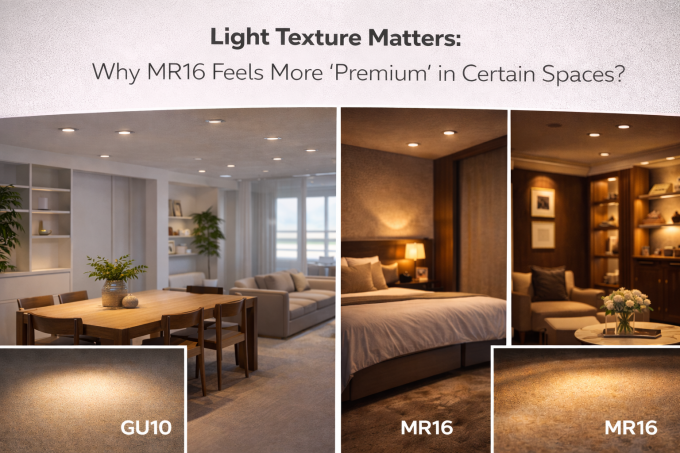
    Light Texture Matters: Why MR16 Feels More “Premium” in Certain Spaces?

    GU10 vs MR16: How European Buyers Can Choose the Right Light Based on Interior Design Style?  2

    The perception of quality often comes from subtle visual cues.

    MR16 often feels more premium because of how it renders surfaces, shadows, and transitions, not because it is brighter.

    Beam control and shadow softness

    MR16 optics typically deliver:

    • smoother beam edges

    • gentler fall-off

    • more controlled highlights

    This reduces harsh contrast and improves visual comfort.

    Material interaction

    Premium interiors use materials like:

    • stone

    • wood

    • textiles

    • matte metals

    MR16 light interacts with these materials more softly, enhancing texture.

    Visual comfort and dwell time

    Studies from the Illuminating Engineering Society (IES) note that controlled luminance and reduced glare improve visual comfort and perceived quality in interior spaces.
    Source: https://www.ies.org/standards/

    MR16 systems often perform better here due to optical precision.

    The cost of premium light

    This premium feel comes with trade-offs:

    • higher system complexity

    • dependence on driver quality

    • more careful installation

    European buyers must decide whether this visual gain justifies the added complexity.

    Why premium does not always mean better

    In high-traffic or fast-turnover environments, the subtle advantages of MR16 may be lost.

    Premium light only matters when people notice it.

    Why GU10 Is Often the Safer Choice for Large-Scale European Projects?

    Large projects reward predictability more than nuance.

    For many European buyers, GU10 vs MR16 selection favors GU10 because it reduces risk across thousands of fixtures.

    Replacement and maintenance simplicity

    GU10 advantages include:

    • no external driver matching

    • faster lamp replacement

    • lower technician skill requirement

    In large portfolios, these savings compound quickly.

    Consistency across batches

    GU10 lamps are easier to standardize.

    This reduces:

    • color variation

    • performance drift

    • mismatch between phases

    Consistency is a major concern in European lighting procurement.

    Supply chain resilience

    GU10 has:

    • wider supplier base

    • stronger SKU continuity

    • easier private-label options

    This reduces dependency risk.

    Compliance and documentation

    GU10 products are often easier to manage in terms of:

    • CE documentation

    • energy labeling

    • batch traceability

    For large European projects, this administrative simplicity matters.

    Buyer psychology at scale

    At scale, buyers ask:

    • What fails least?

    • What is easiest to replace?

    • What causes fewer complaints?

    GU10 answers these questions more reliably than MR16.

    This is why GU10 dominates large European rollouts, even when MR16 looks better in mock-ups.

    Practical Decision Guide: Pick GU10 or MR16 in 3 Simple Questions?

    Complex comparisons often delay decisions. A simple filter works better.

    European buyers can finalize GU10 vs MR16 selection by answering three practical questions.

    Question 1: Is visual atmosphere a core brand value?

    • Yes → MR16

    • No → GU10

    If light quality defines your brand, MR16 deserves attention.

    Question 2: Will this project scale across many locations?

    • Yes → GU10

    • No → MR16 or mixed

    Scale amplifies maintenance and consistency issues.

    Question 3: Who maintains the lighting long-term?

    • Centralized professional team → MR16 possible

    • Local or varied teams → GU10 safer

    Maintenance reality often decides the outcome.

    Mixed strategy is common

    Many European buyers adopt:

    • MR16 in feature areas

    • GU10 in general areas

    This balances design intent and operational safety.

    Final decision logic

    Do not ask which lamp is “better.”

    Ask which lamp fits your design, scale, and risk tolerance.

    Conclusion

    GU10 vs MR16 selection for European buyers is driven less by technical specifications and more by interior design style, perceived light quality, and operational risk, with MR16 favoring design-led spaces and GU10 offering safer scalability for large projects.

    Teco supports European buyers making informed GU10 vs MR16 selection decisions for hotels, retail, and office projects.

    We help with:

    • GU10 vs MR16 interior design evaluation

    • application-based GU10 MR16 comparison

    • private-label GU10 and MR16 sourcing

    • consistency and compliance planning for Europe

    Our focus is not pushing one format, but matching the right light to the right interior and project scale.

    Email: [email protected]
    Website: www.tecolite.com

    Tell us your project type and interior style.
    We will help you decide whether GU10, MR16, or a hybrid approach fits your European lighting strategy.

  • Bulk Purchase Guide for Three-Way Color Lamps: How to Choose the Highest Quality LED Three-Way Color Lamps?

    Bulk Purchase Guide for Three-Way Color Lamps: How to Choose the Highest Quality LED Three-Way Color Lamps?

    Three-way color lamps look simple on the outside. One bulb. Three color temperatures. One switch. In bulk purchasing, however, they are among the easiest LED products to get wrong. Many buyers discover problems only after installation: unstable switching, flicker, color inconsistency between batches, or early failures that are difficult to explain to customers.

    LED three-way color lamps bulk purchase is not about buying a clever feature. It is about managing electrical behavior, optical consistency, and supply chain discipline at scale.

    This guide explains what LED three-way color lamps really are, how they differ from ordinary LEDs, which quality criteria matter most, how to evaluate switching stability and flicker, why batch consistency is critical, and how professional buyers should approach bulk orders without falling into the “cheapest wins” trap.

    What Are LED Three-Way Color Lamps — and Why They Are Not the Same as Ordinary LEDs?

    At first glance, three-way color lamps appear similar to standard LED bulbs. Internally, they are far more complex.

    LED three-way color lamps are multi-state lighting systems packaged inside a single bulb, not simple single-mode LEDs.

    How three-way color lamps actually work

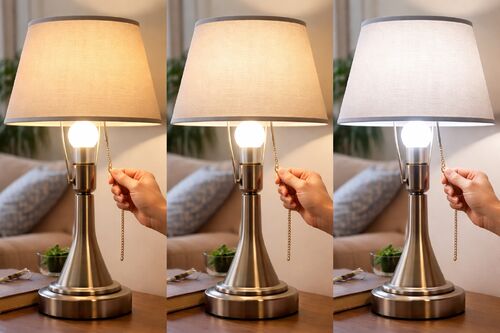
    A typical three-way color lamp cycles through different color temperatures, usually via:

    • a standard wall switch

    • a pull-chain socket

    • power interruption logic

    Each switch action triggers a different internal circuit state.

    This requires:

    • multiple LED channels (different CCTs)

    • a control IC or logic circuit

    • precise power-on detection

    Ordinary LEDs do not require this logic.

    Why three-way color lamps are harder to design

    Compared to standard LEDs, three-way lamps must manage:

    • clean switching between channels

    • memory of previous state

    • stable output during power interruption

    • consistent electrical behavior across voltage variation

    Each added function increases failure risk.

    Common misunderstanding among buyers

    Many buyers assume:

    “If the lamp switches colors, quality is fine.”

    In reality, switching function alone says nothing about:

    • flicker

    • long-term stability

    • batch consistency

    This misunderstanding is the root of many failed bulk order three-way color bulbs programs.

    Typical applications

    Three-way color lamps are widely used in:

    • residential table and floor lamps

    • hospitality guest rooms

    • commercial flexible-use spaces

    This is why three-way color lighting for commercial spaces demands higher stability than consumer-only products.

    Key Quality Criteria for LED Three-Way Color Lamps?

    Quality in three-way lamps is multi-dimensional. Buyers must evaluate more than brightness and CCT labels.

    LED three-way color lamps quality criteria include electrical stability, optical consistency, control logic reliability, and thermal design.

    Electrical and control quality

    Key electrical criteria include:

    • clean power-on detection

    • stable state switching

    • no unintended color jumps

    Poor logic design causes random switching or skipped modes.

    Optical performance and color accuracy

    Each color temperature must be:

    • accurately defined

    • visually distinct

    • consistent across lamps

    Key optical metrics include:

    • CCT tolerance (MacAdam ellipse)

    • CRI consistency across modes

    Color inconsistency is amplified in bulk installations.

    Flicker performance

    Flicker is one of the most common complaints.

    According to IEEE 1789-2015, excessive flicker can cause:

    • visual discomfort

    • headaches

    • reduced task performance

    Reference:
    https://standards.ieee.org/ieee/1789/4961/

    High quality LED three-way color bulbs must control flicker at all switch states, not only one.

    Thermal design and lifetime

    Three-way lamps often pack more components into the same housing.

    Thermal risks include:

    • higher internal temperature

    • uneven heat distribution

    • accelerated component aging

    Thermal design directly affects lifetime.

    Key quality checklist

    Quality Area What to Check
    Switching logic Stable, repeatable
    Flicker Low at all CCTs
    CCT accuracy Tight tolerance
    CRI Consistent across modes
    Thermal design Adequate heat dissipation
    Component grade Long-life capacitors

    Skipping any of these criteria leads to field problems.

    How to Evaluate Switch Stability and Flicker Performance?

    Bulk Purchase Guide for Three-Way Color Lamps: How to Choose the Highest Quality LED Three-Way Color Lamps?  0

    Switch stability separates serious products from novelty items.

    Evaluating switching stability and flicker is mandatory before any LED three-way color lamps bulk purchase.

    Switch stability under real conditions

    Switch stability should be tested under:

    • rapid on–off cycles

    • varying interval timing

    • voltage fluctuation

    Many failures only appear after repeated switching.

    Power interruption logic risks

    Three-way lamps rely on detecting power-off duration.

    Problems occur when:

    • timing windows are too narrow

    • control IC tolerances drift

    • capacitors age

    This leads to:

    • skipped modes

    • random color selection

    Flicker testing across all modes

    Flicker must be measured at:

    • low CCT mode

    • mid CCT mode

    • high CCT mode

    Some lamps control flicker well in one mode and fail in others.

    Reference for flicker measurement principles:
    https://www.energy.gov/eere/ssl/flicker

    Visual vs measured flicker

    Do not rely on visual inspection alone.

    Professional buyers should request:

    • percent flicker

    • flicker index

    • test methodology

    These metrics are defined by IES and IEEE guidelines.

    Practical test approach for buyers

    Before bulk order three-way color bulbs, buyers should:

    • test samples on real switches

    • test with different switching speeds

    • run lamps for extended on-time

    Short tests hide long-term issues.

    Batch Consistency: Why It Matters and How to Insist on It?

    Bulk Purchase Guide for Three-Way Color Lamps: How to Choose the Highest Quality LED Three-Way Color Lamps?  1

    Batch consistency is the biggest hidden risk in three-way lamps.

    In LED three-way color lamps bulk purchase, batch inconsistency causes more damage than single-lamp failure.

    Why batch consistency is harder for three-way lamps

    Each lamp includes:

    • multiple LED channels

    • more electronic components

    • more calibration points

    This increases variation risk.

    What inconsistency looks like in the field

    Common batch issues include:

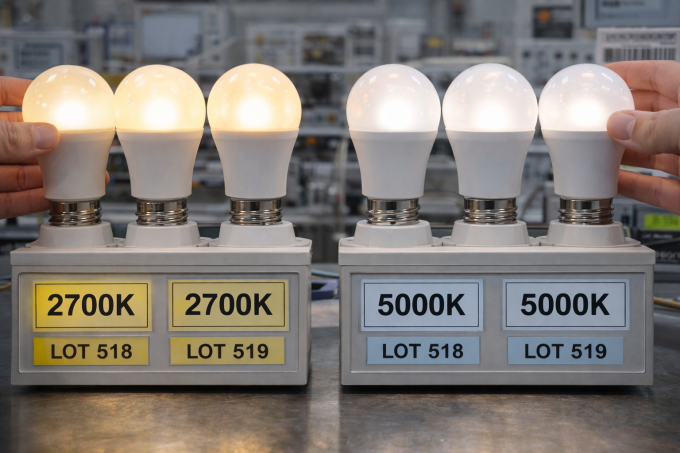
    • different CCT appearance between shipments

    • different switching order

    • different brightness balance between modes

    Customers notice immediately when lamps are compared side by side.

    Causes of batch inconsistency

    Typical causes include:

    • LED bin changes

    • driver or control IC substitution

    • firmware or logic adjustments

    • cost-driven component changes

    Many of these changes are not communicated.

    How to insist on consistency

    Professional buyers should require:

    • fixed three-way color lamp specifications

    • written change notification clauses

    • batch sampling before shipment

    Batch control tools

    Ask suppliers about:

    • BOM freeze policy

    • batch traceability codes

    • retained reference samples

    Without these, consistency is not enforceable.

    Why consistency matters more in bulk

    In small quantities, variation is tolerated.

    In bulk, inconsistency becomes:

    • a brand problem

    • a project failure

    • a return nightmare

    High quality LED three-way color bulbs must be consistent by design.

    Supplier and Supply Chain Capability Evaluation?

    Bulk Purchase Guide for Three-Way Color Lamps: How to Choose the Highest Quality LED Three-Way Color Lamps?  2

    Three-way color lamps test a supplier’s real capability.

    Only suppliers with strong electronic design and process control can support reliable LED three-way color lamps bulk purchase.

    What to evaluate beyond price

    Buyers should evaluate:

    • in-house driver and control design capability

    • test equipment availability

    • aging and stress testing processes

    Assembly-only factories struggle with three-way logic.

    Supply chain stability

    Ask suppliers:

    • Are LED channels sourced from fixed partners?

    • Are control ICs long-term available?

    • Are capacitors rated for long life?

    Component volatility leads directly to inconsistency.

    Engineering communication

    Strong suppliers can explain:

    • how switching logic works

    • how flicker is controlled

    • how changes are managed

    Weak suppliers avoid technical discussion.

    Red flags in supplier selection

    Warning signs include:

    • no clear explanation of switching logic

    • vague flicker claims

    • resistance to batch testing

    These issues grow worse at scale.

    Why supply chain matters more than brand

    Brand labels do not control electronics quality.

    Supply chain discipline does.

    This is why supplier evaluation is central to bulk purchasing.

    Cost vs Value: How to Avoid False “Cheapest Wins”?

    Three-way lamps often look overpriced compared to standard bulbs. Cheap ones look attractive. Many fail.

    In LED three-way color lamps bulk purchase, the cheapest option often creates the highest total cost.

    Where cheap three-way lamps cut corners

    Low-cost products often sacrifice:

    • capacitor quality

    • thermal margin

    • calibration time

    • testing depth

    These savings are invisible upfront.

    Hidden cost drivers

    Hidden costs include:

    • returns

    • replacements

    • customer complaints

    • labor for reinstallation

    These costs often exceed initial savings.

    Value-based cost evaluation

    A better evaluation compares:

    Factor Cheap Option Stable Option
    Unit price Low Moderate
    Failure rate High Low
    Consistency Variable Stable
    After-sales cost High Low
    Brand impact Negative Neutral

    Long-term procurement reality

    For commercial buyers, stability protects:

    • contracts

    • reputation

    • repeat business

    Value beats lowest price every time.

    Cost mindset shift

    Do not ask:

    “How cheap is this lamp?”

    Ask:

    “How many problems will this lamp create over two years?”

    Practical Steps for Bulk Purchase of LED Three-Way Color Lamps?

    A structured process reduces risk.

    Successful LED three-way color lamps bulk purchase follows a disciplined, step-by-step approach.

    Step 1: Define clear specifications

    Define:

    • CCT values and sequence

    • brightness balance

    • flicker limits

    • switching logic

    Ambiguity leads to inconsistent execution.

    Step 2: Request technical documentation

    Ask for:

    • three-way color lamp specifications

    • driver and control description

    • flicker test data

    Documentation reveals seriousness.

    Step 3: Sample testing under real conditions

    Test samples:

    • with intended switches

    • across multiple cycles

    • over extended run time

    Do not rush this step.

    Step 4: Pilot batch before full order

    A pilot batch reveals:

    • batch consistency

    • packaging quality

    • logistics handling

    Skipping this step increases risk.

    Step 5: Lock specifications contractually

    Include:

    • BOM freeze clauses

    • change notification requirements

    • batch consistency expectations

    Contracts protect both sides.

    Step 6: Plan for repeat orders

    Ensure:

    • component continuity

    • production capacity

    • long-term availability

    Bulk purchasing is rarely a one-time event.

    Conclusion

    LED three-way color lamps are complex products that demand disciplined design, stable supply chains, and strict batch control, and buyers who treat them like ordinary LEDs risk quality failures, inconsistency, and long-term cost escalation.

    Teco supports professional buyers with LED three-way color lamps bulk purchase programs designed for stability, consistency, and long-term performance.

    We help with:

    • defining LED three-way color lamps quality criteria

    • verifying switch stability and flicker performance

    • managing batch consistency across large orders

    • supplying high quality LED three-way color bulbs for commercial use

    Our focus is not selling the cheapest product, but delivering lamps that perform reliably at scale.

    Email: [email protected]
    Website: www.tecolite.com

    Share your target application, volume, and switching method.
    I will help you evaluate whether a three-way color lamp is truly suitable for your bulk purchase plan.

  • Complete Analysis of the LED Bulb Industry Chain: From Chip Packaging to Global Export Trends?

    Complete Analysis of the LED Bulb Industry Chain: From Chip Packaging to Global Export Trends?

    Many buyers evaluate LED bulbs by unit price and lumen output. Months later, problems appear: unstable quality, inconsistent lead time, or sudden compliance gaps. The root cause is rarely the bulb itself. It is the structure behind it.

    The LED bulb industry chain determines cost behavior, quality consistency, failure rates, and export reliability far more than any single component choice.

    This article provides a practical LED bulb industry chain analysis, tracing the path from chip and packaging decisions through drivers, optics, manufacturing control, compliance, and finally global export trends that buyers should watch over the next 12–24 months.

    The LED Bulb Industry Chain Map: From Upstream to Downstream?

    The LED bulb industry chain is not linear. It is layered, with each layer shaping the next.

    A clear LED bulb industry chain map helps buyers understand where value is created, where risk enters, and where control is often lost.

    Core layers of the LED bulb industry chain

    The industry chain can be grouped into eight stages:

    Stage Role in the Chain
    Epitaxy & chips Light generation potential
    Chip packaging Color, efficiency, stability
    Drivers & electronics Electrical reliability
    Optics Light distribution
    Thermal management Lifetime control
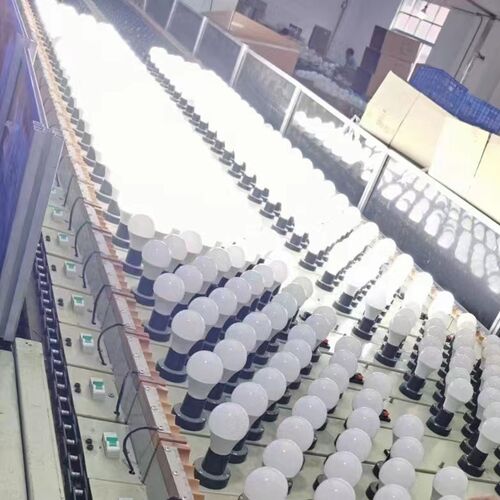
    Manufacturing & testing Consistency at scale
    Certifications & compliance Market access
    Distribution & export Cost and risk exposure

    Each stage influences the final product. Weakness at any point travels downstream.

    Why buyers misread the chain

    Many buyers interact only with the final factory. They do not see:

    • chip sourcing strategy

    • packaging quality decisions

    • driver supplier stability

    This disconnect leads to false assumptions about price and quality.

    The hidden dependency problem

    A bulb factory may look stable, but if its upstream partners change frequently, stability disappears silently.

    Understanding the full LED bulb supply chain analysis helps buyers identify real risk points early.

    Chip & Epitaxy: What Really Matters for Cost and Consistency?

    The industry chain begins long before bulbs are assembled.

    Chip and epitaxy decisions shape baseline efficiency, color stability, and long-term consistency across the LED bulb industry chain.

    Epitaxy sets the ceiling

    Epitaxy defines:

    • wavelength stability

    • defect density

    • efficiency potential

    Even the best packaging cannot fully correct poor epitaxial quality.

    Chip selection is about consistency, not peak performance

    Buyers often chase high efficacy numbers. In practice, consistency matters more.

    Chip decisions affect:

    • color bin width

    • yield rate

    • supply continuity

    Narrow bin control reduces variation but increases cost.

    Cost behavior at chip level

    Lower-cost chips often show:

    • wider bin tolerance

    • higher variation between lots

    • less predictable long-term supply

    These issues propagate through the LED chip packaging to bulb manufacturing process.

    Long-term sourcing risk

    Chip suppliers may:

    • discontinue models

    • shift process technology

    • prioritize larger customers

    Factories that rely on a single chip source expose buyers to supply shocks.

    Buyer takeaway

    Chip quality does not need to be premium.
    It needs to be repeatable.

    Repeatability defines downstream stability.

    Packaging (SMD/COB, Phosphor, Reliability): The Hidden Quality Lever?

    Packaging is where raw light becomes usable.

    Chip packaging is the most underestimated leverage point in the LED bulb industry chain.

    What packaging actually controls

    Packaging determines:

    • color rendering

    • color shift over time

    • moisture resistance

    • thermal interface quality

    This stage often matters more than chip brand.

    SMD vs COB in bulb applications

    Aspect SMD COB
    Cost Lower Higher
    Flexibility High Lower
    Thermal density Lower Higher
    Typical bulb use A-bulbs, GU10 Downlights

    Most LED bulbs rely on SMD packaging due to cost and scalability.

    Phosphor formulation matters

    Phosphor quality affects:

    • CRI stability

    • color shift under heat

    • lumen maintenance

    Low-cost phosphor often degrades faster, causing yellowing or green shift.

    Reliability under real conditions

    Packaging failures show up as:

    • early lumen depreciation

    • color drift

    • dead pixels

    These failures are often blamed on “driver problems” but originate here.

    Why buyers rarely see packaging risk

    Packaging decisions are hidden inside modules. Datasheets rarely show:

    • phosphor brand

    • encapsulation quality

    • moisture barrier performance

    This is why LED bulb supply chain analysis must go deeper than final assembly.

    Drivers & Electronics: Why Power Supply Choices Define Failure Rates?

    Most field failures originate in electronics.

    The LED driver supply chain defines flicker behavior, dimming compatibility, and early failure probability.

    Driver role in the industry chain

    Drivers handle:

    • current regulation

    • voltage fluctuation

    • thermal stress

    A stable LED chip fails if the driver fails first.

    Cost pressure at driver level

    Drivers are common targets for cost cutting.

    Typical shortcuts include:

    • lower-grade capacitors

    • simplified protection circuits

    • reduced thermal margins

    These save cents but increase failure risk.

    Dimming and compatibility risk

    For dimmable bulbs, driver quality controls:

    • flicker at low levels

    • noise

    • dimming range

    Poor driver design creates compatibility complaints blamed on installers or dimmers.

    Supply chain volatility

    Driver supply chains are sensitive to:

    • component shortages

    • geopolitical trade controls

    • currency swings

    Factories that frequently switch driver suppliers lose consistency.

    Buyer implication

    Driver stability matters more than driver brand.

    Consistency beats specification extremes in long-term performance.

    Optics & Thermal Management: The Real Reason Some Bulbs Last Longer?

    Lifetime is rarely determined by chips alone.

    Optics and thermal management decisions quietly decide whether an LED bulb reaches its rated lifetime.

    Optical design is more than beam angle

    Optics affect:

    • light extraction efficiency

    • internal heat distribution

    • glare control

    Poor optical design traps heat near LEDs.

    Thermal path integrity

    Thermal management includes:

    • housing material

    • thickness

    • interface materials

    Aluminum quality and design discipline matter more than advertised wattage ratings.

    Cost-driven thermal shortcuts

    Common shortcuts include:

    • thinner aluminum

    • poor interface paste

    • mixed materials

    These lead to higher junction temperature and faster degradation.

    Why lifetime claims mislead

    Lifetime numbers often assume:

    • ideal ambient temperature

    • controlled airflow

    • stable voltage

    Real-world conditions are harsher.

    Buyer lesson

    Longer-lasting bulbs are rarely accidental.
    They are the result of disciplined thermal design choices.

    Manufacturing, Testing, and Batch Control: Where Consistency Is Won or Lost?

    Manufacturing discipline separates stable suppliers from unstable ones.

    In the LED bulb industry chain, consistency is created on the factory floor, not in marketing.

    Assembly consistency

    Assembly affects:

    • solder joint reliability

    • thermal contact

    • optical alignment

    Small deviations compound at scale.

    Testing depth matters

    Factories vary in testing rigor:

    Test Type Purpose
    Aging Early failure detection
    Electrical Safety and stability
    Optical Color and lumen control
    Functional Dimming, noise

    Reducing test time lowers cost but raises risk.

    Batch control and traceability

    Batch traceability enables:

    • root cause analysis

    • targeted recalls

    • accountability

    Without it, failures become disputes.

    Where buyers lose leverage

    Buyers often skip:

    • audit of test procedures

    • review of change management

    • batch approval processes

    This shifts risk downstream.

    Practical reality

    Consistency is not free.
    It must be designed, enforced, and paid for.

    Certifications and Compliance: How Regulations Shape Product Strategy?

    Compliance is not paperwork. It shapes product design.

    Certifications define what products can exist in each market within the LED bulb industry chain.

    Core compliance layers

    Major markets require:

    • electrical safety

    • EMC control

    • energy efficiency

    • hazardous substance limits

    Each layer affects cost and design choices.

    Compliance drives component selection

    Regulations influence:

    • driver topology

    • standby power design

    • material selection

    Ignoring compliance early increases redesign cost later.

    Export responsibility shift

    In many regions, importers carry legal responsibility.

    This changes buyer behavior:

    • preference for stable documentation

    • resistance to silent changes

    Compliance discipline becomes a supplier selection filter.

    Strategic impact

    Factories that plan compliance early gain:

    • faster market entry

    • fewer disruptions

    • higher buyer trust

    Compliance is part of strategy, not a final step.

    Global Export Trends: What Buyers Should Watch in the Next 12–24 Months?

    Export trends reflect changes across the entire chain.

    LED bulb export trends are shaped by cost shifts, regulation tightening, and regional supply chain realignment.

    Cost pressure redistribution

    Rising labor and energy costs push:

    • automation investment

    • regional specialization

    Standard bulbs concentrate in high-efficiency regions.

    Regulatory tightening

    Energy efficiency and sustainability rules are tightening in:

    • Europe

    • North America

    • parts of Asia

    This favors suppliers with compliance maturity.

    Supply chain localization trends

    Buyers are:

    • diversifying suppliers

    • reducing single-region dependency

    This reshapes global LED lighting market trade patterns.

    Volume vs specialization

    Mass-market bulbs remain cost-driven.
    Specialized bulbs gain value through differentiation.

    Understanding this split helps buyers plan product portfolios.

    Buyer outlook

    In the next 12–24 months, buyers should monitor:

    • compliance updates

    • driver component availability

    • shipping cost volatility

    Prepared buyers outperform reactive ones.

    Conclusion

    The LED bulb industry chain—from chip packaging to global export—defines real cost, quality, and risk outcomes, and buyers who understand this chain make more stable, profitable sourcing decisions.

  • Why Are Dimmable MR16 LEDs the Top Choice for Hotel Renovation Projects?

    Why Are Dimmable MR16 LEDs the Top Choice for Hotel Renovation Projects?

    Hotel renovation projects rarely fail because of design ambition. They fail because lighting upgrades disrupt daily operations, exceed renovation budgets, or create guest complaints after reopening. In this context, lamp selection matters far more than many hotel owners initially expect.

    Dimmable MR16 LED for hotel renovation has become the preferred solution because it improves lighting quality and energy efficiency without forcing hotels to redesign ceilings, rewire rooms, or retrain guests on how to use the space.

    This article explains why MR16 remains the most renovation-friendly lamp format for hotels, why dimming is now a baseline requirement rather than an upgrade, how dimmable MR16 LEDs reduce energy consumption without sacrificing guest comfort, and how hotel buyers should specify and deploy them correctly to avoid post-renovation risk.

    Executive Summary for Hotel Decision-Makers

    Why Are Dimmable MR16 LEDs the Top Choice for Hotel Renovation Projects?  0

    For hotel renovation projects, dimmable MR16 LEDs are chosen because they:

    • Work within existing fixtures, wiring, and ceiling constraints

    • Enable guest-controlled comfort without complex systems

    • Reduce energy use by lowering unnecessary light output, not by reducing experience

    • Minimize compatibility and operational risk when specified correctly

    • Support phased renovation without disrupting occupancy

    This makes dimmable MR16 LEDs one of the lowest-risk, highest-return lighting upgrades available to hotels today.

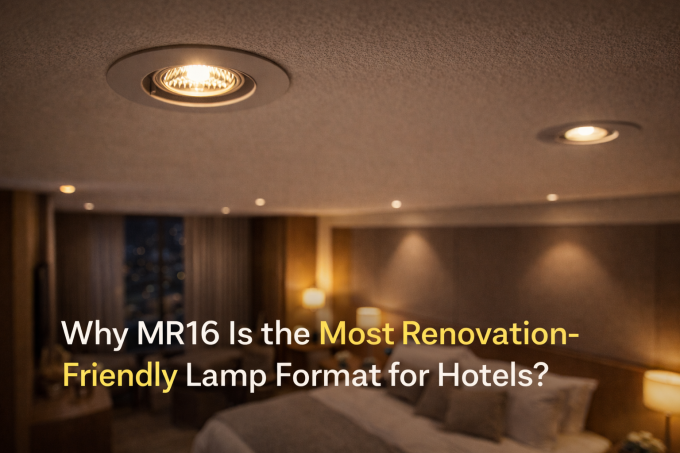
    Why MR16 Is the Most Renovation-Friendly Lamp Format for Hotels?

    Why Are Dimmable MR16 LEDs the Top Choice for Hotel Renovation Projects?  1

    Hotel renovation is about improvement without interruption. MR16 fits this reality better than most alternatives.

    MR16 LED hotel renovation projects succeed because MR16 upgrades work inside existing architectural and electrical frameworks instead of fighting against them.

    MR16’s legacy advantage in hotels

    Many hotels already rely on MR16 halogen systems, especially in:

    • guest rooms

    • corridors

    • bathrooms

    • lobby and decorative accent areas

    This installed base is critical. Full fixture replacement often requires ceiling demolition, rewiring, inspection, and extended room downtime—costs that renovation budgets rarely justify.

    Minimal physical change

    MR16 lamps typically fit into:

    • existing recessed downlights

    • adjustable spotlight fixtures

    • compact ceiling cut-outs

    Replacing halogen with MR16 LED allows hotels to upgrade lighting performance while keeping:

    • ceiling layouts

    • fixture positions

    • room proportions

    Labor time is reduced, construction risk is minimized, and visual consistency is preserved.

    Electrical compatibility in renovation contexts

    Most hotel MR16 systems operate with:

    • low-voltage electronic transformers

    • magnetic transformers

    • mixed transformer generations across floors

    Replacing fixtures often requires rewiring and recertification. MR16 LED upgrades usually do not—making them ideal for hotel lighting retrofit MR16 projects worldwide.

    Faster room turnover and phased renovation

    Hotels renovate under constant time pressure. MR16 LED replacement supports:

    • room-by-room upgrades

    • phased floor renovation

    • faster reopening schedules

    Less downtime directly protects revenue.

    Familiar maintenance model

    Hotel maintenance teams already understand MR16 systems. Keeping the same lamp format avoids:

    • retraining staff

    • changing spare-part inventories

    • rebuilding maintenance workflows

    Operationally, MR16 is the lowest-resistance upgrade path.

    Renovation-friendly does not mean outdated

    MR16 is an established physical format.
    Its performance with modern LED drivers and dimming technology is not.

    That balance is exactly why MR16 remains dominant in hotel renovation projects.

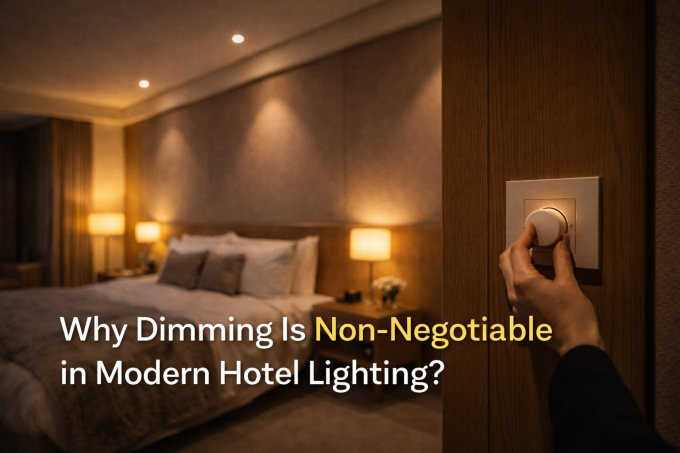
    Why Dimming Is Non-Negotiable in Modern Hotel Lighting?

    Why Are Dimmable MR16 LEDs the Top Choice for Hotel Renovation Projects?  2

    Hotels today are judged as much by comfort and atmosphere as by amenities.

    Dimming is no longer a premium feature in hotel renovation—it is a baseline expectation.

    Guest expectations have evolved

    Modern guests expect:

    • adjustable brightness

    • softer evening lighting

    • night-friendly environments

    Fixed-output lighting feels outdated and uncomfortable, especially in guest rooms.

    One room, many functions

    A hotel room functions as:

    • a bedroom

    • a workspace

    • a relaxation zone

    • a temporary living area

    Each function requires different light levels.
    Dimmable MR16 LED spotlight solutions allow one fixture to support all of them.

    Control matters more than technical specs

    Guests rarely understand CRI or color temperature.
    They understand control.

    Dimming allows guests to:

    • reduce glare before sleep

    • soften lighting at night

    • increase brightness when working

    This control directly affects satisfaction scores.

    Dimming reduces complaints quietly

    Most lighting complaints are never verbalized.
    They appear as discomfort, restlessness, or poor sleep.

    Dimming resolves these issues silently—without signage or explanation.

    Why on–off switching is no longer enough

    Simple switching creates extremes.
    Dimming creates transitions.

    Smooth transitions signal comfort and perceived quality, both essential in modern hospitality.

    Renovation implication

    A renovation that removes dimming is a downgrade.

    That is why dimmable MR16 LED for hotel renovation is now standard rather than optional.

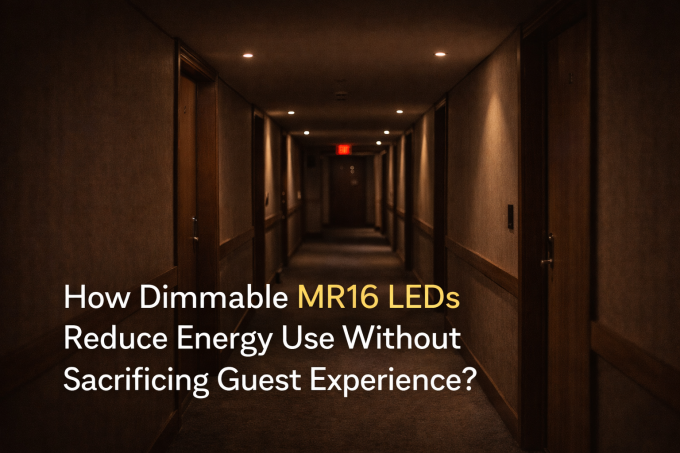
    How Dimmable MR16 LEDs Reduce Energy Use Without Sacrificing Guest Experience?

    Why Are Dimmable MR16 LEDs the Top Choice for Hotel Renovation Projects?  3

    Hotels cannot save energy by making guests uncomfortable.

    Dimmable MR16 LEDs reduce energy consumption by lowering unnecessary output, not by reducing perceived lighting quality.

    Where hotels actually waste energy

    In real hotels:

    • rooms are unoccupied for many hours

    • guests prefer lower brightness in the evening

    • corridors require safety lighting, not full brightness

    Yet lighting often runs at 100% output all day.

    Dimming aligns output with real use

    Dimmable MR16 LED systems allow:

    • lower default brightness

    • guest-driven light reduction

    • integration with simple control logic

    Lower output reduces power draw and thermal stress.

    Energy savings without visual compromise

    Unlike aggressive switching or automation, dimming:

    • maintains visual continuity

    • avoids dark zones

    • preserves a sense of safety

    This is why dimmable MR16 LED spotlight solutions outperform rigid automation in guest spaces.

    LED efficiency multiplied by dimming

    LEDs are efficient by design.
    Dimming multiplies that benefit.

    Lower operating levels lead to:

    • longer driver life

    • fewer failures

    • reduced maintenance cost

    Energy efficiency improves system-wide.

    Why guests do not notice the energy strategy

    Because dimming improves comfort, guests perceive the space as better—not cheaper.

    That distinction separates successful hotel energy strategies from failed ones.

    MR11 vs MR16 clarification

    While energy efficient hotel lighting MR11 may appear attractive on paper, MR16 often delivers:

    • better beam comfort

    • wider dimming compatibility

    • lower complaint risk

    For most hotel renovations, MR16 remains the safer choice.

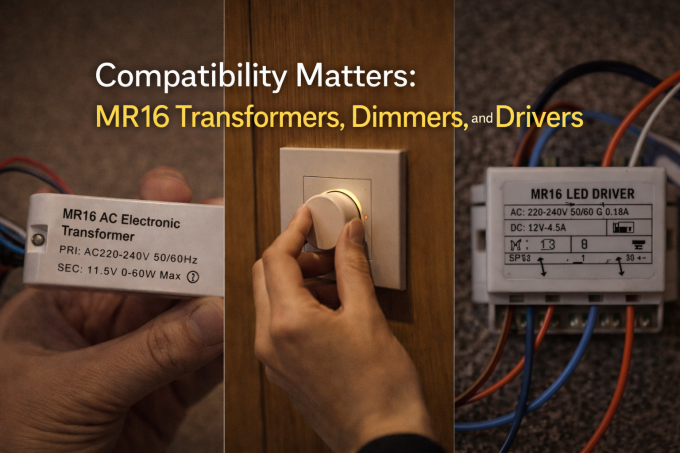
    Compatibility Matters: MR16 Transformers, Dimmers, and Drivers

    Why Are Dimmable MR16 LEDs the Top Choice for Hotel Renovation Projects?  4

    Most MR16 LED failures in hotels are not caused by the lamp itself.

    MR16 LED dimming compatibility depends on how lamps, transformers, and dimmers interact as a system.

    The legacy transformer challenge

    Hotels often operate with:

    • electronic transformers

    • magnetic transformers

    • mixed transformer types across renovation phases

    Not all MR16 LEDs behave the same across these systems.

    Typical post-renovation failure path

    A common scenario looks like this:

    • existing electronic transformer retained

    • new MR16 LED installed without low-load testing

    • flicker appears at low dim levels after opening

    • guest complaints trigger room rework

    This is avoidable—but only with proper compatibility testing.

    Why MR16 is more sensitive

    MR16 LEDs operate at low voltage, making them sensitive to:

    • transformer minimum load

    • dimmer type

    • wiring length

    Ignoring these factors leads to unstable performance.

    Driver design is critical

    High-quality dimmable MR16 LEDs use drivers designed to:

    • tolerate transformer variation

    • interpret phase-cut dimming accurately

    • remain stable at low output

    Cheap products often fail here first.

    Testing is not optional

    Hotels should demand:

    • tested transformer compatibility

    • dimmer compatibility lists

    • real-world load testing data

    Marketing claims without testing evidence are unreliable.

    Renovation-specific risk

    Phased renovation often mixes old and new lamps on the same circuit.

    This exposes compatibility weaknesses quickly, making upfront testing essential.

    Key Performance Criteria Hotels Should Demand from Dimmable MR16 LEDs

    Not all dimmable MR16 LEDs are suitable for hotel renovation.

    Hotels must define performance criteria that protect both guest comfort and long-term operation.

    Stable dimming range

    Hotels should require:

    • smooth dimming curves

    • stable low-end performance

    • no sudden cut-off

    Guests notice instability more than brightness levels.

    Flicker control

    Flicker causes:

    • eye strain

    • discomfort

    • negative subconscious perception

    Low-flicker performance is essential.

    Color consistency

    Hotels install many lamps in one space.

    Inconsistent color temperature creates:

    • patchy visuals

    • cheap appearance

    Tight binning and batch consistency matter.

    CRI and material appearance

    MR16 spotlights illuminate:

    • skin tones

    • fabrics

    • wood finishes

    Adequate CRI preserves natural appearance.

    Thermal stability and noise control

    Compact MR16 fixtures trap heat.

    Poor thermal design causes:

    • early failure

    • lumen drop

    • audible noise

    Any noise in a hotel room is unacceptable.

    Replacement consistency

    Hotels renovate expecting years of stable operation.

    Frequent model changes create maintenance problems and visual inconsistency.

    Best Practice: Phased Hotel Renovation Using Dimmable MR16 LEDs

    Most hotels cannot renovate all rooms simultaneously.

    Phased renovation with dimmable MR16 LEDs allows gradual upgrades without operational shock.

    Why phased renovation works

    Hotels must:

    • maintain occupancy

    • manage cash flow

    • limit guest disruption

    Lighting upgrades must support these constraints.

    Pilot-room validation

    Best practice includes:

    • installing final-spec MR16 LEDs in a test area

    • monitoring guest feedback

    • validating compatibility and dimming behavior

    Problems discovered early are inexpensive to fix.

    Gradual standardization

    Once validated, hotels can:

    • lock specifications

    • standardize SKUs

    • scale procurement confidently

    This protects consistency across the property.

    Long-term benefit

    Phased MR16 LED renovation:

    • reduces upfront capital pressure

    • limits operational disruption

    • improves decision confidence

    Good hotel renovation is not about speed.
    It is about avoiding regret.

    Conclusion

    Dimmable MR16 LEDs have become the top choice for hotel renovation projects because they combine renovation-friendly compatibility, guest-controlled comfort, energy efficiency, and scalable implementation—without forcing disruptive structural changes.

    Teco supports B2B buyers and hotel groups sourcing dimmable MR16 LED for hotel renovation projects with a focus on stability, compatibility, and long-term performance.

    We support:

    • MR16 LED hotel renovation programs

    • dimmable MR16 LED spotlight specification

    • transformer and dimmer compatibility validation

    • phased hotel lighting retrofit MR16 strategies

    Our approach prioritizes guest comfort and operational reliability—not short-term pricing.

    Email: [email protected]
    Website: www.tecolite.com

    Share your hotel type, renovation scope, and existing MR16 infrastructure.
    I will help you specify a dimmable MR16 LED solution that works from the first room to the last.

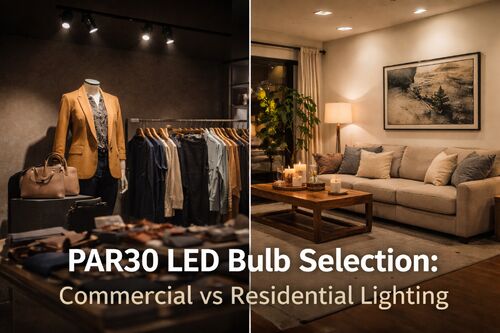
  • How to Choose the Right PAR30 LED Bulb: Commercial vs Residential Lighting Explained?

    How to Choose the Right PAR30 LED Bulb: Commercial vs Residential Lighting Explained?

    Many buyers assume that a PAR30 LED bulb is a universal product. Same size, same socket, same wattage—so it should work everywhere. In real projects, this assumption leads to glare complaints, poor atmosphere, wasted energy, and repeated replacements.

    Choosing the right PAR30 LED bulb depends less on the bulb itself and more on whether the application is commercial or residential.

    This guide explains how commercial and residential lighting needs differ, how those differences affect beam angle, color temperature, CRI, and operating patterns, and why professional buyers should never use one PAR30 specification to cover both environments.

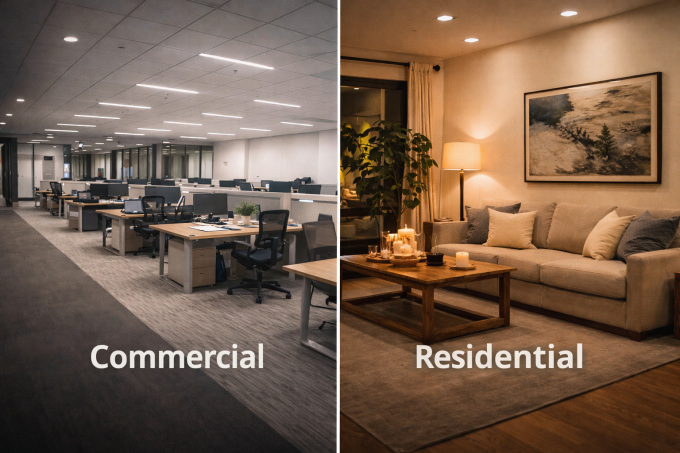
    Understanding the Fundamental Differences Between Commercial and Residential Lighting Needs?

    How to Choose the Right PAR30 LED Bulb: Commercial vs Residential Lighting Explained?  0

    Commercial and residential lighting serve different purposes, even when the same PAR30 LED bulb is used.

    Commercial vs residential PAR30 lighting differs primarily in objectives, operating time, and tolerance for variation.

    What commercial lighting is designed to achieve

    Commercial lighting focuses on:

    • visibility and clarity

    • consistency across spaces

    • support for business activity

    • reduced complaints at scale

    In commercial environments, lighting must work for many users with different preferences.

    What residential lighting is designed to achieve

    Residential lighting focuses on:

    • comfort and atmosphere

    • personal preference

    • emotional warmth

    • flexibility for daily life

    In homes, lighting serves individuals, not crowds.

    Why this difference matters for PAR30 selection

    A PAR30 LED bulb that works well in a shop may feel harsh in a living room.
    A PAR30 LED bulb that feels cozy at home may feel dim or yellow in a commercial space.

    Using the same specification for both creates friction.

    Risk tolerance is not the same

    Commercial buyers want:

    • fewer complaints

    • predictable performance

    • standardized outcomes

    Residential users accept variation if comfort is high.

    This difference shapes every technical decision.

    The key takeaway

    PAR30 LED bulb selection must start with application context, not product availability.

    How Beam Angle Selection for PAR30 Differs in Commercial and Residential Spaces?

    Beam angle is one of the most misunderstood factors in PAR30 selection.

    PAR30 beam angle selection must reflect how light is used, not just how bright it looks on paper.

    Beam angle needs in commercial spaces

    Commercial environments often require:

    • clear product highlighting

    • defined visual zones

    • controlled spill light

    Common commercial beam angles include:

    • narrow to medium beams for displays

    • medium beams for circulation highlights

    A focused beam increases visual efficiency and perceived brightness.

    Beam angle needs in residential spaces

    Residential spaces prioritize:

    • visual comfort

    • smooth light distribution

    • minimal glare

    Wider beam angles are often preferred to avoid harsh contrast.

    Comparing beam angle intent

    Application Typical Beam Angle Goal
    Retail display Focused, controlled
    Office common areas Balanced, medium
    Living room Soft, wide
    Dining area Medium, comfortable

    This difference explains why one PAR30 LED bulb cannot serve all uses equally.

    The glare factor

    In homes, glare tolerance is low.

    A narrow PAR30 beam aimed incorrectly can feel uncomfortable.
    In commercial spaces, higher contrast is often acceptable.

    Practical buyer guidance

    For PAR30 LED bulb for commercial lighting, prioritize:

    • beam control

    • higher center intensity

    For PAR30 LED bulb for residential lighting, prioritize:

    • wider beam

    • softer transitions

    Beam angle choice directly affects user satisfaction.

    Choosing the Right Color Temperature for PAR30 in Different Environments?

    How to Choose the Right PAR30 LED Bulb: Commercial vs Residential Lighting Explained?  1

    Color temperature drives perception more than most buyers expect.

    PAR30 color temperature application should reflect human expectation in each environment, not a single “standard” value.

    Color temperature in commercial settings

    Commercial spaces often favor:

    • neutral white (around 4000K)

    • daylight-like clarity

    • consistent appearance

    These temperatures support:

    • alertness

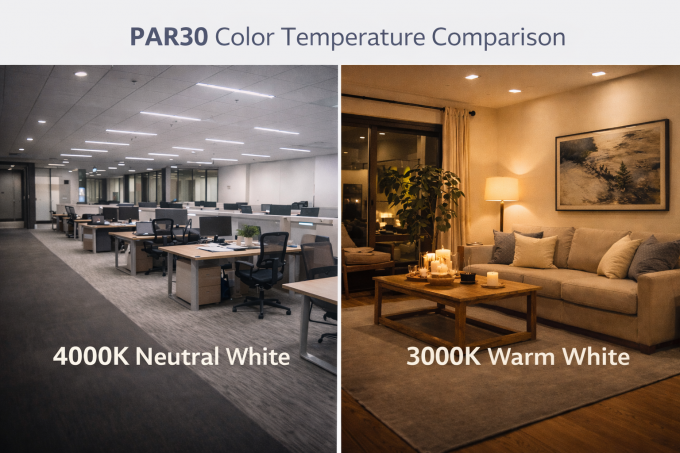
    • product visibility

    • modern visual identity

    This is why many buyers default to neutral or daylight PAR30 in commercial projects.

    Color temperature in residential settings

    Residential environments typically favor:

    • warm white (2700K–3000K)

    • relaxed atmosphere

    • emotional comfort

    These temperatures support rest and social interaction.

    Why mixing standards causes problems

    Installing a commercial-grade color temperature in homes often leads to:

    • “too cold” feedback

    • discomfort in the evening

    • rejection of the lighting

    Installing warm residential PAR30 in commercial spaces often leads to:

    • “too yellow” complaints

    • perceived lack of brightness

    • inconsistency across sites

    Cultural and regional influence

    Color temperature preference also varies by region.

    Commercial buyers usually choose safer, more neutral options to reduce cultural risk.

    Buyer takeaway

    Color temperature is not personal taste for buyers.
    It is risk management.

    Separate PAR30 color temperature strategies reduce returns and complaints.

    CRI and Light Quality Requirements: Commercial vs Residential PAR30?

    How to Choose the Right PAR30 LED Bulb: Commercial vs Residential Lighting Explained?  2

    Light quality expectations differ between markets.

    CRI requirements for PAR30 LED bulb selection change based on whether accuracy or comfort is the priority.

    CRI expectations in commercial lighting

    Commercial environments require:

    • consistent appearance

    • acceptable color rendering

    • predictable visual output

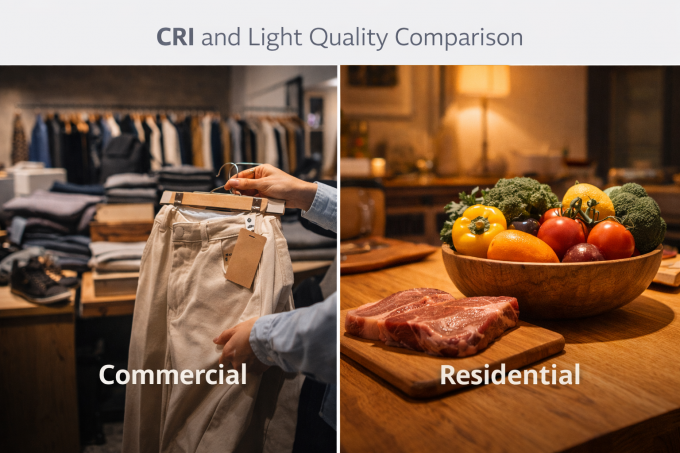
    For many applications, standard CRI levels are acceptable if consistency is high.

    Retail or display-focused areas may require higher CRI, but uniformity often matters more than maximum values.

    CRI expectations in residential lighting

    Residential users are more sensitive to:

    • skin tone appearance

    • food presentation

    • interior material colors

    Higher CRI is often appreciated because it enhances comfort and realism.

    The consistency factor

    In commercial settings, inconsistency between batches causes more problems than slightly lower CRI.

    In residential settings, users often accept variation if light feels pleasant.

    Light quality vs cost trade-off

    Higher CRI often means:

    • higher cost

    • lower efficacy

    Commercial buyers must balance:

    • visual quality

    • energy targets

    • budget constraints

    Residential buyers often prioritize comfort over efficiency.

    Practical guidance

    For commercial vs residential PAR30 lighting:

    • commercial: prioritize consistency and stability

    • residential: prioritize perceived quality and comfort

    Matching CRI strategy to application avoids over-specification.

    Energy Efficiency and Operating Hours: How Usage Patterns Affect PAR30 Selection?

    How to Choose the Right PAR30 LED Bulb: Commercial vs Residential Lighting Explained?  3

    Operating hours change how energy efficiency should be evaluated.

    PAR30 LED bulb efficiency must be judged against usage patterns, not just wattage.

    Commercial operating reality

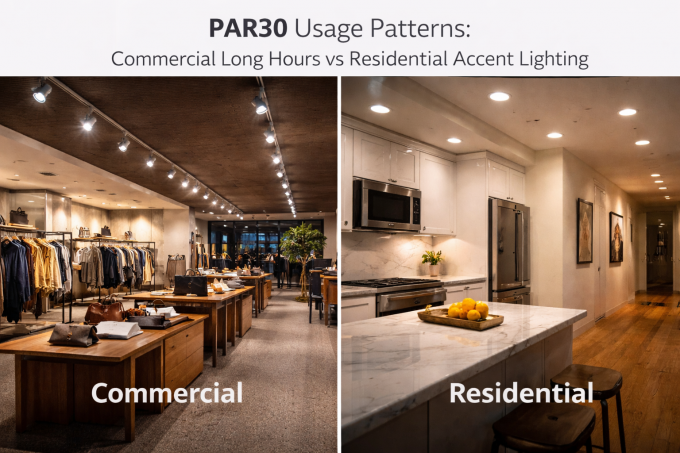
    Commercial PAR30 LED bulbs often run:

    • 8–14 hours per day

    • 6–7 days per week

    This makes:

    • driver reliability

    • thermal management

    • long-term lumen stability

    more important than minimal upfront cost.

    Residential operating reality

    Residential PAR30 usage is often:

    • shorter daily duration

    • more intermittent

    • behavior-dependent

    Efficiency still matters, but lifetime stress is lower.

    Why this affects specification

    A PAR30 LED bulb that performs well at home may fail prematurely in a commercial setting.

    Commercial environments require:

    • better heat dissipation

    • stable drivers

    • conservative operating margins

    Energy efficiency beyond watts

    Efficiency also includes:

    • fewer replacements

    • lower maintenance

    • stable performance over time

    In commercial projects, these factors outweigh small wattage differences.

    Buyer lesson

    For PAR30 LED bulb for commercial lighting, durability and stability drive true efficiency.
    For PAR30 LED bulb for residential lighting, comfort and flexibility often matter more.

    Best Practice: Creating Separate PAR30 Specifications for Commercial and Residential Projects?

    The most common mistake buyers make is trying to simplify too much.

    Using one PAR30 LED bulb specification for both commercial and residential projects creates unnecessary risk.

    Why one-size-fits-all fails

    Commercial and residential environments differ in:

    • expectations

    • operating patterns

    • tolerance for variation

    One compromise specification rarely satisfies both.

    Best practice approach

    Professional buyers create:

    • a commercial PAR30 specification

    • a residential PAR30 specification

    Even if the housing looks identical, internal choices differ.

    What should differ between specs

    Parameter Commercial PAR30 Residential PAR30
    Beam angle Controlled Wider
    Color temperature Neutral / Daylight Warm
    CRI focus Consistency Comfort
    Driver margin High Moderate
    Lifetime stress High Lower

    Inventory management concern

    Some buyers worry this increases SKU count.

    In practice, it reduces:

    • complaints

    • returns

    • project rework

    Which lowers total cost.

    Long-term benefit

    Separate specifications allow:

    • clearer marketing

    • better application fit

    • stronger buyer confidence

    This approach reflects mature procurement, not complexity.

    Final buyer mindset

    PAR30 LED bulbs are not commodities.
    They are application tools.

    Choosing correctly once is cheaper than fixing mistakes later.

    Conclusion

    Choosing the right PAR30 LED bulb requires recognizing that commercial and residential lighting have different goals, usage patterns, and tolerance levels, and the best results come from creating separate, application-specific PAR30 specifications.

    Teco supports B2B buyers and project professionals selecting PAR30 LED bulb solutions tailored for both commercial and residential environments.

    We help with:

    • PAR30 LED bulb for commercial lighting programs

    • PAR30 LED bulb for residential lighting optimization

    • PAR30 beam angle selection and color temperature planning

    • long-term, stable PAR30 supply for differentiated markets

    Our focus is on helping buyers reduce complaints, control operating cost, and build lighting product lines that actually fit their applications.

    Email: [email protected]
    Website: www.tecolite.com

    Tell me your project type and usage scenario.
    I will help you define the right PAR30 specification before problems appear.

  • PAR30 vs BR30: Which One Fits Your Retail Lighting Projects Better?

    PAR30 vs BR30: Which One Fits Your Retail Lighting Projects Better?

    Retail lighting decisions often look simple on the surface. PAR30 and BR30 bulbs share similar sizes, similar wattage ranges, and are often listed as “interchangeable.” In real retail projects, choosing the wrong one leads to poor product display, wasted energy, and unnecessary fixture changes.

    PAR30 vs BR30 lighting is not a cosmetic choice. It directly affects how products are perceived, how customers move through a store, and how efficiently lighting energy is used.

    This article explains the real differences between PAR30 and BR30, how beam angle and distribution shape retail performance, when each lamp type works better, and how buyers should decide between PAR30 and BR30 for retail lighting projects.

    Understanding the Core Design Differences Between PAR30 and BR30?

    PAR30 and BR30 are designed for different lighting purposes, even though they are often sold side by side.

    The core difference in PAR30 vs BR30 lighting lies in optical control, not size or power.

    What PAR30 is designed to do

    PAR30 stands for Parabolic Aluminized Reflector.

    Key characteristics:

    • defined reflector geometry

    • controlled, directional beam

    • higher center beam intensity

    PAR30 behaves like a spotlight. It sends light where you aim it.

    This makes the PAR30 spotlight vs BR30 floodlight distinction critical in retail.

    What BR30 is designed to do

    BR30 stands for Bulged Reflector.

    Key characteristics:

    • softer reflector shape

    • wider beam spread

    • lower center beam intensity

    BR30 behaves like a floodlight. It fills space rather than targeting objects.

    Structural comparison

    Feature PAR30 BR30
    Beam control Strong Soft
    Light direction Focused Diffused
    Typical use Accent / highlight General illumination
    Visual impact High contrast Even brightness

    Why this matters in retail

    Retail lighting is not about brightness alone. It is about:

    • guiding attention

    • creating contrast

    • separating products from background

    PAR30 and BR30 support these goals in different ways.

    Common buyer mistake

    Many buyers select PAR30 or BR30 based only on:

    • price

    • availability

    • fixture compatibility

    This ignores how light actually interacts with merchandise.

    Understanding design intent is the first step to choosing correctly.

    How Beam Angle and Light Distribution Affect Retail Product Display?

    Beam angle determines what customers notice first.

    In PAR30 vs BR30 retail lighting, beam angle and distribution directly influence product visibility and perceived value.

    PAR30 beam behavior

    PAR30 typically offers:

    • narrow to medium beam angles

    • higher lux on the product surface

    • stronger shadow definition

    This makes PAR30 beam angle retail applications ideal for:

    • featured products

    • premium displays

    • vertical surfaces

    Products appear more defined and more intentional.

    BR30 beam behavior

    BR30 typically offers:

    • wide beam angles

    • even horizontal distribution

    • softer shadows

    This supports BR30 general lighting retail environments where:

    • overall brightness matters

    • uniformity is preferred

    • navigation comfort is important

    Contrast drives attention

    Retail psychology relies on contrast.

    PAR30 creates contrast by:

    • brightening products

    • darkening surrounding areas

    BR30 reduces contrast by:

    • spreading light evenly

    • minimizing focal points

    This difference shapes customer behavior.

    Beam angle and perceived quality

    Products lit with controlled beams often feel:

    • more premium

    • more intentional

    • better curated

    This is why luxury retail heavily favors PAR lamps.

    When distribution becomes a problem

    Using BR30 where PAR30 is needed can result in:

    • flat displays

    • products blending into background

    • wasted light on floors

    Using PAR30 where BR30 is needed can result in:

    • harsh glare

    • uneven brightness

    • visual fatigue

    Correct beam selection prevents both issues.

    Practical takeaway

    Beam angle is not a technical detail.
    It is a sales tool.

    When PAR30 Performs Better in Retail Lighting Projects?

    PAR30 excels when lighting must actively sell the product.

    In retail lighting PAR30 or BR30 decisions, PAR30 performs better where focus, hierarchy, and visual impact matter.

    Ideal retail scenarios for PAR30

    PAR30 is well-suited for:

    • apparel displays

    • mannequins

    • feature walls

    • shelving with premium items

    • jewelry and accessories

    Anywhere products must stand out, PAR30 helps.

    Creating visual hierarchy

    Retail spaces need hierarchy:

    • hero products

    • secondary items

    • background elements

    PAR30 supports this by allowing designers to:

    • layer light

    • direct attention

    • control brightness ratios

    BR30 cannot achieve this alone.

    Flexibility in changing displays

    Retail layouts change frequently.

    PAR30 allows:

    • re-aiming fixtures

    • adapting focus as displays change

    • keeping the same lighting hardware

    This flexibility reduces rework cost.

    Perceived brightness without higher energy

    PAR30 delivers higher lux on products without increasing total wattage.

    This improves perceived brightness where it matters, without lighting the entire space excessively.

    Brand positioning impact

    Brands that rely on:

    • premium perception

    • curated presentation

    • storytelling displays

    almost always rely on PAR-style lighting.

    Limitations of PAR30

    PAR30 is not ideal for:

    • large open areas

    • aisles requiring uniform brightness

    • spaces where glare control is difficult

    Understanding limits prevents misuse.

    When BR30 Is the Better Choice for Retail Spaces?

    BR30 plays a different but equally important role.

    BR30 is the better choice when retail lighting needs to feel open, comfortable, and evenly lit.

    Ideal retail scenarios for BR30

    BR30 works best in:

    • supermarkets

    • convenience stores

    • large floor areas

    • aisles and circulation zones

    These spaces prioritize clarity and comfort over drama.

    Supporting customer movement

    BR30 general lighting retail applications help customers:

    • navigate aisles

    • read signage

    • feel comfortable spending time

    Uniform lighting reduces eye strain.

    Reducing glare and harsh contrast

    BR30 produces:

    • softer shadows

    • fewer hot spots

    • smoother brightness transitions

    This is important in:

    • low-ceiling spaces

    • stores with reflective surfaces

    Simplifying maintenance

    BR30 lighting layouts are often:

    • simpler

    • more uniform

    • less sensitive to aiming

    This reduces maintenance effort in large chains.

    Cost and efficiency perception

    From a buyer perspective, BR30 often feels:

    • simpler to specify

    • easier to replicate across stores

    This supports standardized rollout strategies.

    Limitations of BR30

    BR30 struggles with:

    • highlighting specific products

    • creating premium visual impact

    • controlling spill light

    Used alone, it can make stores feel flat.

    Practical role of BR30

    BR30 is excellent at setting the base layer of retail lighting.

    PAR30 vs BR30: Energy Efficiency and Operational Cost Comparison?

    Energy efficiency is not just about watts per lamp.

    In PAR30 vs BR30 lighting, operational cost depends on how effectively light is used, not how widely it is spread.

    Energy efficiency in real retail use

    PAR30 can be more efficient when:

    • fewer lamps are needed for highlights

    • light is concentrated on products

    • background lighting is reduced

    BR30 can be more efficient when:

    • uniform coverage is required

    • fewer fixtures are needed overall

    Efficiency depends on application.

    Comparing effective light use

    Aspect PAR30 BR30
    Light utilization High on target Spread across space
    Fixture count Often higher Often lower
    Visual efficiency High Moderate
    Energy waste Low when aimed well Higher spill on floors

    Operational cost beyond energy

    Operational cost includes:

    • lamp replacement

    • re-aiming labor

    • layout change costs

    PAR30 may require:

    • more initial planning

    • occasional re-aiming

    BR30 may require:

    • additional accent fixtures later

    Long-term retail cost reality

    Many retailers start with BR30 only.

    Later, they add PAR30 to fix flat displays.

    This doubles cost.

    A layered approach from the start is often cheaper.

    Energy codes and compliance

    Modern LED PAR30 and BR30 both meet energy regulations.

    The real question is:

    “How much of that energy helps sell products?”

    Cost mindset shift

    Efficiency is not about lighting less.
    It is about lighting smarter.

    Conclusion

    In retail lighting projects, PAR30 vs BR30 is not an either-or decision: PAR30 excels at product focus and visual impact, while BR30 supports comfortable, uniform general lighting, and the best results often come from using both strategically.

    Teco supports B2B buyers, retailers, and project contractors evaluating PAR30 vs BR30 lighting for real retail environments, not showroom theory.

    We help with:

    • PAR30 vs BR30 retail lighting planning

    • PAR30 spotlight vs BR30 floodlight selection

    • beam angle optimization for retail displays

    • energy-efficient retail lighting layouts

    Our goal is to help buyers choose lighting that improves sales performance while controlling long-term operating cost.

    Email: [email protected]
    Website: www.tecolite.com

    Tell me your store type, ceiling height, and product category.
    I will help you decide whether PAR30, BR30, or a layered solution fits your retail lighting project best.

  • How to Use Dimmable GU10 Bulbs to Create Energy-Efficient and Smart Commercial Lighting

    How to Use Dimmable GU10 Bulbs to Create Energy-Efficient and Smart Commercial Lighting

    Many commercial lighting projects pursue energy savings by replacing fixtures, redesigning layouts, or installing complex building management systems. In reality, a significant portion of wasted energy comes from a simpler issue: lights operate at full output even when full brightness is unnecessary.

    Dimmable GU10 bulbs offer one of the most practical paths to energy-efficient and smart commercial lighting—without replacing fixtures or over-engineering control systems.

    This article explains why dimming is often the most effective energy-saving strategy in commercial environments, how dimmable GU10 bulbs enable smart lighting upgrades, where return on investment is highest, and how buyers should specify dimmable GU10 correctly for reliable, energy-efficient commercial projects.

    Why Dimming Is the Most Effective Energy-Saving Strategy in Commercial Lighting

    How to Use Dimmable GU10 Bulbs to Create Energy-Efficient and Smart Commercial Lighting  0

    Energy efficiency in commercial lighting is often treated as a hardware problem. In practice, it is usually a usage problem.

    The largest energy losses in commercial lighting come from over-lighting, not inefficient light sources.

    Full output is rarely required

    In real commercial spaces:

    • corridors remain empty for long periods

    • retail traffic fluctuates throughout the day

    • offices are partially occupied

    • hospitality spaces operate on variable schedules

    Yet lighting systems are commonly designed to run at 100% output continuously.

    Why dimming outperforms simple on–off control

    On–off switching creates binary behavior, not optimization.

    Dimming allows:

    • partial power reduction instead of full shutdown

    • gradual adjustment to real demand

    • energy savings without visual discomfort

    This is why dimmable GU10 bulbs for commercial lighting consistently outperform simple switching strategies.

    Energy savings depend on time, not just wattage

    Even modest dimming levels matter.

    Reducing output by 30% for 10 hours per day often saves more energy than replacing a fixture that operates inefficiently for only short periods.

    Dimming works because it reduces average operating power over time, not just peak load.

    Why GU10 spotlights benefit most from dimming

    GU10 bulbs are widely used in:

    • retail accent lighting

    • hospitality corridors and public areas

    • task and directional lighting

    These applications rarely require constant full brightness, making GU10 an ideal format for dimming-based energy strategies.

    How Dimmable GU10 Bulbs Reduce Energy Without Fixture Replacement

    How to Use Dimmable GU10 Bulbs to Create Energy-Efficient and Smart Commercial Lighting  1

    One of the biggest barriers to energy-efficient upgrades is disruption.

    Dimmable GU10 bulbs allow energy reduction without replacing fixtures, rewiring ceilings, or redesigning layouts.

    The retrofit advantage

    Most commercial buildings already use GU10 fixtures.

    Replacing fixtures introduces:

    • labor cost

    • downtime

    • coordination risk

    Replacing lamps with dimmable GU10 bulbs upgrades performance within existing infrastructure—forming the basis of GU10 smart lighting retrofit strategies.

    Power reduction and thermal benefit

    Dimming does not reduce power perfectly linearly, but lower output still reduces:

    • power draw

    • thermal stress on drivers

    • component aging

    Lower operating temperature extends lamp life and reduces replacement frequency, contributing to long-term energy efficiency.

    Incremental implementation

    Commercial projects rarely upgrade everything at once.

    Dimmable GU10 bulbs support:

    • phased deployment

    • room-by-room upgrades

    • budget-controlled rollouts

    This flexibility often delivers higher real-world savings than theoretical maximum efficiency.

    What “Smart” Means in Smart Commercial GU10 Lighting

    In this context, smart does not mean complex.

    Smart commercial lighting with GU10 bulbs refers to basic automation—timers, sensors, and controlled dimming—not necessarily full building management systems.

    Why automation matters

    Manual dimming depends on:

    • staff discipline

    • consistent behavior

    • correct daily operation

    In commercial environments, this reliability rarely holds at scale.

    Automation ensures dimming actually happens.

    Practical smart control methods

    Effective setups often include:

    • occupancy sensors (corridors, meeting rooms, storage)

    • time-based dimming schedules (retail, hospitality)

    • daylight-responsive dimming near windows

    These systems reduce energy without increasing operational complexity.

    GU10’s advantage in smart control

    GU10 circuits are usually:

    • localized

    • application-specific

    • easy to segment

    This enables targeted smart control rather than whole-building complexity.

    Where Dimmable GU10 Delivers the Highest ROI

    How to Use Dimmable GU10 Bulbs to Create Energy-Efficient and Smart Commercial Lighting  2

    Not all spaces benefit equally from dimming.

    The highest ROI appears where occupancy and usage fluctuate.

    High-ROI applications

    • Retail: variable traffic, accent lighting, long operating hours

    • Hospitality: corridors, lounges, restaurants, public zones

    • Offices: meeting rooms, breakout areas, circulation spaces

    • Museums & galleries: accent lighting, preservation-sensitive zones

    In these environments, dimming reduces waste without affecting functionality.

    Lower-ROI applications

    Dimmable GU10 is less effective in:

    • emergency lighting

    • safety-critical constant illumination

    • spaces requiring fixed brightness

    In these cases, efficient non-dimmable lighting or limited night-time reduction may be more appropriate.

    ROI is not only energy

    Return on investment also includes:

    • reduced maintenance

    • longer lamp life

    • improved user comfort

    These benefits often outweigh pure kWh savings.

    A Simple Energy Saving Estimation Method

    For early-stage evaluation, buyers can estimate savings using a practical approximation:

    Annual Energy Saving (kWh)
    = (W_full − W_dim_avg) × operating hours × number of lamps ÷ 1000

    Notes:

    • Actual power reduction is not perfectly linear

    • Low-end dimming behavior depends on driver design

    • For large projects, request measured power curves from suppliers

    This approach supports realistic budgeting and ROI comparison.

    Common Mistakes in Smart Commercial GU10 Projects

    Most failures come from execution, not concept.

    Typical errors

    • assuming all dimmable GU10 bulbs perform similarly

    • ignoring dimmer and load compatibility

    • over-complex automation

    • no defined dimming strategy

    • poor commissioning

    • excessive dimming that causes discomfort

    Discomfort leads to manual overrides, which eliminate energy savings.

    How Buyers Should Specify Dimmable GU10 for Commercial Projects

    How to Use Dimmable GU10 Bulbs to Create Energy-Efficient and Smart Commercial Lighting  3

    Specification determines outcome.

    Five parameters that must be fixed in specifications

    • Supported dimming type (leading-edge / trailing-edge / TRIAC)

    • Minimum stable dimming level (with test conditions)

    • Flicker acceptance criteria or measurement method

    • Recommended load range per dimmer

    • Change management: written approval for driver or BOM changes

    These items should appear in datasheets, contracts, or purchase orders.

    Prioritize stability over features

    Reliable dimming with low flicker and silent operation matters more than advanced features that are rarely used.

    Think beyond the first order

    Energy efficiency includes:

    • long-term availability

    • consistent dimming behavior

    • stable specifications over multiple years

    Short-term savings disappear if products change silently.

    Conclusion

    Dimmable GU10 bulbs enable energy-efficient and smart commercial lighting by reducing over-lighting, supporting simple automation, and upgrading existing fixtures without disruption—when specified, controlled, and commissioned correctly.

    Teco supports B2B buyers developing dimmable GU10 bulbs for commercial lighting that focus on real energy savings, not marketing claims.

    We help with:

    • energy-efficient GU10 lighting programs

    • smart commercial GU10 retrofit strategies

    • dimmer compatibility and stability guidance

    • long-term, repeatable GU10 specifications for bulk orders

    Email: [email protected]
    Website: www.tecolite.com

    Share your application type, control method, and project scale.
    We will help you design a GU10 dimming solution that saves energy without creating new operational problems.

  • How Color Temperature Influences Purchasing Decisions: Why Many Buyers Prefer Daylight GU10?

    How Color Temperature Influences Purchasing Decisions: Why Many Buyers Prefer Daylight GU10?

    Many GU10 purchasing decisions are described as “technical.” In reality, most of them are psychological, operational, and risk-driven. Buyers do not always choose what designers prefer. They choose what feels safer to sell, specify, and repeat.

    Daylight GU10 bulbs are often selected not because they are visually ideal, but because they reduce decision risk, complaints, and downstream uncertainty for buyers.

    This article explains how color temperature shapes purchasing behavior, why Daylight GU10 (typically around 4000K in European markets) has become a default choice for many buyers, how commercial and project demand reinforces this preference, and what buyers should evaluate before committing inventory to daylight GU10 bulbs.

    How Color Temperature Directly Influences Buying Behavior?

    How Color Temperature Influences Purchasing Decisions: Why Many Buyers Prefer Daylight GU10?  0

    Color temperature is not just a lighting parameter. It functions as a buying signal.

    Color temperature purchasing decisions in lighting are driven more by perceived safety, versatility, and complaint risk than by aesthetics alone.

    Buyers do not evaluate color temperature like designers

    Designers tend to think in terms of:

    • mood

    • atmosphere

    • emotional warmth

    Buyers, however, think in terms of:

    • return rates

    • customer complaints

    • reorders

    • internal approval risk

    This difference explains why technically “better” lighting is not always commercially preferred.

    Warm light feels subjective, daylight feels neutral

    Warm white lighting often triggers subjective reactions:

    • “too yellow”

    • “too dim”

    • “feels old-fashioned”

    These reactions vary significantly between individuals.

    Daylight and neutral white lighting, by contrast, provoke fewer emotional responses. They feel more “correct,” more neutral, and easier to accept without discussion.

    Neutrality reduces friction in sales and specification

    Daylight GU10 bulbs tend to:

    • appear acceptable in a wider range of spaces

    • generate fewer objections during approval

    • require less explanation during sales

    This neutrality directly affects purchasing behavior, especially for bulk buyers and distributors.

    Fewer variables mean fewer problems

    From a buyer’s perspective, daylight GU10 works in:

    • offices

    • retail environments

    • corridors

    • kitchens

    • general commercial renovations

    Warm white often requires justification.
    Justification slows decisions.

    Psychological safety in organizational purchasing

    In many organizations, daylight GU10 reduces internal debate. It is harder for stakeholders to criticize later, which lowers perceived decision risk for procurement teams.

    This is a risk-reduction choice, not a design-driven one.

    Why Daylight GU10 Is Perceived as the Safest Choice?

    How Color Temperature Influences Purchasing Decisions: Why Many Buyers Prefer Daylight GU10?  1

    Safety in purchasing is not only about electrical compliance. It is about avoiding problems after delivery.

    Daylight GU10 bulbs are perceived as the safest option because they minimize subjective dissatisfaction across different users and environments.

    Daylight equals “working light” in buyer logic

    In many markets, daylight or neutral white lighting is associated with:

    • clarity

    • productivity

    • cleanliness

    Even in residential settings, 4000K is often described as “normal” or “clear.”
    Perception matters more than theory.

    Fewer “too warm” complaints

    Warm white GU10 bulbs frequently generate feedback such as:

    • “too yellow”

    • “too dark”

    • “not modern enough”

    Daylight GU10 rarely triggers strong negative reactions, even when users do not love the appearance.

    Daylight travels better across markets

    Buyers serving multiple regions face cultural variation.

    What feels cozy in one country feels dull or outdated in another.

    Daylight GU10 crosses borders more easily with fewer objections, which explains why many buyers default to it as a core SKU.

    Operational safety in projects

    In project environments, safety means:

    • fewer change requests

    • fewer on-site arguments

    • fewer redesign discussions

    Daylight GU10 lowers the chance that someone will say, “This looks wrong.”

    Buyer logic summary

    Daylight GU10 is chosen because it:

    • offends fewer people

    • requires less explanation

    • reduces post-installation conflict

    That makes it commercially safe.

    Commercial and Project Applications Drive Daylight GU10 Demand

    How Color Temperature Influences Purchasing Decisions: Why Many Buyers Prefer Daylight GU10?  2

    The strongest driver behind daylight GU10 demand is commercial reality, not residential taste.

    Daylight GU10 dominates commercial lighting because projects prioritize clarity, consistency, and risk avoidance over atmosphere.

    Commercial lighting priorities

    Commercial buyers prioritize:

    • brightness perception

    • visual clarity

    • standardization

    Daylight GU10 supports all three.

    Retail and showroom environments

    In retail, daylight GU10 bulbs:

    • present products clearly

    • reduce color distortion

    • feel modern and clean

    Retailers avoid lighting that alters product appearance. Daylight feels safer.

    Offices and workspaces

    In offices, 4000K is widely perceived as:

    • neutral

    • professional

    • suitable for long working hours

    Even when circadian discussions arise, buyers often default to daylight GU10 for simplicity.

    Hospitality public areas

    While guest rooms may favor warmer tones, public areas often use daylight or neutral white because:

    • spaces are multifunctional

    • lighting must suit all guests

    • design themes change over time

    Daylight GU10 provides flexibility.

    Project-driven stocking behavior

    Wholesalers serving project clients stock more daylight GU10 because:

    • projects reorder the same specification

    • changes are costly

    • standardization simplifies logistics

    This demand reinforces availability and further normalizes daylight GU10.

    Daylight GU10 vs Warm White GU10: Sales Reality vs Design Theory

    How Color Temperature Influences Purchasing Decisions: Why Many Buyers Prefer Daylight GU10?  3

    Design theory and sales reality often point in different directions.

    The daylight GU10 vs warm white GU10 debate highlights the gap between ideal design and commercial decision-making.

    What design theory emphasizes

    Design theory often recommends:

    • warm light for comfort

    • 2700K–3000K for living spaces

    • emotional warmth over clarity

    This works well in controlled environments.

    What sales reality shows

    In practice:

    • daylight GU10 sells faster

    • daylight GU10 generates fewer returns

    • daylight GU10 leads to fewer disputes

    Buyers respond to what moves smoothly through the channel.

    Inventory risk comparison

    Aspect Daylight GU10 Warm White GU10
    Sell-through speed High Variable
    Complaint risk Low Higher
    Project acceptance High Conditional
    Cross-market use Strong Limited

    Why reality wins

    Sales reality involves:

    • mixed expectations

    • rushed decisions

    • non-technical end users

    Daylight GU10 performs better under imperfect conditions.

    When Daylight GU10 Is the Right Choice—and When It Is Not

    How Color Temperature Influences Purchasing Decisions: Why Many Buyers Prefer Daylight GU10?  4

    Daylight GU10 is not universally correct.

    It works best where clarity and neutrality matter more than atmosphere.

    When daylight GU10 is the right choice

    • offices

    • retail spaces

    • showrooms

    • corridors

    • kitchens

    • commercial renovations

    Where daylight GU10 is often misused

    • bedrooms

    • restaurants

    • lounges

    • hospitality guest rooms

    In these spaces, daylight can feel harsh or uncomfortable.

    Why buyers still choose it

    Buyers often accept this compromise because daylight GU10:

    • avoids subjective arguments

    • simplifies SKU management

    • matches commercial expectations

    This is a trade-off, not ignorance.

    Balanced stocking strategy

    Many professional buyers:

    • stock daylight GU10 as the core SKU

    • offer warm white GU10 for defined zones

    This balances risk and experience.

    What Buyers Should Evaluate Before Stocking Daylight GU10

    How Color Temperature Influences Purchasing Decisions: Why Many Buyers Prefer Daylight GU10?  5

    Stocking daylight GU10 is not just about CCT.

    Buyers should evaluate consistency, perception, and application fit.

    CCT consistency

    Daylight GU10 requires tight binning.
    Inconsistent 4000K looks worse than inconsistent warm white.

    CRI and comfort

    Low-CRI daylight lighting can feel:

    • flat

    • clinical

    • uncomfortable

    Ensure CRI aligns with the target market.

    Dimming behavior

    Daylight GU10 often performs worse when dimmed.

    Check:

    • flicker

    • low-end stability

    • dimmer compatibility

    SKU positioning

    Decide whether daylight GU10 is:

    • a default SKU

    • a project-only option

    • a commercial-focused product

    Clear positioning reduces mismatch.

    Conclusion

    Daylight GU10 bulbs dominate purchasing decisions because they reduce risk, simplify sales, and align with commercial and project-driven demand—even when design theory suggests warmer alternatives.

    Teco supports B2B buyers supplying Daylight GU10 bulbs for commercial, residential, and project markets with a focus on consistency, stability, and repeatability.

    We help with:

    • daylight GU10 vs warm white GU10 SKU planning

    • stable 4000K GU10 production programs

    • private-label and ODM GU10 solutions

    • application-focused specification support

    Our goal is not to push one color temperature, but to help buyers stock what actually sells with the least friction.

    Email: [email protected]
    Website: www.tecolite.com

    Tell us your target market and application mix.
    We will help you decide whether daylight GU10 should sit at the core of your product line.