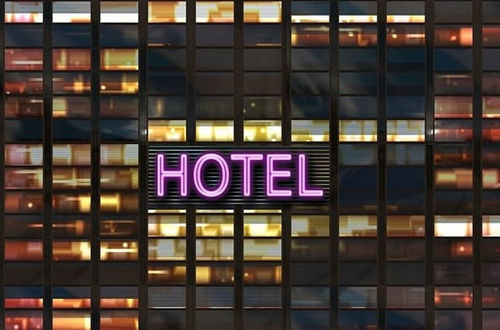
Introduction
Lighting plays a crucial role in creating the perfect atmosphere in hotels. From welcoming lobbies to comfortable guest rooms, the right lighting enhances guest experiences while showcasing the hotel’s unique design and brand identity. This article explores the various types of lighting commonly used in hotels, their applications, and the latest trends in hotel lighting technology.
Key Types of Hotel Lighting
Ambient Lighting
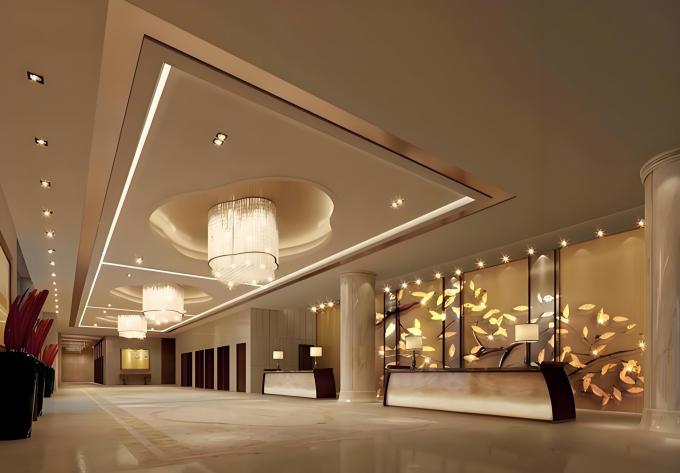
Ambient lighting provides the main source of illumination in hotel spaces. It creates the overall brightness level and sets the foundation for other lighting layers.
Common ambient lighting solutions in hotels include:
- Chandeliers and pendant lights in lobbies and dining areas
-
Recessed downlights in corridors and guest rooms
-
Cove lighting along ceiling edges for indirect illumination
-
Flush-mount ceiling fixtures in functional areas
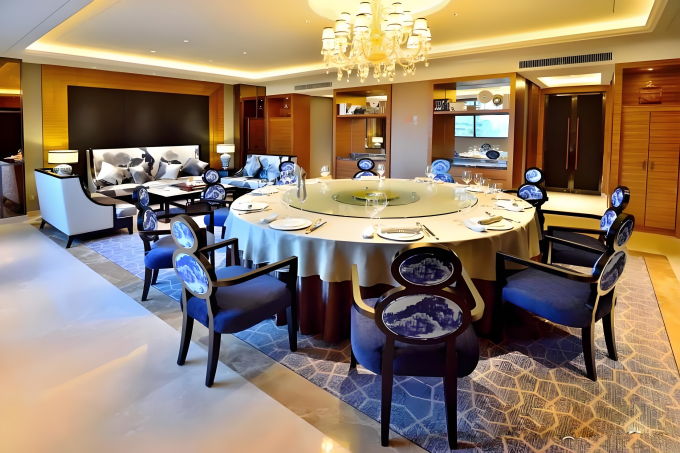
The color temperature of ambient lighting is carefully selected to create the desired mood—warmer tones (2700K-3000K) for relaxing areas and cooler tones (3500K-4000K) for functional spaces where alertness is important.
Task Lighting
Task lighting focuses on specific areas where activities take place, providing adequate illumination for particular functions.
Examples of task lighting in hotels include:
- Reading lights mounted by the bed or on headboards
-
Desk lamps in work areas and writing desks
-
Vanity lighting around bathroom mirrors
-
Under-cabinet lighting in kitchenettes or minibar areas
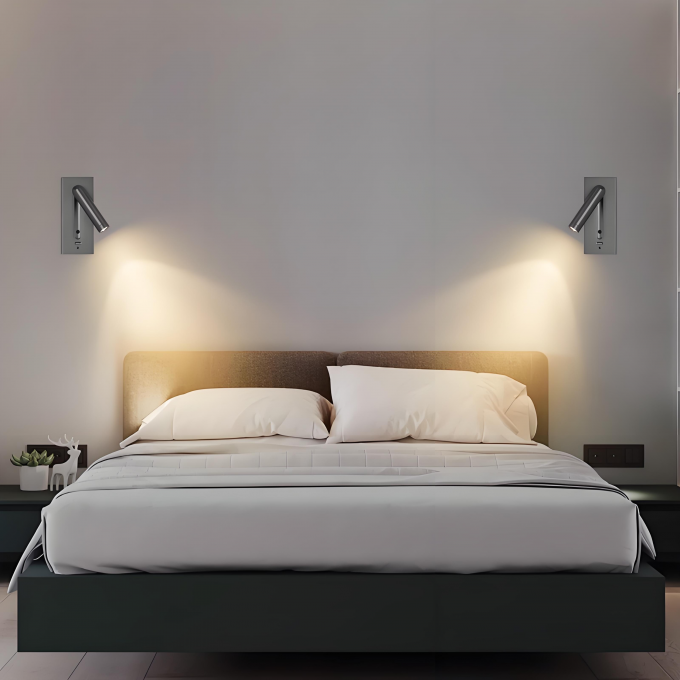
Effective task lighting enhances guest comfort and convenience while allowing for lower levels of ambient lighting, creating a more intimate atmosphere.
Accent Lighting
Accent lighting highlights architectural features, artwork, and design elements. It adds visual interest and creates depth in hotel spaces.
Popular accent lighting techniques include:
- Wall sconces in corridors and transition areas
-
Picture lights illuminating artwork and photographs
-
Uplighting highlighting columns, plants, or textured walls
-
LED strip lighting accentuating architectural details
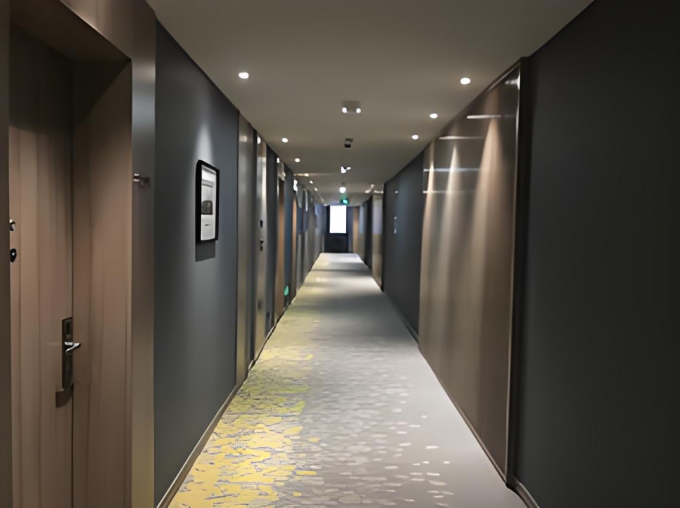
Accent lighting typically delivers three to five times more light on the focal point than the surrounding ambient lighting, creating visual contrast that draws attention to design features.
Specialized Lighting Applications in Hotels
Lobby and Reception Area Lighting
The hotel lobby creates the first impression for guests, making lighting particularly important in this space.
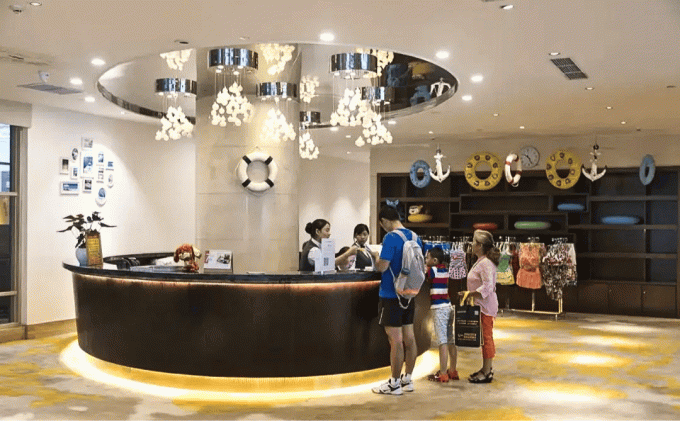
Effective lobby lighting typically includes:
- Statement lighting fixtures that reflect the hotel’s design aesthetic
-
Layered lighting creates distinct zones for reception, seating, and circulation
-
Dynamic lighting systems that adjust throughout the day
-
Strategic accent lighting highlighting architectural features and branding elements
Guest Room Lighting
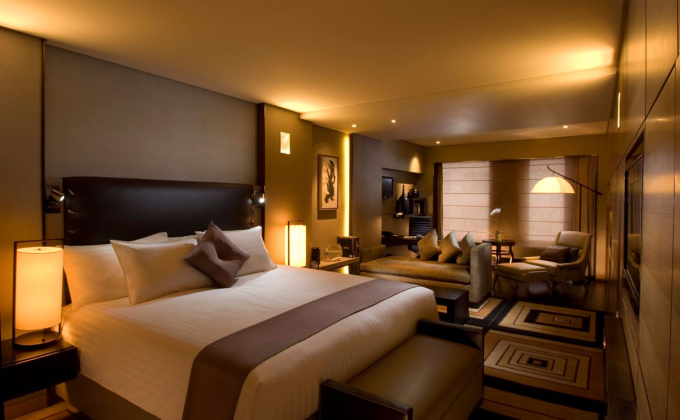
Guest room lighting must be versatile enough to support multiple activities while creating a comfortable environment.
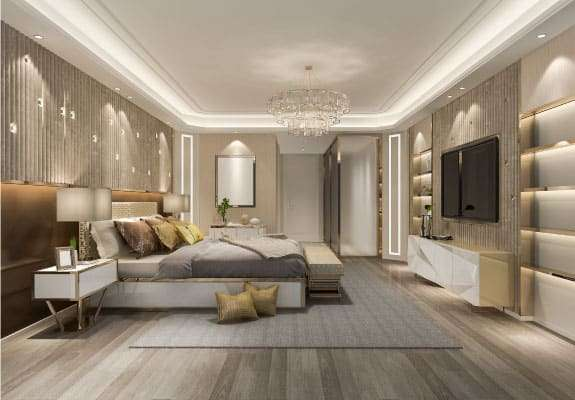
Key elements include:
- Centralized controls allow guests to adjust lighting from entry points and bedside
-
Layered lighting combining ambient, task, and accent elements
-
Bathroom lighting that works for both grooming and relaxation
-
Energy-efficient solutions that reduce operational costs
Restaurant and Bar Lighting
Hotel restaurants and bars require lighting that creates an atmosphere while allowing guests to read menus and see their food properly.
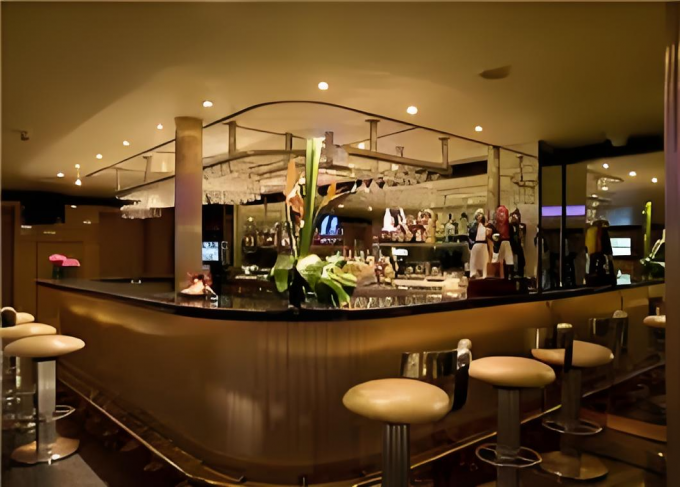
Successful approaches include:
- Adjustable systems that transition from daytime to evening settings
-
Focused table lighting creates intimate dining experiences
-
Decorative fixtures reinforcing the venue’s theme
-
Accent lighting highlighting food display areas and architectural features
Technology Trends in Hotel Lighting
Smart Lighting Systems
Modern hotels increasingly implement intelligent lighting control systems that enhance guest experience while improving operational efficiency.
Key features include:
- Centralized management systems
-
Occupancy sensors adjusting lighting based on room presence
-
Scene-setting capabilities creating pre-programmed environments
-
Integration with property management systems
Energy Efficiency Solutions
Sustainability is driving many lighting decisions in the hospitality industry.
[IMAGE: LED lighting fixtures being installed in a hotel ceiling, showcasing their compact size and energy efficiency]
Popular approaches include:
- LED technology replacing traditional halogen and incandescent lights
-
Daylight harvesting systems balancing artificial light with available natural light
-
Automated controls reduce energy waste in unoccupied spaces
-
Energy management systems integrating lighting with HVAC and other building systems
Circadian Lighting
Hotels are beginning to implement lighting that supports guests’ natural sleep-wake cycles.
Circadian lighting systems:
- Adjust color temperature throughout the day
-
Provide energizing light in the morning
-
Transition to warmer, dimmer light in the evening
-
Support better sleep quality for guests still adjusting to new time zones
Conclusion
Hotel lighting design balances aesthetics, functionality, energy efficiency, and guest comfort. The thoughtful integration of ambient, task, and accent lighting creates environments that enhance the guest experience while supporting the hotel’s operational goals.
As technology continues to evolve, hotels are finding new ways to personalize lighting experiences while reducing environmental impact. From dramatic lobby installations to subtle bedroom illumination, lighting remains one of the most important elements in creating memorable hotel environments that keep guests returning.
For hoteliers planning renovations or new construction, investing in high-quality, adaptable lighting systems delivers returns through improved guest satisfaction, operational efficiency, and brand differentiation in a competitive marketplace.


 Your message must be between 20-3,000 characters!