.gtr-container-x7y2z9 {
font-family: Verdana, Helvetica, “Times New Roman”, Arial, sans-serif;
color: #333;
line-height: 1.6;
padding: 15px;
box-sizing: border-box;
overflow-wrap: break-word;
}
.gtr-container-x7y2z9 p {
font-size: 14px;
margin-bottom: 1em;
text-align: left !important;
}
.gtr-container-x7y2z9 a {
color: #007bff;
text-decoration: underline;
}
.gtr-container-x7y2z9 strong {
font-weight: bold;
}
.gtr-container-x7y2z9 .gtr-title {
font-size: 18px;
font-weight: bold;
margin-bottom: 1.5em;
text-align: left;
}
.gtr-container-x7y2z9 .gtr-section-title {
font-size: 18px;
font-weight: bold;
margin-top: 2em;
margin-bottom: 1em;
text-align: left;
}
.gtr-container-x7y2z9 .gtr-subsection-title {
font-size: 16px;
font-weight: bold;
margin-top: 1.5em;
margin-bottom: 0.8em;
text-align: left;
}
.gtr-container-x7y2z9 .gtr-sub-subsection-title {
font-size: 14px;
font-weight: bold;
margin-top: 1.2em;
margin-bottom: 0.6em;
text-align: left;
}
.gtr-container-x7y2z9 .gtr-separator {
border-top: 1px solid #ddd;
margin: 2em 0;
}
.gtr-container-x7y2z9 ul {
list-style: none !important;
padding-left: 0;
margin-bottom: 1em;
}
.gtr-container-x7y2z9 ul li {
list-style: none !important;
position: relative;
padding-left: 1.5em;
margin-bottom: 0.5em;
font-size: 14px;
text-align: left;
}
.gtr-container-x7y2z9 ul li::before {
content: "â¢" !important;
position: absolute !important;
left: 0 !important;
color: #007bff;
font-size: 1em;
line-height: 1.6;
}
.gtr-container-x7y2z9 ol {
list-style: none !important;
padding-left: 0;
margin-bottom: 1em;
counter-reset: list-item;
}
.gtr-container-x7y2z9 ol li {
list-style: none !important;
position: relative;
padding-left: 2em;
margin-bottom: 0.5em;
font-size: 14px;
text-align: left;
counter-increment: none;
}
.gtr-container-x7y2z9 ol li::before {
content: counter(list-item) "." !important;
position: absolute !important;
left: 0 !important;
color: #007bff;
font-weight: bold;
width: 1.5em;
text-align: right;
line-height: 1.6;
}
@media (min-width: 768px) {
.gtr-container-x7y2z9 {
max-width: 800px;
margin: 0 auto;
padding: 20px;
}
.gtr-container-x7y2z9 .gtr-title {
font-size: 24px;
}
.gtr-container-x7y2z9 .gtr-section-title {
font-size: 20px;
}
.gtr-container-x7y2z9 .gtr-subsection-title {
font-size: 18px;
}
}
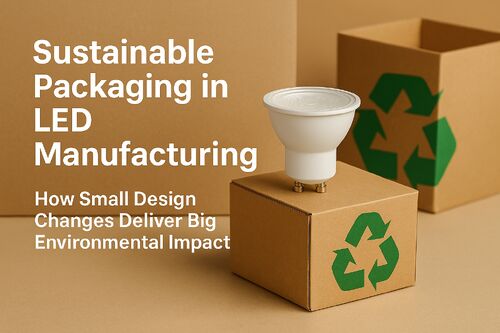
Sustainable Packaging in LED Manufacturing: How Small Design Changes Deliver Big Environmental Impact
Sustainability used to be a marketing slogan in the lighting world. Today, it is a business requirement. Regulations are tighter, customers are more informed, and wholesalers are expected to offer products that do more than just perform well—they must also carry a smaller environmental footprint. Packaging has become one of the simplest, fastest, and most cost-effective ways for LED manufacturers to reduce waste without changing the core product.
In LED manufacturing, small packaging adjustments—changing materials, optimizing structure, or reducing ink—can create a surprisingly large environmental impact. For companies that sell millions of units annually, these changes are not minor; they reshape the way products travel, store, and reach end users.
This article breaks down how sustainable packaging works in LED factories, why it matters for the global supply chain, and what benefits wholesalers and commercial buyers gain by supporting the shift.
Why Sustainable Packaging Has Become a Priority
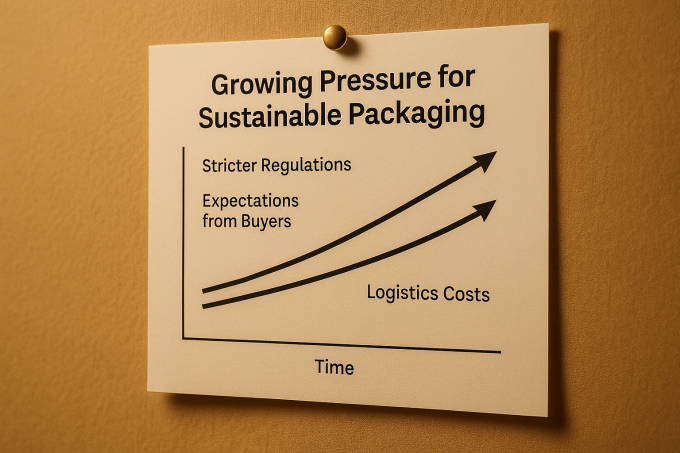
The lighting industry faces rising pressure from three directions:
Environmental regulations, especially in Europe, often set the pace for global standards. For instance:
These numbers explain why LED manufacturers are rethinking packaging—not only for compliance but also for cost efficiency and brand value.
For B2B buyers, the shift is equally important. Many retailers, electrical wholesalers, and engineering companies now submit sustainability reports or ESG disclosures. Choosing LED suppliers with eco-friendly packaging directly supports these initiatives.
How LED Manufacturers Reduce Packaging Waste Through Material Choices
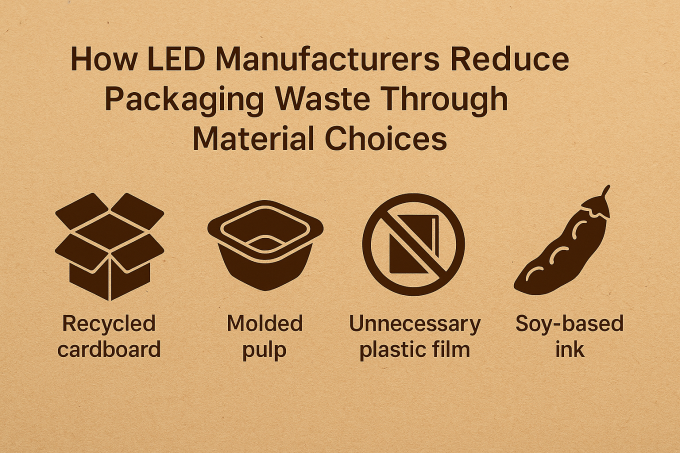
The fastest path to greener packaging starts with the materials themselves. LED manufacturers are now replacing old components with sustainable alternatives that still protect products during shipping.
- Recycled cardboard instead of virgin pulp
Most modern LED factories now use packaging with 70–90% recycled fiber. The advantage is substantial—producing recycled cardboard requires:
Recycled cardboard also performs well in drop tests, making it suitable for GU10, MR16, and A-series LED bulbs.
- Switching from plastic trays to molded pulp
Molded pulp trays, made from waste fiber, replace traditional PET or PVC trays. They are:
- biodegradable
-
shock-absorbent
-
cost-competitive
A study published by the Sustainable Packaging Coalition shows molded pulp reduces carbon emissions by up to 70% compared to plastic. (Source: https://sustainablepackaging.org)
- Eliminating unnecessary plastic film
Many LED boxes once contained inner plastic bags or shrink wrap. Manufacturers now rely on:
- friction-fit structures
-
die-cut stabilizers
-
fiber-based cushioning
These remove more than 20–30 tons of plastic waste annually for mid-size factories.
- Soy-based inks instead of petroleum inks
Soy ink reduces VOC emissions and improves recyclability. The American Soybean Association notes that soy ink cuts petroleum-based ink usage by 40–80%. (Source: https://soyink.com)
These material shifts may look simple, but when multiplied across millions of units, the environmental savings become enormous.
Structural Packaging Improvements That Reduce Volume and Carbon Footprint
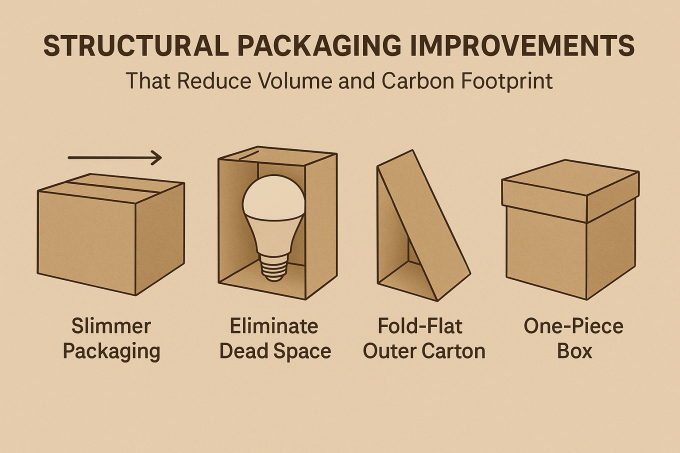
Material substitution is just one part of the story. Structural redesign often produces even bigger benefits for LED companies and wholesalers.
- Slimmer packaging saves container space
When engineers reduce box width by even 2–3 mm, the gains are significant. For a factory exporting 200,000 GU10 bulbs monthly, downsizing packaging can:
The World Shipping Council estimates that optimizing container space can reduce transportation emissions by 10–15%. (Source: https://worldshipping.org)
- Eliminating dead space inside boxes
Historically, LED bulbs came in oversized boxes to “look premium.” Now, manufacturers follow strict volume control standards. Proper alignment of the bulb, driver, and optics allows for much tighter packaging without compromising impact resistance.
- Fold-flat outer cartons
Factories increasingly use cartons designed to fold flat before filling, cutting warehouse storage needs by around 30–40%. This benefits distributors that stock thousands of items.
- One-piece box designs
A single-piece box reduces glue usage and speeds up automated packing, lowering energy consumption in production lines.
Automation and Smart Packaging Techniques in LED Factories
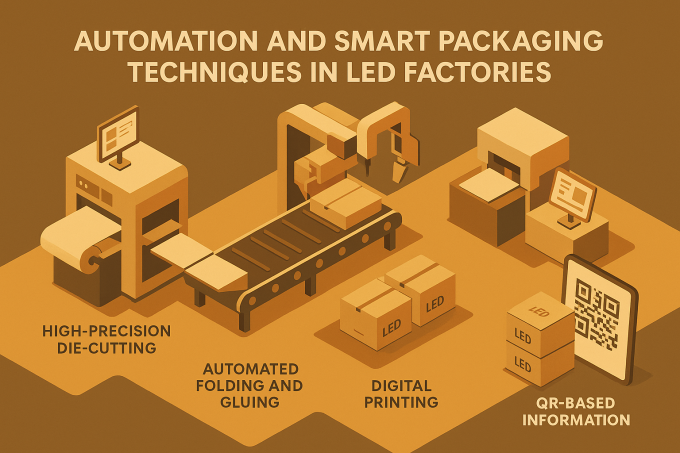
Many LED factories—including highly optimized plants in China—now use automated packaging lines. These systems are more precise and produce less waste.
Key technologies include:
1. High-precision die-cutting
Computer-controlled machines cut packaging board with less than 0.5 mm tolerance, reducing trim waste by 15–25%.
- Automated folding and gluing
Automated lines ensure consistent folding, allowing manufacturers to use thinner cardboard without risking deformation.
- Digital printing for small batches
Digital printing reduces ink waste and eliminates plate-making chemicals. It also supports small-batch customization—valuable for private-label wholesalers.
- QR-based information instead of large manuals
More LED manufacturers now use QR codes linking to digital instructions, meeting EU digital product requirements and cutting paper usage by up to 80%.
The European Paper Recycling Council reports that digital documentation significantly reduces lifecycle carbon emissions for high-volume retail products. (Source: https://www.paperforrecycling.eu)
How Sustainable Packaging Reduces Cost for Wholesalers and Importers
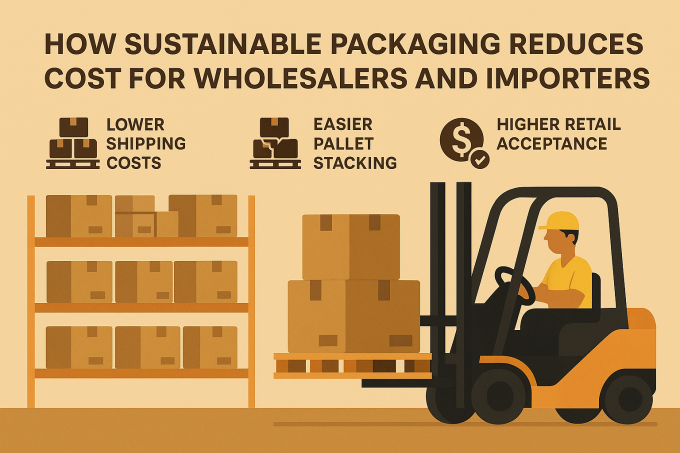
A misconception in the market is that eco-friendly packaging costs more. In reality, sustainable packaging often reduces total cost of ownership for distributors and large buyers.
Here’s how:
- Lower shipping costs
Smaller packaging → more units per pallet → fewer pallets per shipment.
This reduces:
- freight cost
-
warehouse cost
-
COâ emissions
- Lower damage rates
Molded pulp or reinforced cardboard provides better shock resistance than plastic trays, reducing breakage during shipping.
- Easier pallet stacking
Uniform, slim packaging improves stacking efficiency, which helps wholesalers who store thousands of SKUs.
- Higher retail acceptance
Many retailers and electrical chains now demand sustainable packaging as part of their ESG commitments. Using eco-friendly packaging ensures compliance with:
This avoids penalties or rejection during product listing.
How Small Packaging Changes Reduce Environmental Impact Across the Supply Chain
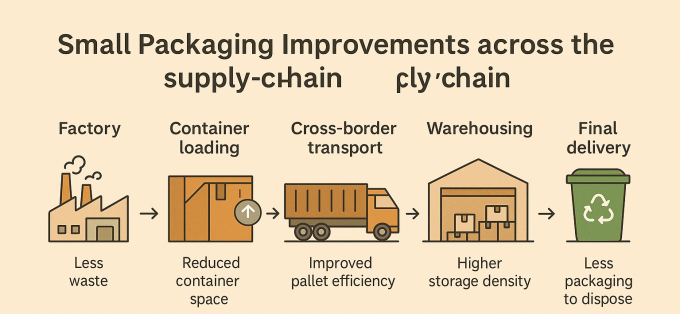
To understand the environmental value of sustainable packaging, it helps to see how LED products move across the global supply chain:
- Factory
-
Container loading
-
Cross-border transport
-
Warehousing
-
Distributor sorting
-
Final delivery
Small packaging improvements affect each stage:
At the factory
In shipping
In warehousing
- Higher storage density
-
Fewer damaged goods
-
Faster picking times
For customers
The result is a full supply-chain improvement, not just a cosmetic upgrade.
Real-World Examples of High-Impact Packaging Changes
1. Reducing GU10 LED box height by 4 mm
Small change → production gains:
- Switching to recycled molded pulp inserts
Benefits:
- Using soy-based ink on outer cartons
Outcome:
- 50–80% less petrochemical ink
-
higher recyclability
-
better print clarity
- Adding QR code instead of 12-page manuals
Impact:
For factories producing millions of units, these numbers scale dramatically.
Why Sustainable Packaging Strengthens Brand Value
Lighting is a competitive market. Small details like packaging help brands stand out. LED buyers—especially in Europe, Singapore, and the UAE—care about environmental performance as part of overall product value.
Sustainable packaging builds:
- Better brand perception
-
Compliance with retailer requirements
-
Alignment with corporate ESG goals
-
Consumer trust
-
Differentiation from low-cost competitors
In many cases, wholesalers using sustainable packaging also highlight it in product catalogs, increasing the perceived value of their private-label brands.
What Wholesalers Should Look for When Choosing LED Suppliers
When evaluating LED factories for sustainable packaging, wholesalers should ask:
- Do you use recycled cardboard or molded pulp?
-
Can you reduce box dimensions for container optimization?
-
Do you support plastic-free packaging?
-
What is the average packaging waste reduction per unit?
-
Can you print QR codes instead of multi-language manuals?
-
Can you provide certifications or test reports for packaging materials?
-
Do you offer sustainable packaging customization for private-label orders?
These questions help buyers filter suppliers that deliver genuine sustainability—rather than marketing claims.
Final Thoughts: Small Adjustments, Major Impact
Sustainable packaging is no longer a trend—it is becoming a new standard in LED manufacturing. The beauty of packaging innovation is that small design decisions produce large environmental benefits without increasing product cost. For manufacturers, the changes reduce waste. For wholesalers, they improve efficiency and profitability. And for the environment, they reduce long-term impact.
In the lighting world where millions of units move every month, even a 2-millimeter reduction in packaging size can save tons of paper, thousands of dollars, and a meaningful amount of carbon emissions.
Ready to Switch to Sustainable Packaging for Your LED Products?
If you are seeking a supplier that can support:
â sustainable packaging
â bulk production
â customized private-label solutions
â improved container efficiency
â stable, long-term supply
I can help.
Contact me directly:
www.tecolite.com
Let’s build a cleaner, smarter lighting supply chain—one small improvement at a time.


 Your message must be between 20-3,000 characters!