.gtr-container-k7p2q9 {
font-family: Verdana, Helvetica, “Times New Roman”, Arial, sans-serif;
color: #333;
line-height: 1.6;
padding: 20px;
max-width: 100%;
box-sizing: border-box;
}
.gtr-container-k7p2q9 p {
font-size: 14px;
margin-bottom: 1em;
text-align: left !important;
word-break: normal;
overflow-wrap: normal;
}
.gtr-container-k7p2q9 .gtr-section-title {
font-size: 18px;
font-weight: bold;
margin-top: 2em;
margin-bottom: 1em;
color: #0056b3;
padding-bottom: 5px;
border-bottom: 1px solid #eee;
text-align: left !important;
}
.gtr-container-k7p2q9 hr {
border: none;
border-top: 1px solid #ddd;
margin: 30px 0;
}
.gtr-container-k7p2q9 img {
max-width: 100%;
height: auto;
display: block;
margin: 20px auto;
box-shadow: 0 2px 8px rgba(0, 0, 0, 0.1);
border-radius: 4px;
}
.gtr-container-k7p2q9 a {
color: #007bff;
text-decoration: none;
}
.gtr-container-k7p2q9 a:hover {
text-decoration: underline;
}
.gtr-container-k7p2q9 .gtr-table-wrapper {
overflow-x: auto;
margin-bottom: 20px;
}
.gtr-container-k7p2q9 table {
width: 100%;
border-collapse: collapse !important;
border-spacing: 0 !important;
margin-bottom: 1em;
font-size: 14px;
min-width: 600px;
}
.gtr-container-k7p2q9 th,
.gtr-container-k7p2q9 td {
border: 1px solid #ccc !important;
padding: 12px 15px !important;
text-align: left !important;
vertical-align: top !important;
word-break: normal;
overflow-wrap: normal;
}
.gtr-container-k7p2q9 th {
background-color: #f8f8f8;
font-weight: bold !important;
color: #333;
}
.gtr-container-k7p2q9 tbody tr:nth-child(even) {
background-color: #f2f2f2;
}
.gtr-container-k7p2q9 ul {
list-style: none !important;
margin: 0 0 1em 0 !important;
padding: 0 !important;
}
.gtr-container-k7p2q9 ul li {
position: relative;
padding-left: 25px;
margin-bottom: 8px;
font-size: 14px;
text-align: left !important;
}
.gtr-container-k7p2q9 ul li::before {
content: "â¢";
color: #007bff;
font-weight: bold;
position: absolute;
left: 0;
top: 0;
font-size: 16px;
line-height: 1.6;
}
.gtr-container-k7p2q9 ol {
list-style: none !important;
margin: 0 0 1em 0 !important;
padding: 0 !important;
}
.gtr-container-k7p2q9 ol li {
position: relative;
padding-left: 30px;
margin-bottom: 8px;
font-size: 14px;
text-align: left !important;
}
.gtr-container-k7p2q9 ol li::before {
content: counter(list-item) ".";
counter-increment: none;
color: #007bff;
font-weight: bold;
position: absolute;
left: 0;
top: 0;
font-size: 14px;
line-height: 1.6;
width: 20px;
text-align: right;
}
@media (min-width: 768px) {
.gtr-container-k7p2q9 {
padding: 30px 40px;
max-width: 960px;
margin: 0 auto;
}
.gtr-container-k7p2q9 .gtr-section-title {
font-size: 22px;
margin-top: 2.5em;
margin-bottom: 1.2em;
}
.gtr-container-k7p2q9 p {
font-size: 15px;
}
.gtr-container-k7p2q9 th,
.gtr-container-k7p2q9 td {
padding: 10px 15px !important;
}
.gtr-container-k7p2q9 table {
min-width: auto;
}
.gtr-container-k7p2q9 .gtr-table-wrapper {
overflow-x: visible;
}
}
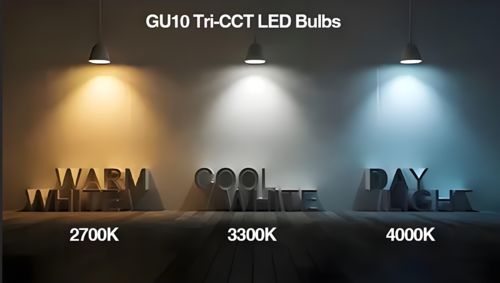
Many distributors and wholesalers struggle with stocking multiple GU10 bulbs in different color temperatures to meet diverse customer needs. The GU10 three-stage color temperature solution eliminates this challenge by offering 2700K, 3300K, and 4000K in one productâreducing inventory pressure while increasing flexibility for resale and project installations.
GU10 LED three-stage color temperature bulbs let users switch between 2700K, 3300K, and 4000K using either a DIP switch or a wall switch, offering flexible lighting control.
This article will guide you step by step, from the basic concept to controls, B2B benefits, and real applications.
Understanding GU10 Three-Stage Color Temperature?
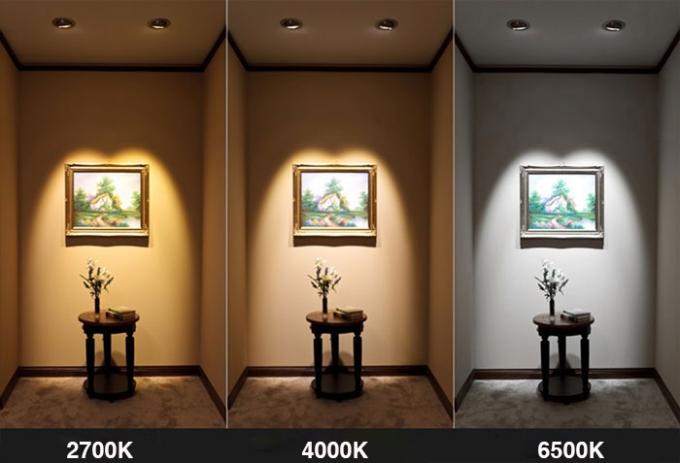
Color temperature defines how âwarm” or âcool” a light looks. A three-stage GU10 LED allows switching between 2700K, 3300K, and 4000K.
- 2700K â Warm white, cozy, soft atmosphere
-
3300K â Natural white, balanced, versatile
-
4000K â Cool white, bright, functional
This range is carefully chosen. It avoids extreme cool tones and instead focuses on practical indoor applications like hotels, offices, retail, and homes.
By consolidating three options in one bulb, wholesalers reduce SKU complexity and contractors gain flexibility in projects.
DIP Switch Control â How It Works?
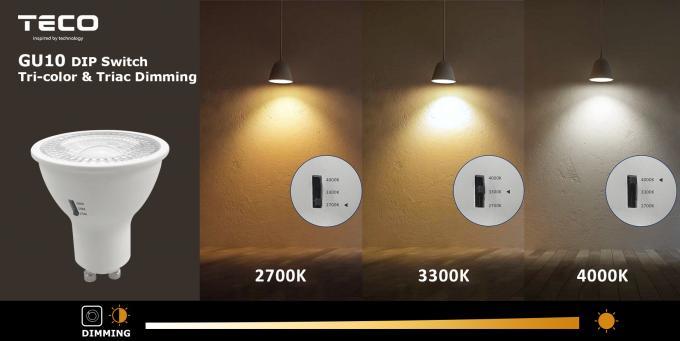
DIP switch control means there is a small built-in switch at the base of the GU10 bulb. Installers set the desired color temperature before fitting.
The DIP switch fixes one of the three stages (2700K, 3300K, or 4000K) until changed again manually.
This is very useful for large projects where uniform lighting is needed. Contractors can set all bulbs to 3300K before installation, avoiding errors during operation.
Wall Switch Three-Stage Color Temperature â Setup & Advantages?
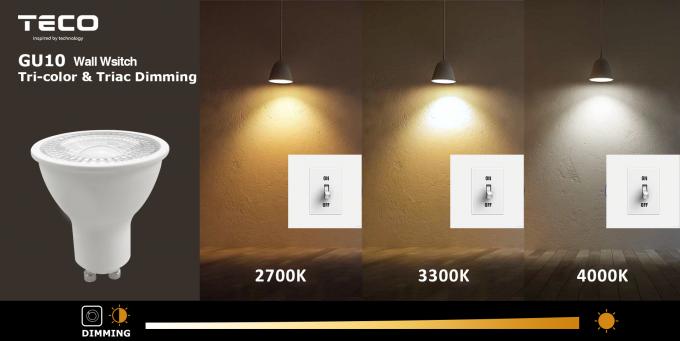
Wall switch control works differently. Instead of a manual switch, the bulb cycles color temperature each time the wall switch toggles on and off.
Users simply flip the switch to rotate through 2700K, 3300K, and 4000K without extra controllers.
This option is ideal for residential projects and retail retrofits where end-users want flexibility. For instance, a homeowner can change from bright cool white (4000K) for cleaning to warm white (2700K) for evening relaxation by just flipping the switch.
DIP Switch vs Wall Switch: Pros & Cons
| Feature |
DIP Switch Control |
Wall Switch Control |
| Setup |
Pre-set before installation |
Change anytime via wall switch |
| Best use |
Hotels, offices, large projects |
Homes, retail, small retrofits |
| Flexibility |
Fixed once installed |
Flexible for end-user |
| Consistency |
Ensures uniform CCT across many fixtures |
May vary if users change settings |
| Installation |
Requires pre-setting bulbs |
No extra step, user-controlled |
| Risk of error |
Low once set |
Higher if users switch unintentionally |
Key Benefits for B2B Applications?
For B2B buyers, Tri-CCT GU10 LEDs bring several clear advantages:
- Reduced inventory pressure â One SKU replaces three separate CCT options.
-
Greater project flexibility â Contractors can adapt to different spaces on-site.
-
Lower return rate â Buyers no longer complain that the âcolor looks wrong.”
-
Easy cross-market sales â Works in retail, hospitality, office, and residential.
How to Choose the Right GU10 LED with Three-Stage Color Temperature?
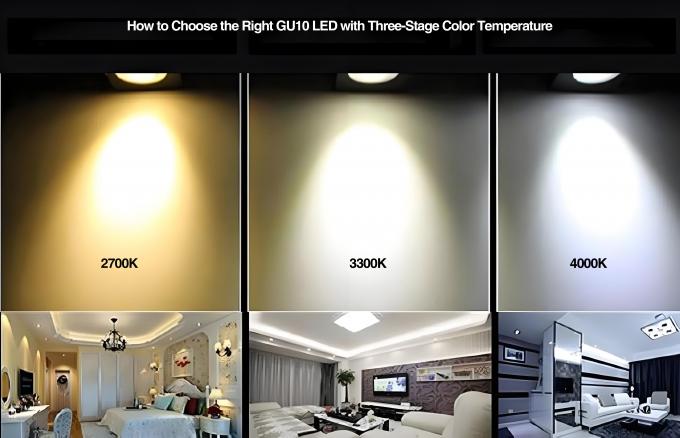
When selecting, I recommend focusing on:
- Color temperature range (2700Kâ4000K with 3300K as middle stage).
-
Control type (DIP switch for fixed setups, wall switch for flexibility).
-
Lumen output (ensure â¥500lm for general spotlight use).
-
CRI rating (CRI >80 for natural color rendering, CRI >90 for premium projects).
-
Certifications (CE, RoHS, Energy Star).
-
Dimming compatibility (phase-cut vs. trailing-edge dimmers).
Applications & Case Examples?
Application by Color Temperature
| Stage |
Color Temperature |
Typical Application |
| 2700K |
Warm white |
Hotel rooms, lounges, residential living areas |
| 3300K |
Natural white |
Retail shops, restaurants, general commercial spaces |
| 4000K |
Cool white |
Offices, task lighting, conference rooms |
Case Example:
A contractor in Singapore equipped a mixed-use building with DIP switch GU10s. Offices used 4000K for productivity, retail stores preferred 3300K, while lounges kept 2700K for warmth. With one product, they satisfied multiple tenant needs and simplified spare parts management.
Installation Tips and Common Issues?
Tips:
- Always check if the driver supports dimming before pairing with dimmers.
-
Confirm voltage compatibility (AC220-240V or AC110V depending on region).
-
Pre-set DIP switch before ceiling installation to avoid rework.
-
Label the wall switch cycle function for end-users.
Common Issues:
Conclusion
GU10 three-stage color temperature LEDs (2700K / 3300K / 4000K) solve inventory, design, and user preference issues. They give buyers flexible control, reduce costs, and open wider applications.
Author
Chanfone Sun â Teco (Dimmable LED spotlight manufacturer)


 Your message must be between 20-3,000 characters!