.gtr-container-k9p2q7 {
font-family: Verdana, Helvetica, “Times New Roman”, Arial, sans-serif;
color: #333;
line-height: 1.6;
padding: 15px;
box-sizing: border-box;
max-width: 100%;
overflow-x: hidden;
}
.gtr-container-k9p2q7 p {
    font-size: 14px;
    margin-bottom: 1em;
    text-align: left !important;
}

.gtr-container-k9p2q7 strong {
    font-weight: bold;
}

.gtr-container-k9p2q7 em {
    font-style: italic;
}

.gtr-container-k9p2q7 hr {
    border: none;
    border-top: 1px solid #eee;
    margin: 2em 0;
}

.gtr-container-k9p2q7 .gtr-k9p2q7-title {
    font-size: 18px;
    font-weight: bold;
    margin-bottom: 1.5em;
    color: #0056b3;
    text-align: left;
}

.gtr-container-k9p2q7 .gtr-k9p2q7-subtitle {
    font-size: 16px;
    font-weight: bold;
    margin-top: 2em;
    margin-bottom: 1em;
    color: #0056b3;
    text-align: left;
}

.gtr-container-k9p2q7 .gtr-k9p2q7-sub-subtitle {
    font-size: 15px;
    font-weight: bold;
    margin-top: 1.5em;
    margin-bottom: 0.8em;
    color: #333;
    text-align: left;
}

.gtr-container-k9p2q7 ul,
.gtr-container-k9p2q7 ol {
    margin: 1em 0;
    padding-left: 20px;
    list-style: none !important;
}

.gtr-container-k9p2q7 ul li,
.gtr-container-k9p2q7 ol li {
position: relative;
    margin-bottom: 0.5em;
    padding-left: 15px;
    font-size: 14px;
    text-align: left;
list-style: none !important;
}
.gtr-container-k9p2q7 ul li::before {
content: "â¢" !important;
position: absolute !important;
left: 0 !important;
color: #0056b3;
font-size: 1.2em;
line-height: 1;
}
.gtr-container-k9p2q7 ol {
counter-reset: list-item;
}
.gtr-container-k9p2q7 ol li::before {
content: counter(list-item) "." !important;
position: absolute !important;
left: 0 !important;
color: #0056b3;
font-weight: bold;
width: 15px;
text-align: right;
margin-right: 5px;
}
.gtr-container-k9p2q7 .gtr-k9p2q7-table-wrapper {
width: 100%;
overflow-x: auto;
margin: 1.5em 0;
}
.gtr-container-k9p2q7 table {
width: 100%;
border-collapse: collapse !important;
border-spacing: 0 !important;
margin: 0 !important;
font-size: 14px;
min-width: 600px;
}
.gtr-container-k9p2q7 th,
.gtr-container-k9p2q7 td {
border: 1px solid #ccc !important;
padding: 8px !important;
text-align: left !important;
vertical-align: top !important;
word-break: normal;
overflow-wrap: normal;
}
.gtr-container-k9p2q7 th {
font-weight: bold !important;
background-color: #f0f0f0 !important;
color: #333;
}
.gtr-container-k9p2q7 tr:nth-child(even) {
background-color: #f9f9f9 !important;
}
.gtr-container-k9p2q7 p > em {
display: block;
text-align: center;
font-size: 12px;
color: #666;
margin-top: 0.5em;
}
.gtr-container-k9p2q7 .gtr-k9p2q7-cta-link {
display: inline-block;
padding: 10px 20px;
margin-top: 1.5em;
background-color: #007bff;
color: #fff;
text-decoration: none;
border-radius: 5px;
font-weight: bold;
transition: background-color 0.3s ease;
font-size: 14px;
}
.gtr-container-k9p2q7 .gtr-k9p2q7-cta-link:hover {
background-color: #0056b3;
}
@media (min-width: 768px) {
.gtr-container-k9p2q7 {
padding: 30px;
}
.gtr-container-k9p2q7 .gtr-k9p2q7-title {
font-size: 24px;
}
.gtr-container-k9p2q7 .gtr-k9p2q7-subtitle {
font-size: 20px;
}
.gtr-container-k9p2q7 .gtr-k9p2q7-sub-subtitle {
font-size: 18px;
}
.gtr-container-k9p2q7 table {
min-width: auto;
}
}
Introduction
In commercial lighting, choosing the right LED bulb is more than just about brightness—it’s about safety, reliability, and long-term performance. Enclosed fixtures, commonly used in hotels, offices, retail spaces, and residential complexes, trap heat and place extraordinary stress on the light source. Standard LED bulbs can overheat in such environments, leading to premature lumen depreciation, color shift, or even safety hazards.
To address this challenge, TECO has developed GU10 LED bulbs with over-temperature protection (OTP) integrated via NTC chips in the driver circuit. This solution ensures safe, reliable operation even in thermally demanding enclosed fixtures.
This article explores the technical principles of driver-integrated NTC OTP, its advantages over other solutions, practical applications across commercial projects, and why TECO’s GU10 LEDs are the preferred choice for B2B buyers.
Challenges of Enclosed Fixtures
While enclosed fixtures enhance aesthetics and reduce glare, they trap heat, creating risks for LEDs:
- Limited Ventilation: Reduced airflow leads to higher internal temperatures.
-
Thermal Stress: Excessive heat accelerates lumen depreciation, shortens lifespan, and affects color rendering.
-
Safety Concerns: Overheating can cause flickering, premature failure, or safety hazards.
For commercial projects, these issues translate into higher operational costs, dissatisfied clients, and potential liabilities for contractors and distributors.

Over-Temperature Protection via NTC in Driver Circuit
What Is NTC and How It Works
Definition:
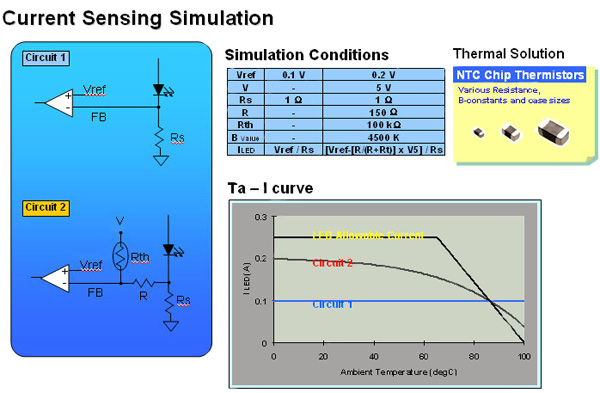
An NTC (Negative Temperature Coefficient) thermistor is a temperature-sensitive resistor whose resistance decreases as the temperature rises. In TECO’s GU10 LED bulbs, the NTC is integrated directly into the LED driver circuit, enabling the driver to continuously monitor its own temperature and the heat affecting the LED.
Working Principle:
- Temperature Sensing: The NTC thermistor is positioned near the driver’s heat source. As temperature rises, resistance decreases.
-
Voltage Signal Conversion: The resistance change produces a voltage signal that the driver’s control circuit interprets.
-
Protective Response: When the driver temperature exceeds a preset threshold (typically around 85°C), the driver reduces LED current or dims output to lower heat generation.
-
Self-Recovery: Once the temperature drops below the threshold, full power is restored automatically, ensuring continuous operation without manual intervention.
Advantages of Driver-Integrated NTC OTP:
- Direct Thermal Feedback: Measures the actual heat source for accurate protection.
-
Fast Response: Immediate output adjustment prevents thermal overshoot.
-
Compact & Cost-Efficient: Minimal additional components required.
-
Reliable & Low Maintenance: Passive sensing with driver logic ensures stability across varying conditions.
Comparison with Other Over-Temperature Protection Solutions
| Feature |
NTC in Driver (TECO) |
PTC Thermistor OTP |
Microcontroller / IC-Based OTP |
| Placement |
Inside driver, monitors actual heat source |
On PCB or near LED |
Integrated with MCU / driver circuit |
| Response Speed |
Fast, dynamic |
Slower, triggers at set point |
Fast, programmable |
| Complexity |
Simple, integrates easily |
Simple, may require external circuit |
High, requires firmware & IC |
| Cost |
Low |
Low to medium |
Medium to high |
| Precision |
Moderate, practical for LED thermal control |
Moderate |
High, programmable thresholds |
| Reliability |
Very reliable, less prone to interference |
Reliable but slower |
High if properly designed |
| Applications |
GU10 LED bulbs, enclosed fixtures |
Spotlights, general-purpose LEDs |
High-end smart lighting, dimmable/variable-wattage LEDs |
Insights for B2B Buyers:
- TECO’s driver-integrated NTC solution is optimized for enclosed GU10 fixtures, where driver heat is the main contributor to thermal stress.
-
Compared to PTC thermistors, NTC offers faster and more dynamic response, reducing thermal stress and extending bulb lifespan.
-
Microcontroller- or IC-based OTP systems provide programmable thresholds but add complexity and cost, making them less suitable for standard commercial GU10 applications.
Advantages of OTP-Enabled GU10 LED Bulbs
- Enhanced Safety: OTP prevents overheating, protecting both lamp and fixture.
-
Extended Lifespan: Reduced thermal stress maintains lumen output and color stability, reaching up to 40,000 hours.
-
Lower Maintenance: Fewer replacements and reduced labor costs in large-scale projects.
-
Consistent Energy Efficiency: Even during temporary output reduction, energy savings remain superior to halogen or CFL.
-
Regulatory Compliance: CE, CB, and RoHS certifications, including thermal testing, ensure international installation approval.
-
Project Reliability: OTP ensures dependable performance, enhancing contractor and distributor credibility.
Applications Across Commercial Projects
Hotels:
Offices:
Retail Spaces:
Residential Projects:
- Apartments with recessed ceilings rely on consistent illumination and long bulb life.
Public Buildings:
- Airports, hospitals, museums, and government buildings require long-lasting, safe LED solutions.
Selecting the Right OTP GU10 LED Bulb
B2B buyers should consider:
- Enclosed Fixture Compatibility: Check datasheet specifications.
-
Thermal Thresholds: Request NTC activation data.
-
Performance Options: TECO offers 5W, 5.5W, 7.5W models; beam angles 10°–60°.
-
High CRI: Up to Ra98 for retail and hospitality applications.
-
Certifications: CE, CB, RoHS.
-
OEM/ODM Customization: Private label, packaging, dimming compatibility, beam angle and color temperature adjustments.
TECO’s Expertise and B2B Support
- Innovation: Driver-integrated NTC OTP for enclosed GU10 fixtures.
-
ODM Solutions: Custom packaging, labeling, and technical customization.
-
Quality Control: Rigorous thermal, lumen, and dimming tests ensure reliable performance.
-
Global Compliance: CE, CB, RoHS certifications simplify international procurement.
-
B2B Focus: Scalable production ensures reliable supply for distributors and contractors.
Call to Action
For B2B buyers, selecting GU10 LED bulbs with driver-integrated NTC OTP ensures safe, reliable, and long-lasting performance in enclosed fixtures.
Contact TECO today to:
- Request samples of OTP-enabled GU10 LED bulbs
-
Receive detailed thermal performance reports and certifications
-
Explore OEM/ODM customization options
-
Get bulk procurement pricing
Reach TECO Lighting Team and secure reliable lighting solutions for your next commercial project.
Conclusion
Over-temperature protection is essential for enclosed fixtures. TECO’s driver-integrated NTC OTP GU10 LED bulbs offer safe, durable, and cost-effective lighting solutions for hotels, offices, retail spaces, and public buildings. By proactively managing heat, TECO ensures extended product life, consistent performance, and high reliability, making these bulbs the preferred choice for B2B buyers worldwide.


 Your message must be between 20-3,000 characters!