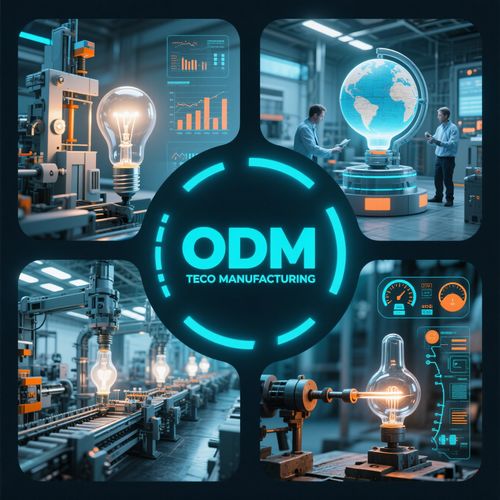
In today’s global lighting market, overseas buyers are increasingly looking for direct partnerships with an ODM LED spotlight manufacturer in China. The reason is simple: working with a factory that offers LED bulb customization ensures tailored product solutions, faster turnaround, and better cost efficiency. However, buyers often face uncertainty—what should you ask, how do you evaluate a manufacturer, and what makes a reliable partner?
This article serves as a comprehensive guide for importers, wholesalers, distributors, and project contractors who are considering ODM (Original Design Manufacturing) partnerships with Chinese LED spotlight factories. We will walk through the entire customization process, highlight key questions buyers should raise, and offer practical tips for building sustainable cooperation.
Understanding ODM in the LED Lighting Industry
ODM (Original Design Manufacturing) refers to a business model where the manufacturer is responsible for product design, development, and mass production, while the buyer can brand the products under their own label.
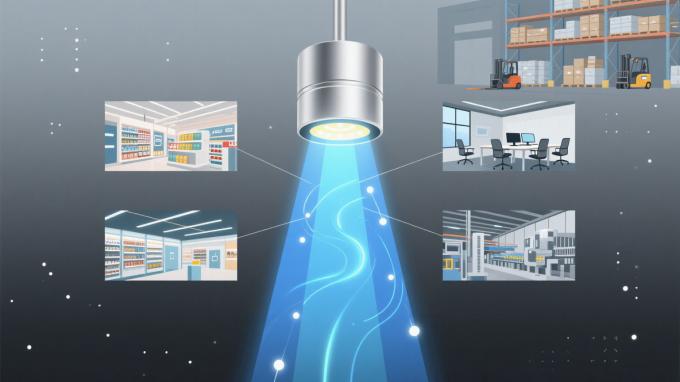
In the LED spotlight market, ODM services are particularly attractive because lighting is a technology-driven industry, where innovation in beam angle, heat dissipation, color rendering, and smart control systems plays a critical role in competitiveness. Buyers who lack R&D resources rely on an ODM LED spotlight manufacturer to create unique, market-ready products.
Why ODM Is Different from OEM
For buyers without internal design teams, ODM is the best path to offer differentiated LED spotlights without heavy upfront investment in R&D.
The Rising Demand for Customized LED Spotlights
The global demand for customized LED spotlights is fueled by multiple factors:
- Commercial Projects Require Tailored Lighting
Architects and interior designers increasingly specify precise beam angles, CRI levels, and dimming features. Standard products often do not meet these requirements.
Brand Differentiation in Competitive Markets
Distributors and wholesalers need unique products that stand out. ODM ensures they are not selling the same generic bulbs as everyone else.
- Energy Efficiency Regulations
Different regions (EU, US, Middle East) impose unique energy and safety standards. ODM manufacturers can customize certifications and product compliance.
Smart Lighting Integration
With the rise of IoT, many buyers now request smart-enabled spotlights compatible with Google Home, Alexa, or Zigbee systems.
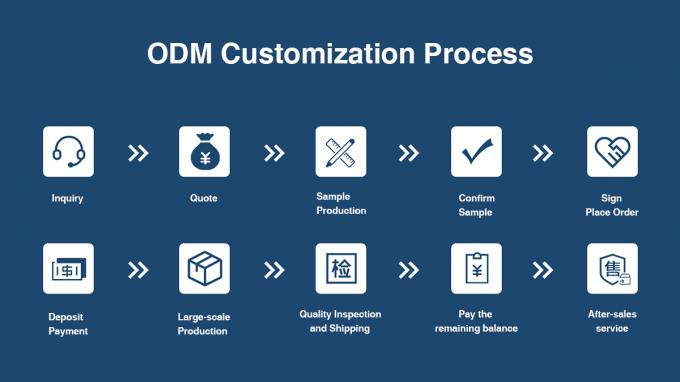
Step-by-Step ODM LED Spotlight Customization Process
Understanding the ODM workflow helps buyers evaluate whether a manufacturer can meet their needs. A typical process includes:
1. Requirement Collection
The first step is communication. Buyers must clarify:
- Desired wattage, lumen output, and beam angle
-
Housing material (die-cast aluminum, plastic-aluminum, glass)
-
Dimming compatibility (Triac, 0-10V, DALI, smart control)
-
Certification needs (CE, RoHS, CB, UL)
-
Packaging and branding details
2. Product Concept and Design
The factory’s R&D team will:
3. Prototype and Sample Testing
Samples are produced and shipped to the buyer for evaluation. At this stage, buyers should:
4. Tooling and Pre-Production
For unique housings, manufacturers may create molds. This requires investment but ensures product exclusivity.
5. Certification and Compliance
A trustworthy ODM manufacturer helps secure the necessary certifications:
6. Mass Production
Once samples are approved, large-scale production begins. Buyers should monitor:
- Production timeline
-
Quality control checkpoints
-
Supply chain stability for LEDs, drivers, and housings
7. Packaging and Branding
ODM allows full customization of retail boxes, instruction manuals, and even barcodes to match buyer branding.
8. Logistics and After-Sales
Factories coordinate shipping via sea, air, or rail. Reliable after-sales service ensures replacement and warranty support.
What Buyers Should Ask Before Choosing an ODM LED Spotlight Manufacturer
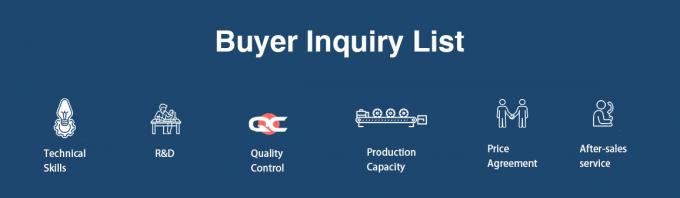
When evaluating a potential partner, overseas buyers should prepare a checklist of critical questions. These questions reduce risks and help identify whether a factory is professional and reliable.
Questions on Product Capabilities
- Can you design LED spotlights with specific beam angles (10°, 24°, 36°, 60°)?
-
What range of CRI (Color Rendering Index) can you provide?
-
Do you offer dimming options such as Triac, 0-10V, or DALI?
-
Are smart lighting features (Wi-Fi, Bluetooth, Zigbee) available?
Questions on R&D and Customization
-
How many engineers are in your R&D team?
-
Can you assist in industrial design and optical engineering?
-
Do you support “dim-to-warm” or tunable white solutions?
Questions on Certification and Quality
-
Which certifications have your products already passed?
-
Can you provide CB test reports and CE/UL/ETL documents?
-
What is your defect rate and how do you manage quality control?
Questions on Production Capacity
-
What is your monthly production output?
-
What is your lead time for new tooling and mass production?
-
Do you maintain stable suppliers for LED chips and drivers?
Questions on Pricing and Contracts
-
Do you provide tiered pricing based on order volume?
-
What is your MOQ (Minimum Order Quantity)?
-
How do you handle payment terms and currency fluctuations?
Questions on After-Sales and Warranty
-
What is your warranty period for aluminum, plastic, and glass models?
-
Do you provide spare parts or replacements for defective units?
-
How is after-sales support managed for international clients?
Key Advantages of Working with a Chinese ODM LED Spotlight Manufacturer
- Comprehensive Product Range
Chinese factories can offer GU10, MR16, AR111, PAR series, covering both residential and commercial needs.
Cost Efficiency
Due to economies of scale, Chinese ODM manufacturers often deliver competitive pricing compared to other regions.
- Fast Customization
Prototypes can be completed within 2–4 weeks, enabling quicker product launches.
Flexible Order Volumes
Many factories accept small trial orders before scaling up, reducing risk for buyers.
- Integrated Supply Chains
Access to LED chips, drivers, and housings in the same region reduces lead time.
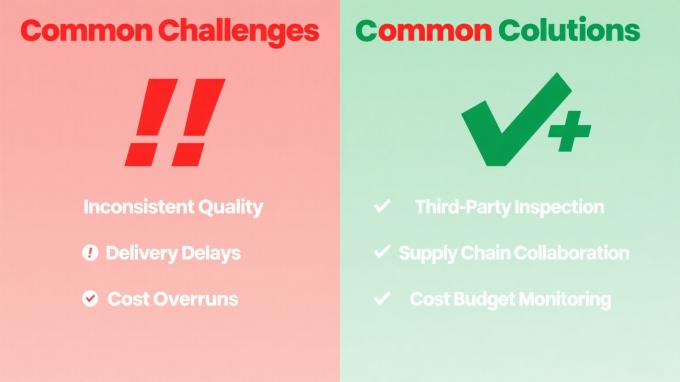
Common Challenges and How to Avoid Them
Even with advantages, buyers must remain cautious.
- Overpromising Factories: Some claim advanced customization but only offer OEM services. Solution: request sample verification before contracts.
-
Quality Inconsistency: Different batches may vary. Solution: insist on third-party inspections.
-
Hidden Costs: Tooling fees and certification costs may arise unexpectedly. Solution: request full cost breakdown in advance.
-
Language and Communication Barriers: Misunderstandings may delay projects. Solution: choose manufacturers with fluent international sales teams.
Practical Tips for Successful Cooperation
- Start with a Pilot Project
Place a small ODM order first to test quality and communication.
Request Transparent Documentation
Ensure every product has proper test reports and certifications.
- Build Long-Term Partnerships
Continuous cooperation leads to better credit terms, priority support, and co-development opportunities.
Visit the Factory (if possible)
On-site audits reveal the real production capabilities beyond brochures.
Future Trends in ODM LED Spotlight Manufacturing
- Smart Control Integration: Expect more ODM spotlights compatible with mobile apps and voice assistants.
-
Sustainability: Eco-friendly housings and recyclable packaging will become standard.
-
Higher CRI and Efficiency: Advances in LED chips will push CRI values closer to natural daylight with lower power consumption.
-
Customization as Standard: In the future, most international buyers will expect ODM support as a basic offering, not a premium service.
Conclusion
Partnering with an ODM LED spotlight manufacturer in China can unlock tremendous opportunities for overseas buyers. From design innovation to energy compliance and branding, ODM services enable businesses to bring unique lighting products to market without building their own R&D infrastructure.
The key is to ask the right questions—about capabilities, certifications, pricing, and after-sales support—before committing to a partnership. With proper due diligence and transparent cooperation, buyers can achieve successful LED bulb customization projects that enhance competitiveness in their markets.


 Your message must be between 20-3,000 characters!