.gtr-container-x7y2z9 {
font-family: Verdana, Helvetica, “Times New Roman”, Arial, sans-serif;
color: #333;
line-height: 1.6;
padding: 15px;
max-width: 100%;
box-sizing: border-box;
overflow-x: hidden;
}
.gtr-container-x7y2z9 .gtr-heading-2 {
font-size: 18px;
font-weight: bold;
margin-top: 25px;
margin-bottom: 15px;
color: #0056b3;
padding-bottom: 5px;
border-bottom: 2px solid #e0e0e0;
text-align: left;
}
.gtr-container-x7y2z9 .gtr-heading-3 {
font-size: 16px;
font-weight: bold;
margin-top: 20px;
margin-bottom: 10px;
color: #555;
text-align: left;
}
.gtr-container-x7y2z9 p {
font-size: 14px;
margin-bottom: 10px;
text-align: left !important;
word-break: normal;
overflow-wrap: normal;
}
.gtr-container-x7y2z9 .gtr-separator {
border: none;
border-top: 1px solid #e0e0e0;
margin: 30px 0;
}
.gtr-container-x7y2z9 ul {
list-style: none !important;
margin: 10px 0 10px 0 !important;
padding: 0 !important;
}
.gtr-container-x7y2z9 ul li {
position: relative;
padding-left: 20px;
margin-bottom: 8px;
font-size: 14px;
text-align: left !important;
}
.gtr-container-x7y2z9 ul li::before {
content: "â¢";
position: absolute;
left: 0;
color: #0056b3;
font-weight: bold;
font-size: 14px;
line-height: 1.6;
}
.gtr-container-x7y2z9 ol {
list-style: none !important;
margin: 10px 0 10px 0 !important;
padding: 0 !important;
}
.gtr-container-x7y2z9 ol li {
position: relative;
padding-left: 25px;
margin-bottom: 8px;
font-size: 14px;
text-align: left !important;
}
.gtr-container-x7y2z9 ol li::before {
content: counter(list-item) ".";
counter-increment: none;
position: absolute;
left: 0;
color: #0056b3;
font-weight: bold;
font-size: 14px;
line-height: 1.6;
width: 20px;
text-align: right;
}
.gtr-container-x7y2z9 .gtr-table-wrapper {
overflow-x: auto;
margin-top: 20px;
margin-bottom: 20px;
}
.gtr-container-x7y2z9 table {
width: 100%;
border-collapse: collapse !important;
border-spacing: 0 !important;
margin: 0 !important;
font-size: 14px;
min-width: 600px;
}
.gtr-container-x7y2z9 th,
.gtr-container-x7y2z9 td {
border: 1px solid #ccc !important;
padding: 8px 12px !important;
text-align: left !important;
vertical-align: top !important;
word-break: normal;
overflow-wrap: normal;
}
.gtr-container-x7y2z9 th {
background-color: #f0f0f0;
font-weight: bold !important;
color: #333;
}
.gtr-container-x7y2z9 tbody tr:nth-child(even) {
background-color: #f9f9f9;
}
.gtr-container-x7y2z9 strong {
font-weight: bold;
}
.gtr-container-x7y2z9 .gtr-caption {
font-style: italic;
color: #666;
margin-top: 20px;
font-size: 13px;
text-align: left !important;
}
@media (min-width: 768px) {
.gtr-container-x7y2z9 {
padding: 25px;
}
.gtr-container-x7y2z9 .gtr-heading-2 {
font-size: 20px;
margin-top: 35px;
margin-bottom: 20px;
}
.gtr-container-x7y2z9 .gtr-heading-3 {
font-size: 18px;
margin-top: 25px;
margin-bottom: 12px;
}
.gtr-container-x7y2z9 table {
min-width: auto;
}
}
Introduction
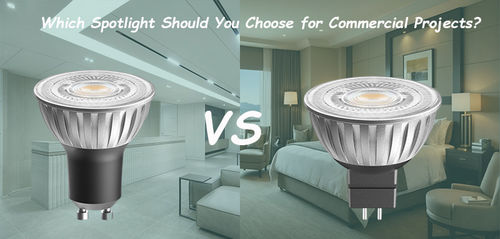
Selecting the right LED spotlight is critical for commercial projects, from hotel lobbies to retail stores and office spaces. Two of the most widely used options are LED MR16 and LED GU10 spotlights. Both offer energy efficiency and long lifespans, but they differ significantly in technical characteristics, installation requirements, and application suitability LED spotlight comparison.
This guide provides an in-depth comparison of LED MR16 vs LED GU10, supported by real-world use cases, cost analysis, and commercial insights commercial lighting case studies. It is specifically designed for B2B buyers, project managers, and architects in Europe and North America LED lighting market Europe North America.
Understanding LED MR16 and LED GU10
LED MR16 Spotlight Basics
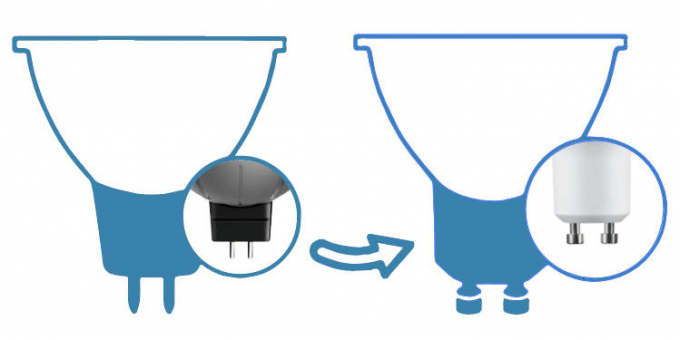
- Lamp Base: GU5.3 two-pin base
-
Voltage: 12V low-voltage system
-
Applications: Accent lighting, track lighting, recessed fixtures
-
Power Range: 3W–7.5W LED replacements
-
Beam Angles: Narrow (10°–60°)
Key Advantages:
- Low voltage improves safety in enclosed or damp environments
-
Narrow beams are ideal for precise accent lighting, such as artwork, retail displays, or decorative lighting accent lighting examples
LED GU10 Spotlight Basics
- Lamp Base: GU10 twist-lock base
-
Voltage: 110V/230V mains power (direct connection)
-
Applications: General illumination, track lighting, retrofit projects
-
Power Range: 3W–10W
-
Beam Angles: Wide range (10°–60°+)
Key Advantages:
- Easy plug-and-play installation, no transformer required
-
Flexible beam angles suitable for both accent and ambient lighting
-
Smart lighting integration compatible (Zigbee, Tuya, Wi-Fi) smart GU10 LED lighting
Technical Comparison: LED MR16 vs LED GU10
| Feature |
LED MR16 |
LED GU10 |
Notes/Benefits |
| Voltage |
12V low-voltage (requires transformer) |
110V/230V mains |
MR16 safer for damp spaces; GU10 simpler direct connection |
| Lamp Base |
GU5.3 two-pin |
GU10 twist-lock |
MR16 needs matching sockets; GU10 easier replacement |
| Beam Angle |
Narrow (10°–60°) |
Wide range (10°–60°+) |
Narrow beams for accents, wide beams for ambient coverage |
| Dimming |
Phase-cut compatible |
Phase-cut + smart system compatible |
GU10 supports IoT & smart lighting integration |
| Heat Dissipation |
Dependent on transformer & fixture |
Aluminum heat sink, high durability |
GU10 better long-term performance |
| Lifespan |
25,000–40,000 hours |
25,000–40,000 hours |
GU10 generally longer-lasting |
| CRI |
High CRI available |
High CRI available |
Both suitable for color-critical applications |
Notes: MR16 requires compatible transformer, which may affect flicker and lifespan LED transformer effects on flicker.
Applications in Commercial Projects
Hospitality (Hotels & Restaurants)
12V low-voltage ensures safety in guest rooms, corridors, and bathrooms
LED GU10:
Suitable for lobbies, banquet halls, and dining areas
Recommendation:
- Guest rooms, corridors → LED MR16
-
Public spaces → LED GU10
Retail & Showrooms
Precise accent lighting for product displays
- Narrow beams (10°–36°) enhance high-value items or feature areas
LED GU10:
General lighting across aisles
- Flexible track lighting for evolving layouts
Recommendation:
Offices & Educational Spaces
Task-specific lighting for lab or presentation areas
Uniform ambient lighting for offices, classrooms, and meeting rooms
- Easy integration with smart dimming and scene control smart office LED systems
Recommendation:
Museums & Galleries
High CRI ensures accurate color rendering for artworks
- Narrow, adjustable beams protect sensitive exhibits museum lighting high CRI
LED GU10:
Provides general illumination for audience pathways and large rooms
- Easy to install and maintain
Recommendation:
- Exhibit spotlighting → LED MR16
-
Visitor areas → LED GU10
Summary Table
| Scenario |
LED MR16 |
LED GU10 |
| Hotels |
Guest rooms, corridors (safety low-voltage, precise beams) |
Lobby, banquet halls (easy install, maintenance low) |
| Retail |
Display lighting (focus) |
General lighting (coverage) |
| Offices |
Task-specific lighting |
Ambient workspaces, smart control |
| Museums |
Artworks (high CRI, narrow beams) |
Visitor areas (uniform light) |
Cost & Maintenance Considerations
| Factor |
LED MR16 |
LED GU10 |
| Initial Cost |
Higher (transformer needed) |
Moderate (plug-and-play) |
| Maintenance |
Transformer + bulb replacement |
Bulb replacement only |
| Lifespan |
25,000–40,000 hours |
25,000–40,000 hours |
| Energy Efficiency |
Excellent |
Excellent |
ROI Example (LED-only comparison):
- Replace 100 LED MR16 bulbs (7.5W) with LED GU10 bulbs in a 200 m² retail space:
Power consumption reduced from 750W (MR16 system including transformer losses) → 700W GU10
Market Insights & Trends
- Smart & Tunable Lighting:
GU10 LEDs increasingly support Tri-CCT, tunable white, and IoT controls smart commercial LED lighting trends
- MR16 LEDs still widely used in low-voltage retrofit projects
High CRI Demand:
Commercial spaces prioritize CRI 90+ for color-critical applications (retail, museums, hotels)
EU energy labeling, US DLC/UL compliance favors GU10 for new projects due to easier certification EU US LED energy standards
GU10 reduces long-term maintenance and installation costs
- MR16 remains preferred for specialized low-voltage installations where safety is critical
How to Choose for Your Commercial Project
- Evaluate Existing Infrastructure:
Low-voltage system → MR16
Determine Lighting Goals:
Accent lighting → MR16
- General or flexible lighting → GU10
Consider Smart & Control Systems:
GU10 easier for IoT integration commercial IoT lighting integration
GU10 offers faster payback in most retrofit/new-build commercial projects
Conclusion
Both LED MR16 and LED GU10 have clear advantages depending on the project:
For new commercial projects, GU10 is often preferred for ease, versatility, and ROI, while MR16 remains valuable for existing low-voltage systems or precision spotlighting.
By understanding technical specs, application scenarios, costs, and market trends, businesses can confidently select the spotlight that maximizes efficiency, aesthetics, and long-term value.


 Your message must be between 20-3,000 characters!