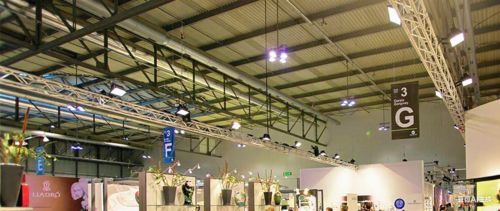
Introduction: Why Choosing the Right LED Bulb Matters
In the world of commercial LED lighting and industrial LED bulbs, selecting the right product is more than simply finding the brightest option. It is about balancing efficiency, durability, cost-effectiveness, and application-specific performance. For businesses, lighting impacts not only operating costs but also productivity, safety, and customer experience.
Whether you’re managing a retail chain, operating a large-scale warehouse, or designing lighting for a factory floor, this comprehensive guide to LED bulb types will help you make informed decisions. We’ll explore different LED bulb types explained for commercial projects, look at the best LED bulbs for industrial lighting, and show you how to choose LED bulbs for warehouses and offices.
Reference: For official guidelines on energy-efficient lighting, visit the U.S. Department of Energy – LED Lighting Basics.
Understanding the Different LED Bulb Types
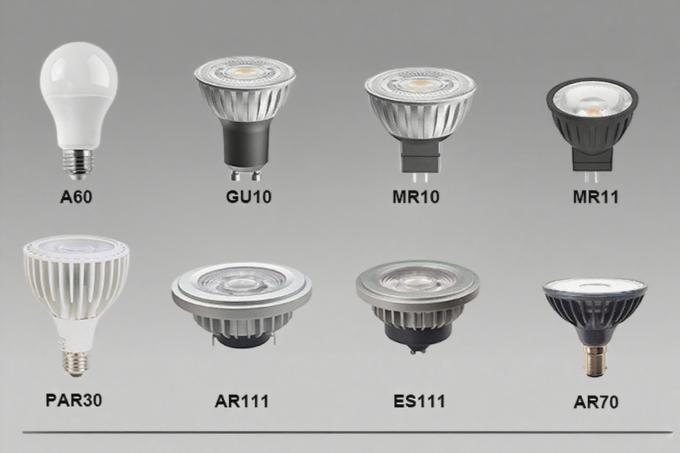
LED technology has evolved rapidly, giving businesses a wide selection of types of LED bulbs for commercial use and industrial applications.
Common LED Bulb Types:
- A-Type Bulbs – Standard “household” shape; used in hotels, lobbies, and office desk lamps.
-
PAR (Parabolic Aluminized Reflector) Bulbs – Concentrated beam; perfect for spot or accent lighting in showrooms.
-
BR (Bulged Reflector) Bulbs – Wide beam for softer lighting in conference rooms and cafes.
-
GU10 and MR16 Spotlights – Compact size for display cases and track lighting.
-
T8 and T5 LED Tubes – Energy-efficient replacements for fluorescent tubes in offices and warehouses.
-
High Bay LEDs – For large industrial spaces with ceilings over 20 feet.
-
Low Bay LEDs – For lower ceilings in workshops or small factories.
-
Specialty LEDs – Explosion-proof, IP65 waterproof, or high-temperature resistant bulbs.
Commercial vs. Industrial LED Bulbs: Key Differences
Although both categories use the same LED technology, commercial LED lighting focuses on comfort and aesthetics, while industrial LED bulbs prioritize ruggedness and functionality.
| Feature |
Commercial LED Lighting |
Industrial LED Bulbs |
| Primary Purpose |
Visual appeal, customer comfort |
Safety, visibility, performance under tough conditions |
| Durability |
Standard usage, protected environments |
Shock-resistant, water/dustproof, heat-tolerant |
| Certifications |
CE, RoHS |
CE, RoHS, UL, IP65+, ATEX explosion-proof |
| Design |
Stylish, often with dimming capability |
Functional, with heavy-duty housing materials |
| Energy Efficiency |
Balanced between efficiency and light quality |
Maximum lumen output per watt for operational savings |
LED Bulb Types Explained for Commercial Projects
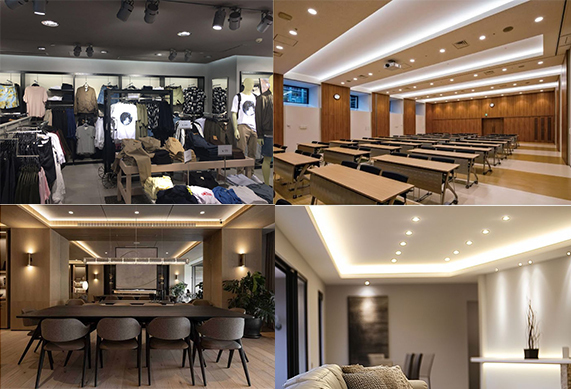
When planning a lighting design for offices, hotels, or retail spaces, it’s essential to match the bulb to the purpose.
Retail Stores:
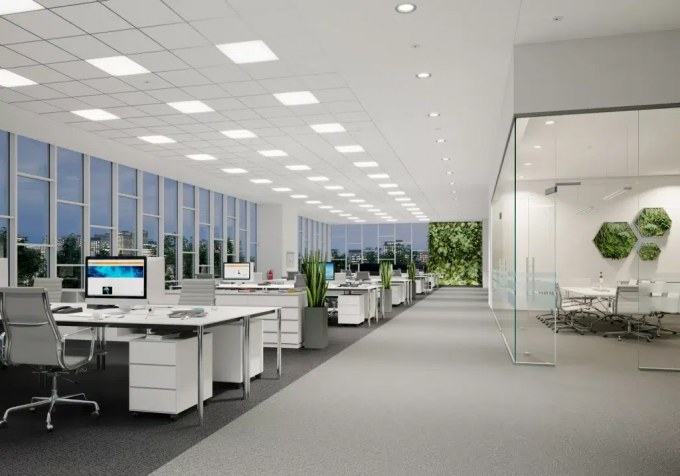
Offices:
Restaurants and Hotels:
Healthcare Facilities:
- Neutral white LEDs with high CRI for accurate diagnosis and reduced eye strain.
Best LED Bulbs for Industrial Lighting
Industrial environments demand resilience and performance. The best LED bulbs for industrial lighting are designed to handle extreme conditions.
Recommended Types:
- High Bay LEDs – Provide bright, even coverage for large spaces.
-
Low Bay LEDs – Optimized for ceiling heights between 12–20 feet.
-
Explosion-Proof LEDs – Certified for hazardous areas such as oil refineries.
-
Waterproof/IP65+ LEDs – Suitable for wet or dusty areas.
Reference: Learn about workplace lighting safety at OSHA Lighting Standards.
How to Choose LED Bulbs for Warehouses and Offices
Selecting LED bulbs for warehouses differs significantly from office spaces.
For Warehouses:
- Ceiling Height – High bay for over 20 feet, low bay for lower ceilings.
-
Brightness (Lumens) – Typically 20,000+ lumens for large spaces.
-
Beam Angle – Narrow for focused lighting, wide for general coverage.
-
Color Temperature – 5000K daylight for maximum clarity.
For Offices:
- Low Glare – Prevents eye fatigue for employees.
-
CRI Rating – 80+ is sufficient for general office work.
-
Color Temperature – 3500K–4000K for a neutral, productive environment.
-
Energy Efficiency – Opt for ENERGY STAR® rated products.
Commercial LED Bulbs with High Energy Efficiency
Energy efficiency is a priority for any business seeking to cut costs. Modern commercial LED bulbs with high energy efficiency offer:
- Up to 80% lower energy consumption compared to traditional bulbs.
-
Longer lifespan, reducing maintenance and replacement costs.
-
Compatibility with smart controls for motion detection and daylight harvesting.
Energy Efficiency Tip: Calculate the lumen-per-watt ratio to determine the real efficiency of the bulb.
The Importance of CRI (Color Rendering Index)
For spaces where appearance matters—like retail stores or design studios—a CRI of 90+ ensures colors are vivid and accurate. In industrial spaces, CRI 80+ is usually enough to maintain clarity and safety.
Maintenance and Lifespan
High-quality LED bulbs can last 25,000–50,000 hours. For industrial environments, aluminum housing improves heat dissipation, prolonging lifespan even under continuous operation.
Future Trends in LED Bulbs for Businesses
- Human-Centric Lighting – Adjusts color temperature to match natural circadian rhythms.
-
IoT Integration – Enables remote monitoring and control.
-
Ultra-Efficient LEDs – New designs reaching over 200 lumens per watt.
-
Sustainable Materials – Recyclable and eco-friendly LED components.
Practical LED Bulb Selection Guide Checklist
Before purchasing, consider:
- Application type (commercial or industrial)
-
Required certifications
-
Energy efficiency rating
-
Warranty period
-
Supplier reliability
Conclusion: Lighting That Works as Hard as Your Business
This LED bulb selection guide has shown that choosing the right lighting involves evaluating more than just wattage. From LED bulb types explained for commercial projects to finding the best LED bulbs for industrial lighting, every decision impacts efficiency, safety, and long-term costs.
If you are looking for tailored recommendations, partnering with a reputable supplier is essential. You can explore advanced solutions at LED bulb solutions for B2B buyers or contact a trusted LED bulb manufacturer for customized support.


 Your message must be between 20-3,000 characters!