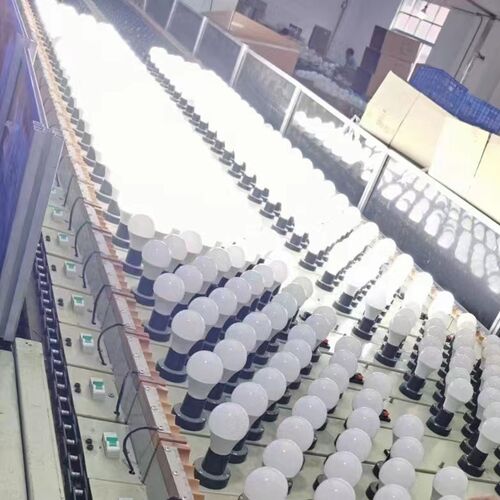
Many buyers evaluate LED bulbs by unit price and lumen output. Months later, problems appear: unstable quality, inconsistent lead time, or sudden compliance gaps. The root cause is rarely the bulb itself. It is the structure behind it.
The LED bulb industry chain determines cost behavior, quality consistency, failure rates, and export reliability far more than any single component choice.
This article provides a practical LED bulb industry chain analysis, tracing the path from chip and packaging decisions through drivers, optics, manufacturing control, compliance, and finally global export trends that buyers should watch over the next 12–24 months.
The LED Bulb Industry Chain Map: From Upstream to Downstream?
The LED bulb industry chain is not linear. It is layered, with each layer shaping the next.
A clear LED bulb industry chain map helps buyers understand where value is created, where risk enters, and where control is often lost.
Core layers of the LED bulb industry chain
The industry chain can be grouped into eight stages:
| Stage |
Role in the Chain |
| Epitaxy & chips |
Light generation potential |
| Chip packaging |
Color, efficiency, stability |
| Drivers & electronics |
Electrical reliability |
| Optics |
Light distribution |
| Thermal management |
Lifetime control |
| Manufacturing & testing |
Consistency at scale |
| Certifications & compliance |
Market access |
| Distribution & export |
Cost and risk exposure |
Each stage influences the final product. Weakness at any point travels downstream.
Why buyers misread the chain
Many buyers interact only with the final factory. They do not see:
This disconnect leads to false assumptions about price and quality.
The hidden dependency problem
A bulb factory may look stable, but if its upstream partners change frequently, stability disappears silently.
Understanding the full LED bulb supply chain analysis helps buyers identify real risk points early.
Chip & Epitaxy: What Really Matters for Cost and Consistency?
The industry chain begins long before bulbs are assembled.
Chip and epitaxy decisions shape baseline efficiency, color stability, and long-term consistency across the LED bulb industry chain.
Epitaxy sets the ceiling
Epitaxy defines:
- wavelength stability
-
defect density
-
efficiency potential
Even the best packaging cannot fully correct poor epitaxial quality.
Chip selection is about consistency, not peak performance
Buyers often chase high efficacy numbers. In practice, consistency matters more.
Chip decisions affect:
- color bin width
-
yield rate
-
supply continuity
Narrow bin control reduces variation but increases cost.
Cost behavior at chip level
Lower-cost chips often show:
These issues propagate through the LED chip packaging to bulb manufacturing process.
Long-term sourcing risk
Chip suppliers may:
Factories that rely on a single chip source expose buyers to supply shocks.
Buyer takeaway
Chip quality does not need to be premium.
It needs to be repeatable.
Repeatability defines downstream stability.
Packaging (SMD/COB, Phosphor, Reliability): The Hidden Quality Lever?
Packaging is where raw light becomes usable.
Chip packaging is the most underestimated leverage point in the LED bulb industry chain.
What packaging actually controls
Packaging determines:
This stage often matters more than chip brand.
SMD vs COB in bulb applications
| Aspect |
SMD |
COB |
| Cost |
Lower |
Higher |
| Flexibility |
High |
Lower |
| Thermal density |
Lower |
Higher |
| Typical bulb use |
A-bulbs, GU10 |
Downlights |
Most LED bulbs rely on SMD packaging due to cost and scalability.
Phosphor formulation matters
Phosphor quality affects:
- CRI stability
-
color shift under heat
-
lumen maintenance
Low-cost phosphor often degrades faster, causing yellowing or green shift.
Reliability under real conditions
Packaging failures show up as:
- early lumen depreciation
-
color drift
-
dead pixels
These failures are often blamed on “driver problems” but originate here.
Why buyers rarely see packaging risk
Packaging decisions are hidden inside modules. Datasheets rarely show:
This is why LED bulb supply chain analysis must go deeper than final assembly.
Drivers & Electronics: Why Power Supply Choices Define Failure Rates?
Most field failures originate in electronics.
The LED driver supply chain defines flicker behavior, dimming compatibility, and early failure probability.
Driver role in the industry chain
Drivers handle:
- current regulation
-
voltage fluctuation
-
thermal stress
A stable LED chip fails if the driver fails first.
Cost pressure at driver level
Drivers are common targets for cost cutting.
Typical shortcuts include:
These save cents but increase failure risk.
Dimming and compatibility risk
For dimmable bulbs, driver quality controls:
- flicker at low levels
-
noise
-
dimming range
Poor driver design creates compatibility complaints blamed on installers or dimmers.
Supply chain volatility
Driver supply chains are sensitive to:
Factories that frequently switch driver suppliers lose consistency.
Buyer implication
Driver stability matters more than driver brand.
Consistency beats specification extremes in long-term performance.
Optics & Thermal Management: The Real Reason Some Bulbs Last Longer?
Lifetime is rarely determined by chips alone.
Optics and thermal management decisions quietly decide whether an LED bulb reaches its rated lifetime.
Optical design is more than beam angle
Optics affect:
Poor optical design traps heat near LEDs.
Thermal path integrity
Thermal management includes:
- housing material
-
thickness
-
interface materials
Aluminum quality and design discipline matter more than advertised wattage ratings.
Cost-driven thermal shortcuts
Common shortcuts include:
- thinner aluminum
-
poor interface paste
-
mixed materials
These lead to higher junction temperature and faster degradation.
Why lifetime claims mislead
Lifetime numbers often assume:
- ideal ambient temperature
-
controlled airflow
-
stable voltage
Real-world conditions are harsher.
Buyer lesson
Longer-lasting bulbs are rarely accidental.
They are the result of disciplined thermal design choices.
Manufacturing, Testing, and Batch Control: Where Consistency Is Won or Lost?
Manufacturing discipline separates stable suppliers from unstable ones.
In the LED bulb industry chain, consistency is created on the factory floor, not in marketing.
Assembly consistency
Assembly affects:
- solder joint reliability
-
thermal contact
-
optical alignment
Small deviations compound at scale.
Testing depth matters
Factories vary in testing rigor:
| Test Type |
Purpose |
| Aging |
Early failure detection |
| Electrical |
Safety and stability |
| Optical |
Color and lumen control |
| Functional |
Dimming, noise |
Reducing test time lowers cost but raises risk.
Batch control and traceability
Batch traceability enables:
- root cause analysis
-
targeted recalls
-
accountability
Without it, failures become disputes.
Where buyers lose leverage
Buyers often skip:
This shifts risk downstream.
Practical reality
Consistency is not free.
It must be designed, enforced, and paid for.
Certifications and Compliance: How Regulations Shape Product Strategy?
Compliance is not paperwork. It shapes product design.
Certifications define what products can exist in each market within the LED bulb industry chain.
Core compliance layers
Major markets require:
Each layer affects cost and design choices.
Compliance drives component selection
Regulations influence:
- driver topology
-
standby power design
-
material selection
Ignoring compliance early increases redesign cost later.
Export responsibility shift
In many regions, importers carry legal responsibility.
This changes buyer behavior:
Compliance discipline becomes a supplier selection filter.
Strategic impact
Factories that plan compliance early gain:
- faster market entry
-
fewer disruptions
-
higher buyer trust
Compliance is part of strategy, not a final step.
Global Export Trends: What Buyers Should Watch in the Next 12–24 Months?
Export trends reflect changes across the entire chain.
LED bulb export trends are shaped by cost shifts, regulation tightening, and regional supply chain realignment.
Cost pressure redistribution
Rising labor and energy costs push:
- automation investment
-
regional specialization
Standard bulbs concentrate in high-efficiency regions.
Regulatory tightening
Energy efficiency and sustainability rules are tightening in:
- Europe
-
North America
-
parts of Asia
This favors suppliers with compliance maturity.
Supply chain localization trends
Buyers are:
This reshapes global LED lighting market trade patterns.
Volume vs specialization
Mass-market bulbs remain cost-driven.
Specialized bulbs gain value through differentiation.
Understanding this split helps buyers plan product portfolios.
Buyer outlook
In the next 12–24 months, buyers should monitor:
Prepared buyers outperform reactive ones.
Conclusion
The LED bulb industry chain—from chip packaging to global export—defines real cost, quality, and risk outcomes, and buyers who understand this chain make more stable, profitable sourcing decisions.


 Your message must be between 20-3,000 characters!