.gtr-container-h7j8k9 {
font-family: Verdana, Helvetica, “Times New Roman”, Arial, sans-serif;
color: #333;
line-height: 1.6;
padding: 15px;
box-sizing: border-box;
}
.gtr-container-h7j8k9 p {
font-size: 14px;
margin-bottom: 1em;
text-align: left !important;
}
.gtr-container-h7j8k9 a {
color: #007bff;
text-decoration: none;
}
.gtr-container-h7j8k9 a:hover {
text-decoration: underline;
}
.gtr-container-h7j8k9 strong {
font-weight: bold;
}
.gtr-container-h7j8k9 .gtr-title {
font-size: 18px;
font-weight: bold;
margin-bottom: 1.5em;
color: #222;
text-align: left !important;
}
.gtr-container-h7j8k9 .gtr-section-title {
font-size: 16px;
font-weight: bold;
margin-top: 2em;
margin-bottom: 1em;
color: #222;
text-align: left !important;
}
.gtr-container-h7j8k9 .gtr-subsection-title {
font-size: 15px;
font-weight: bold;
margin-top: 1.5em;
margin-bottom: 0.8em;
color: #333;
text-align: left !important;
}
.gtr-container-h7j8k9 .gtr-divider {
border-top: 1px solid #eee;
margin: 2em 0;
}
.gtr-container-h7j8k9 ul,
.gtr-container-h7j8k9 ol {
margin-left: 0;
padding-left: 25px;
margin-bottom: 1em;
}
.gtr-container-h7j8k9 li {
list-style: none !important;
position: relative;
margin-bottom: 0.5em;
padding-left: 15px;
font-size: 14px;
text-align: left !important;
}
.gtr-container-h7j8k9 ul li::before {
content: "â¢" !important;
color: #007bff;
font-size: 1.2em;
position: absolute !important;
left: 0 !important;
top: 0;
line-height: inherit;
}
.gtr-container-h7j8k9 ol {
counter-reset: list-item;
}
.gtr-container-h7j8k9 ol li::before {
content: counter(list-item) "." !important;
color: #007bff;
position: absolute !important;
left: 0 !important;
top: 0;
width: 20px;
text-align: right;
line-height: inherit;
}
.gtr-container-h7j8k9 .gtr-cta-section {
margin-top: 3em;
padding-top: 1.5em;
border-top: 1px solid #eee;
}
.gtr-container-h7j8k9 .gtr-cta-section p {
margin-bottom: 0.5em;
}
.gtr-container-h7j8k9 .gtr-cta-section strong {
color: #007bff;
}
@media (min-width: 768px) {
.gtr-container-h7j8k9 {
padding: 25px;
}
}
Best GU10 LED Bulbs for Commercial Spaces: High-Efficiency and Dimmable Solutions
When lighting designers, contractors, or wholesalers choose a GU10 LED for a commercial project, they are not simply comparing wattage or price. They are evaluating a lighting tool that influences how customers perceive a store, how employees feel in an office, and how guests experience a hotel lobby. Commercial environments place far higher demands on lighting than residential spaces, which is why professional-grade GU10 LED bulbs have evolved into a category of their own—more efficient, more durable, and more controllable.
This article explores the engineering, performance factors, and practical considerations that make high-efficiency, dimmable GU10 LEDs a top choice for commercial spaces. It also explains how buyers can evaluate suppliers, what certifications matter, and what features ensure reliability in real-world installations. Whether you manage procurement for a lighting brand or oversee large-scale projects as a contractor, you will find detailed insights that help you choose the right products with confidence.
Why GU10 LEDs Are Widely Adopted in Commercial Lighting
The GU10 form factor has been used for decades, originally popularized by halogen spotlights. When LEDs replaced halogens, the convenience of the GU10 base—simple twist-and-lock installation, standardized size, and compatibility with countless fixtures—helped the technology transition smoothly into retail stores, hotels, restaurants, conference centers, and offices.
Commercial users prefer GU10 LEDs because:
- They operate directly on 230V line voltage, eliminating the need for external transformers.
-
They can fit thousands of existing fixtures without redesign.
-
They support advanced optical control, ideal for accent lighting and display illumination.
-
Modern GU10 LEDs offer narrow, medium, and wide beam spreads, allowing designers to sculpt lighting as needed.
The result is a lighting product that balances practicality with aesthetics—something commercial spaces value highly.
Energy Efficiency: The Primary Driver Behind GU10 LED Adoption
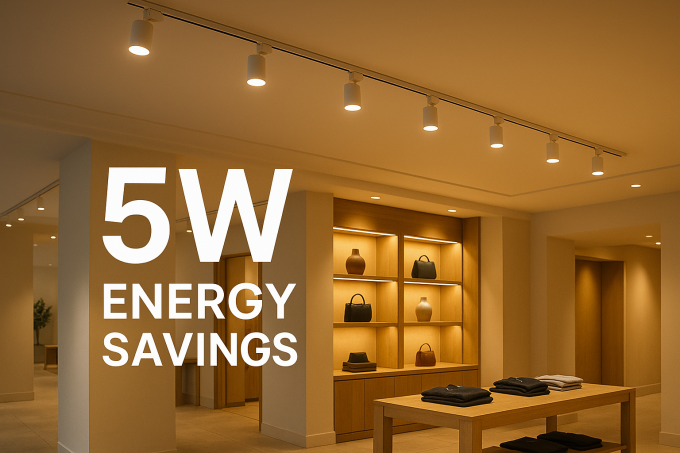
Commercial facilities typically operate lighting for long hours. A hotel corridor may run lights 24/7. A restaurant might dim lights during service and brighten them during cleaning. Offices operate for consistent work hours, and retail stores rely heavily on lighting to highlight products. In all these scenarios, energy cost becomes a significant part of operational expenses.
Modern GU10 LEDs address this with impressive efficiency advances:
1. Low Wattage, High Output
A typical high-end GU10 LED consumes between 4.5–6 watts, replacing 35W–50W halogens. According to the U.S. Department of Energy, LEDs consume up to 75% less energy and last 25x longer than incandescent and halogen lighting.
DOE reference: https://www.energy.gov/energysaver/led-lighting
2. Optimized Driver ICs
Advanced constant-current drivers reduce wasted energy and stabilize lumen output. A well-engineered driver improves power factor and reduces harmonics, contributing to overall system efficiency.
3. Superior Thermal Management
Better heatsinks keep junction temperature lower, which preserves both lumen output and color stability. Overheated LEDs dim prematurely—a major concern for commercial customers who cannot afford inconsistent lighting.
4. High Luminous Efficacy
Premium GU10 LEDs now achieve 85–105 lm/W, making them competitive with integrated COB downlights in many applications.
For a business operating hundreds or thousands of lamps, these savings accumulate quickly. Annual electricity savings alone often justify upgrading from older technologies.
The Importance of Dimming Performance in Commercial Spaces
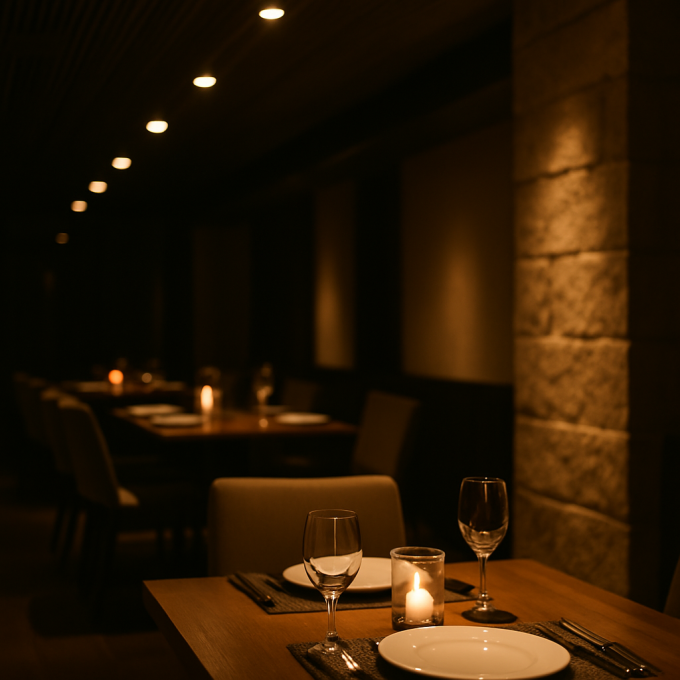
Dimming might appear optional in some commercial environments, but in practice, it is essential for achieving the right ambiance and energy control.
Restaurants and Hotels
Atmosphere influences customer experience and perceived value. Poor dimming—especially flicker or sudden drop-offs—can ruin the effect.
Retail and Galleries
Dimming helps adjust contrast, highlight merchandise, and compensate for daylight.
Conference and Office Areas
Flexible illumination supports presentations, video conferencing, and productivity.
However, dimming performance varies widely among GU10 suppliers. The main factors that determine quality include:
1. Driver Design
High-quality GU10 LEDs use trailing-edge dimming protocols compatible with modern dimmer switches used in Europe, the Middle East, and Asia. Poor drivers produce flicker, hum, or dropout.
2. Low Flicker Rates
Professional-grade LEDs maintain flicker below the thresholds recommended by the IEEE Standard 1789 for human comfort.
Reference: https://standards.ieee.org
3. Smooth Dimming Curve
Commercial buyers require dimming from 100% down to at least 10%, ideally 5%, without color shift. Some premium GU10 LEDs maintain color integrity even at low dimming levels due to stable current regulation.
4. Compatibility Testing
Reliable manufacturers test bulbs with 20–40 dimmer models to ensure performance across regions. This avoids installation problems and costly on-site troubleshooting.
Optical Performance: Beam Angles, Lenses, and Light Quality
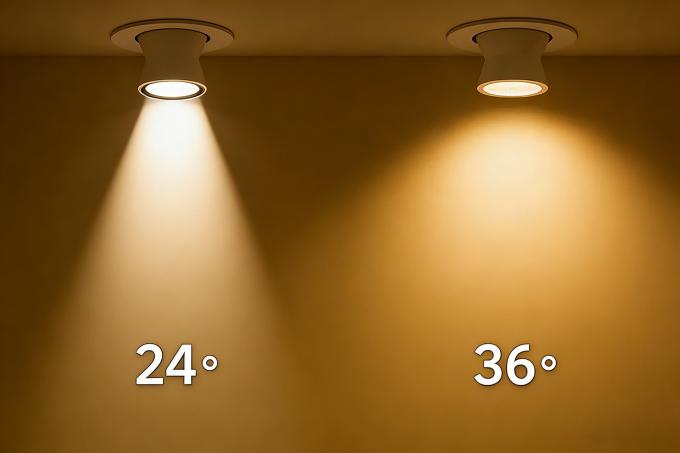
In commercial lighting, optical control matters just as much as energy savings. A GU10 LED in a boutique must highlight products without creating glare. In a hotel, it must produce warm, inviting tones. Offices need wider distribution to avoid shadowed corners.
Beam Angles
Typical commercial GU10 LEDs offer:
Narrow beams enhance focal points; wider beams create softer ambient lighting.
Lens and Reflector Design
Quality GU10 LEDs use precision-molded lenses or aluminum reflectors engineered to:
Optics directly affect how customers perceive a space. Poor optical design causes harsh shadows or uneven illumination—problems that harm the overall environment.
CRI and Color Consistency: The Hidden Performance Metrics Buyers Overlook
Many commercial buyers focus on wattage and lumen output, but industry professionals know that CRI (Color Rendering Index) and color consistency determine how a space truly feels.
High-quality GU10 LEDs now offer CRI 90+, with strong R9 values for richer reds. This is especially important in:
The CIE (International Commission on Illumination) defines CRI measurement standards:
https://cie.co.at
Color Consistency
Serious suppliers maintain tight 3-step or 4-step MacAdam ellipse tolerances, ensuring that every bulb looks visually identical—even across large installations.
Low-cost products drift noticeably in color temperature over time, creating an unprofessional patchwork effect.
Durability and Heat Management in Professional GU10 LEDs
Commercial lighting operates for long hours, sometimes under extreme environmental conditions—enclosed fixtures, poor ventilation, or high ambient temperatures.
Professional GU10 LEDs incorporate:
- aluminum or composite heatsinks
-
temperature-resistant electronics
-
reinforced bases for mechanical stability
-
thermal fuse protection in high-end models
These features allow them to maintain lumen output and color stability over thousands of hours. ENERGY STAR notes that well-designed LEDs maintain 70% of original lumens after 25,000 hours.
Source: https://www.energystar.gov
Certifications and Compliance That Matter to Commercial Buyers
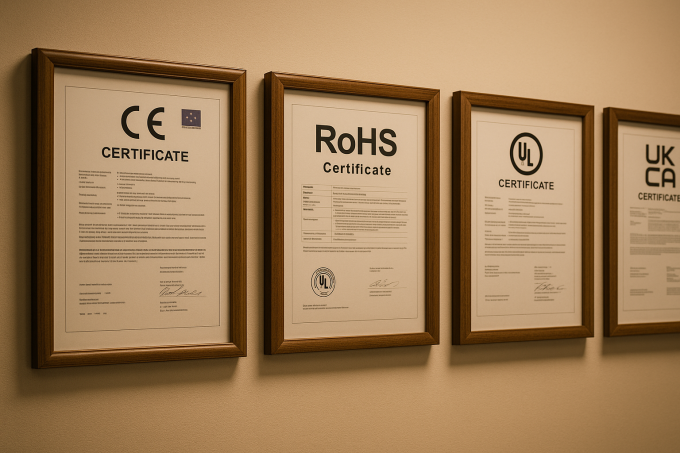
When lighting products enter regulated markets, certifications ensure compliance and reliability.
Key certifications include:
Commercial buyers should verify that the supplier can provide valid certificates and test reports (LM-79, LM-80), available from independent labs.
LM-79/LM-80 standards: https://www.ies.org
How to Evaluate a GU10 LED Supplier: What B2B Buyers Should Look For
1. Production Capacity and Lead Times
Factories with multiple automated assembly lines ensure consistent delivery schedules, especially important for contractors.
2. Driver and Chip Quality
Look for branded LED chips and IC-based drivers—these are the heart of reliability.
3. Dimming Compatibility Test Reports
A supplier that tests with multiple dimmer models shows commitment to quality.
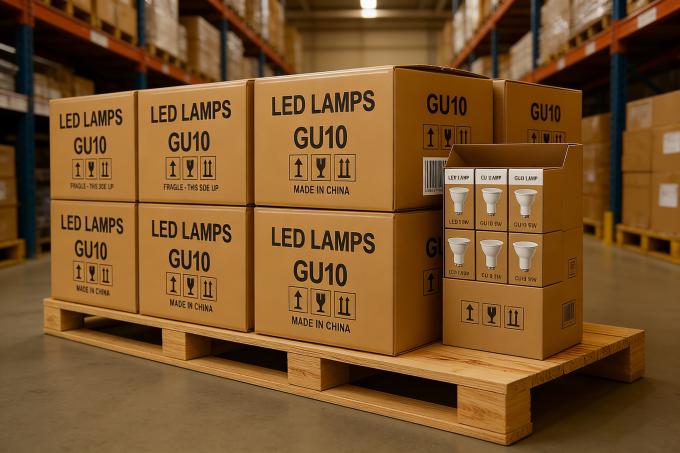
4. Packaging and Shipping Stability
Poor packaging leads to defects during transit; good suppliers use reinforced inner boxes and drop-tested cartons.
5. Batch-to-Batch Color Consistency
Consistent color matching is essential for repeat orders.
6. Customization Options
Branding, private label boxes, special CCT options, and color tuning help clients build product differentiation.
Applications Where High-Efficiency Dimmable GU10 LEDs Shine
Retail Stores & Boutiques
Highlight merchandise with precision spot beams.
Hotels & Hospitality
Create warm, relaxing mood lighting with smooth dimming.
Restaurants & Cafés
Adjust ambiance throughout the day.
Corporate Offices
Maintain visual comfort with consistent color.
Museums & Galleries
High CRI ensures artwork is displayed accurately.
Residential Projects by Contractors
Even homes benefit from commercial-grade reliability.
Why High-Quality GU10 LEDs Reduce Total Cost of Ownership
While premium GU10 LEDs cost more upfront, they save money in:
For wholesalers and lighting brands, premium products also reduce customer complaints—one of the biggest hidden costs in the industry.
Final Thoughts
Commercial lighting is not merely about choosing a bulb. It is about selecting stable, controllable, and consistent lighting tools that shape the customer experience and operational efficiency of a business. High-efficiency, dimmable GU10 LEDs represent a matured category that balances energy savings with refined light quality.
For B2B buyers—wholesalers, lighting brands, and contractors—the strategic advantage lies in partnering with manufacturers who emphasize driver quality, optical precision, CRI stability, and tight production control. When these factors come together, the result is a lighting product capable of elevating every commercial space it illuminates.
CTA — Ready to Source Commercial-Grade GU10 LED Solutions?
If you need reliable, high-efficiency, dimmable GU10 LEDs with stable supply and customizable branding for wholesale or project use, I can help.
Contact:
[[email protected]]
[www.tecolite.com]
Let’s build lighting solutions that meet the performance standards your customers expect—every shipment, every batch.


 Your message must be between 20-3,000 characters!