Huizhou Henhui Electronics Technology Co., Ltd.

作者: tecolux

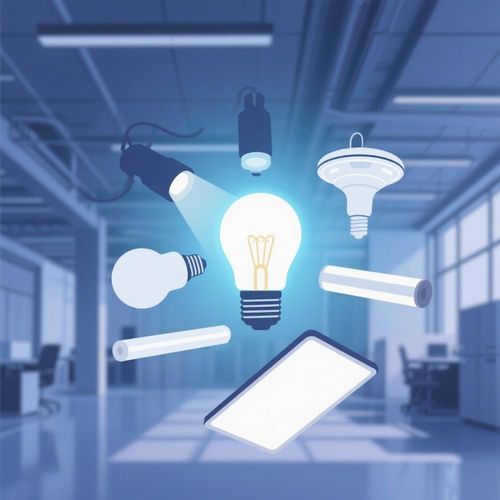
  • Comprehensive Guide to LED Bulb Types for Commercial & Industrial Lighting

    Comprehensive Guide to LED Bulb Types for Commercial & Industrial Lighting

    Introduction: Why Choosing the Right LED Bulb Matters

    In the world of commercial LED lighting and industrial LED bulbs, selecting the right product is more than simply finding the brightest option. It is about balancing efficiency, durability, cost-effectiveness, and application-specific performance. For businesses, lighting impacts not only operating costs but also productivity, safety, and customer experience.

    Whether you’re managing a retail chain, operating a large-scale warehouse, or designing lighting for a factory floor, this comprehensive guide to LED bulb types will help you make informed decisions. We’ll explore different LED bulb types explained for commercial projects, look at the best LED bulbs for industrial lighting, and show you how to choose LED bulbs for warehouses and offices.

    Reference: For official guidelines on energy-efficient lighting, visit the U.S. Department of Energy – LED Lighting Basics.

    Understanding the Different LED Bulb Types

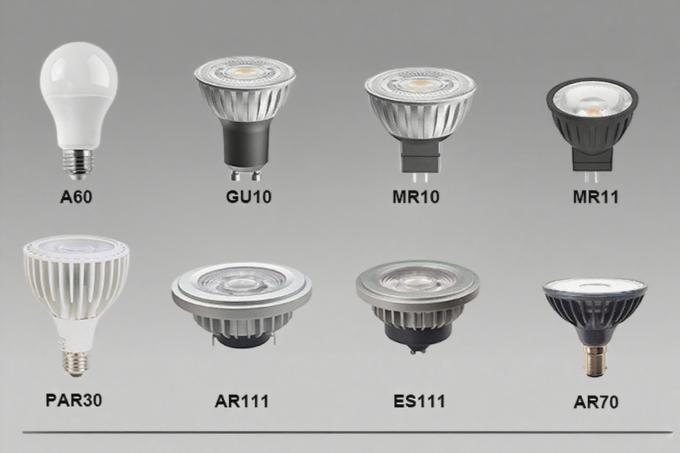
    LED technology has evolved rapidly, giving businesses a wide selection of types of LED bulbs for commercial use and industrial applications.

    Common LED Bulb Types:

    • A-Type Bulbs – Standard “household” shape; used in hotels, lobbies, and office desk lamps.

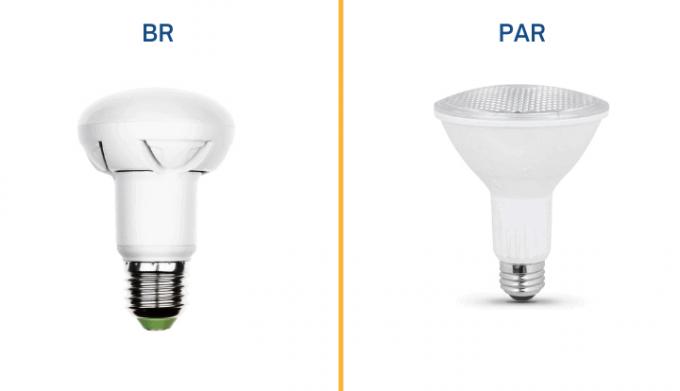
    • PAR (Parabolic Aluminized Reflector) Bulbs – Concentrated beam; perfect for spot or accent lighting in showrooms.

    • BR (Bulged Reflector) Bulbs – Wide beam for softer lighting in conference rooms and cafes.

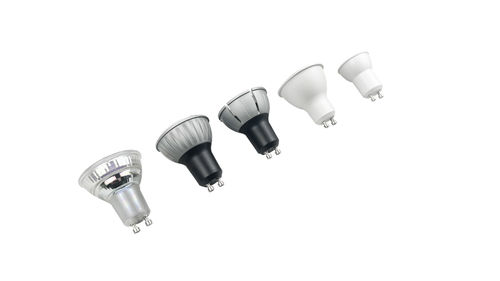
    • GU10 and MR16 Spotlights – Compact size for display cases and track lighting.

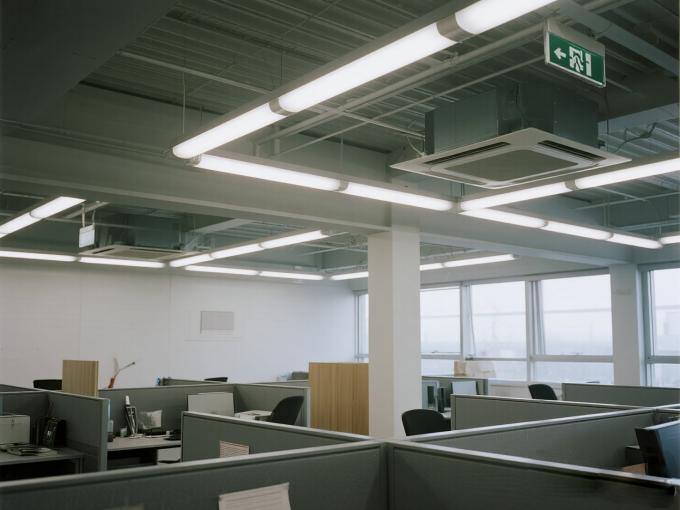
    • T8 and T5 LED Tubes – Energy-efficient replacements for fluorescent tubes in offices and warehouses.

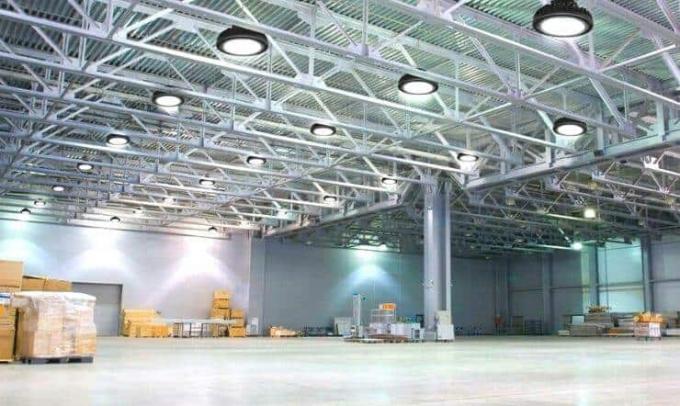
    • High Bay LEDs – For large industrial spaces with ceilings over 20 feet.

    • Low Bay LEDs – For lower ceilings in workshops or small factories.

    • Specialty LEDs – Explosion-proof, IP65 waterproof, or high-temperature resistant bulbs.
    Comprehensive Guide to LED Bulb Types for Commercial & Industrial Lighting  0

    Commercial vs. Industrial LED Bulbs: Key Differences

    Although both categories use the same LED technology, commercial LED lighting focuses on comfort and aesthetics, while industrial LED bulbs prioritize ruggedness and functionality.

    Feature Commercial LED Lighting Industrial LED Bulbs
    Primary Purpose Visual appeal, customer comfort Safety, visibility, performance under tough conditions
    Durability Standard usage, protected environments Shock-resistant, water/dustproof, heat-tolerant
    Certifications CE, RoHS CE, RoHS, UL, IP65+, ATEX explosion-proof
    Design Stylish, often with dimming capability Functional, with heavy-duty housing materials
    Energy Efficiency Balanced between efficiency and light quality Maximum lumen output per watt for operational savings

    LED Bulb Types Explained for Commercial Projects

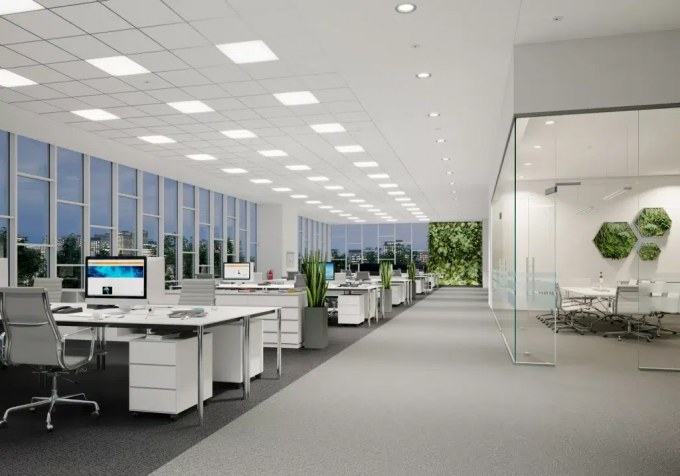
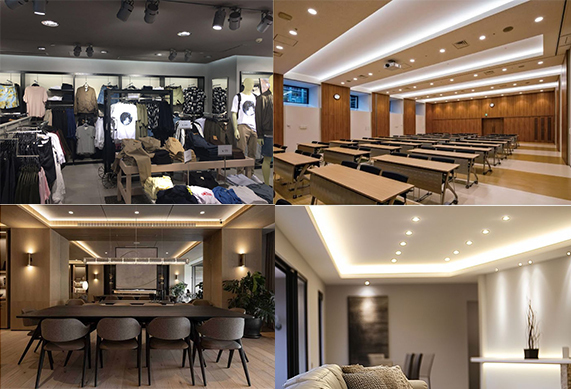
    When planning a lighting design for offices, hotels, or retail spaces, it’s essential to match the bulb to the purpose.

    Retail Stores:

    • Use GU10 or PAR bulbs for accent lighting to highlight products.

    • Consider high CRI (90+) bulbs for accurate color display.

    Offices:

    • T8 LED tubes or panel lights for uniform, low-glare illumination.

    • Dimmable options to adjust lighting during presentations.

    Restaurants and Hotels:

    • A-type warm white LEDs to create an inviting ambiance.

    • Dimmable bulbs to control mood lighting.

    Healthcare Facilities:

    • Neutral white LEDs with high CRI for accurate diagnosis and reduced eye strain.
    Comprehensive Guide to LED Bulb Types for Commercial & Industrial Lighting  1

    Best LED Bulbs for Industrial Lighting

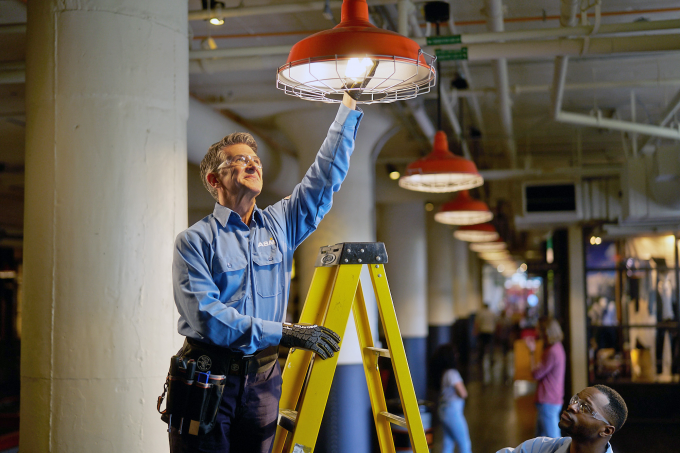
    Industrial environments demand resilience and performance. The best LED bulbs for industrial lighting are designed to handle extreme conditions.

    Recommended Types:

    • High Bay LEDs – Provide bright, even coverage for large spaces.

    • Low Bay LEDs – Optimized for ceiling heights between 12–20 feet.

    • Explosion-Proof LEDs – Certified for hazardous areas such as oil refineries.

    • Waterproof/IP65+ LEDs – Suitable for wet or dusty areas.

    Reference: Learn about workplace lighting safety at OSHA Lighting Standards.

    How to Choose LED Bulbs for Warehouses and Offices

    Selecting LED bulbs for warehouses differs significantly from office spaces.

    For Warehouses:

    • Ceiling Height – High bay for over 20 feet, low bay for lower ceilings.

    • Brightness (Lumens) – Typically 20,000+ lumens for large spaces.

    • Beam Angle – Narrow for focused lighting, wide for general coverage.

    • Color Temperature – 5000K daylight for maximum clarity.

    For Offices:

    • Low Glare – Prevents eye fatigue for employees.

    • CRI Rating – 80+ is sufficient for general office work.

    • Color Temperature – 3500K–4000K for a neutral, productive environment.

    • Energy Efficiency – Opt for ENERGY STAR® rated products.
    Comprehensive Guide to LED Bulb Types for Commercial & Industrial Lighting  2

    Commercial LED Bulbs with High Energy Efficiency

    Energy efficiency is a priority for any business seeking to cut costs. Modern commercial LED bulbs with high energy efficiency offer:

    • Up to 80% lower energy consumption compared to traditional bulbs.

    • Longer lifespan, reducing maintenance and replacement costs.

    • Compatibility with smart controls for motion detection and daylight harvesting.

    Energy Efficiency Tip: Calculate the lumen-per-watt ratio to determine the real efficiency of the bulb.

    The Importance of CRI (Color Rendering Index)

    For spaces where appearance matters—like retail stores or design studios—a CRI of 90+ ensures colors are vivid and accurate. In industrial spaces, CRI 80+ is usually enough to maintain clarity and safety.

    Maintenance and Lifespan

    High-quality LED bulbs can last 25,000–50,000 hours. For industrial environments, aluminum housing improves heat dissipation, prolonging lifespan even under continuous operation.
    Comprehensive Guide to LED Bulb Types for Commercial & Industrial Lighting  3

    Future Trends in LED Bulbs for Businesses

    • Human-Centric Lighting – Adjusts color temperature to match natural circadian rhythms.

    • IoT Integration – Enables remote monitoring and control.

    • Ultra-Efficient LEDs – New designs reaching over 200 lumens per watt.

    • Sustainable Materials – Recyclable and eco-friendly LED components.

    Practical LED Bulb Selection Guide Checklist

    Before purchasing, consider:

    • Application type (commercial or industrial)

    • Required certifications

    • Energy efficiency rating

    • Warranty period

    • Supplier reliability

    Conclusion: Lighting That Works as Hard as Your Business

    This LED bulb selection guide has shown that choosing the right lighting involves evaluating more than just wattage. From LED bulb types explained for commercial projects to finding the best LED bulbs for industrial lighting, every decision impacts efficiency, safety, and long-term costs.

    If you are looking for tailored recommendations, partnering with a reputable supplier is essential. You can explore advanced solutions at LED bulb solutions for B2B buyers or contact a trusted LED bulb manufacturer for customized support.
  • IP66 AR111 LED Bulb for Outdoor Projects – Waterproof G53 PAR36 Spotlight

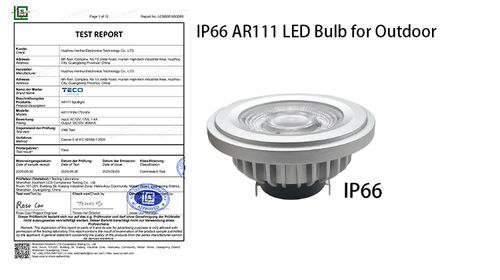
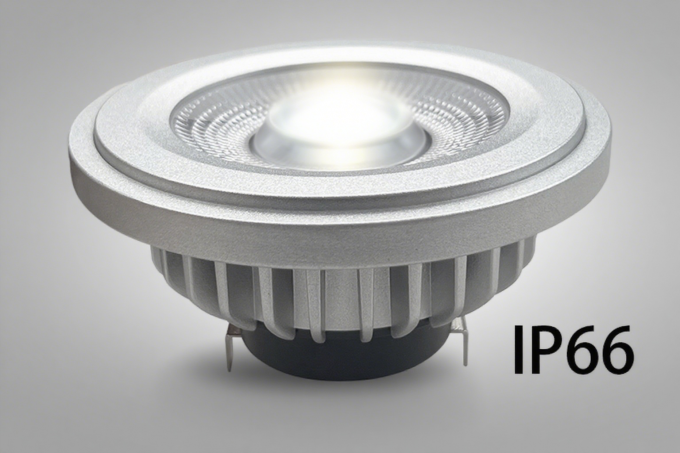
    IP66 AR111 LED Bulb for Outdoor Projects – Waterproof G53 PAR36 Spotlight

    Introduction: Lighting That Withstands the Elements

    Outdoor lighting projects face a unique set of challenges—unpredictable weather, exposure to dust and debris, and the need for reliable illumination in critical spaces. This is where the IP66 AR111 LED bulb becomes an ideal choice. Designed with a G53 base and PAR36 form factor, this waterproof AR111 LED spotlight delivers durability, energy efficiency, and outstanding performance in a variety of outdoor and commercial applications.

    Whether you’re designing architectural lighting, illuminating exterior signage, or upgrading existing fixtures, this IP66-rated AR111 LED bulb for outdoor projects ensures your lighting remains functional and efficient in even the harshest conditions.

    Reference: For an overview of IP rating standards, visit the International Electrotechnical Commission (IEC) IP Code Guide.

    Understanding the IP66 Rating

    The IP (Ingress Protection) rating is a standardized way to describe how well a lighting product resists dust and water. IP66 offers complete dust protection and can withstand powerful water jets from any direction.

    IP Rating Breakdown:

    • First digit (6) = Completely dust-tight.

    • Second digit (6) = Resistant to strong water jets.

    Practical meaning for outdoor lighting: An IP66 bulb can handle heavy rain, wind-blown dust, and even high-pressure cleaning without performance loss.

    IP Ratings Compared

    IP Rating Dust Protection Water Protection Common Application
    IP54 Limited Light splashes Indoor/outdoor covered areas
    IP65 Full Low-pressure jets Garden lighting, wall fixtures
    IP66 Full Strong jets Outdoor signage, building facades, stadium lighting
    IP67 Full Temporary immersion Fountain lighting, docks
    IP68 Full Continuous immersion Underwater lighting

    Tip: While IP67 and IP68 handle water immersion, IP66 offers the best balance for durable yet affordable outdoor lighting in most commercial settings.

    What is an IP66 AR111 LED Bulb?

    The AR111 bulb type is known for its precise beam control, high lumen output, and long service life. The G53 base makes it a perfect retrofit for older halogen AR111 bulbs, while the PAR36 shape ensures compatibility with many commercial fixtures.

    Key Features:

    • Waterproof Housing – Protects internal electronics.

    • High Lumen Efficiency – More light per watt.

    • G53 Base Retrofit – Plug-and-play replacement.

    • Low Heat Emission – Protects fixture components.

    • Weatherproof Materials – Corrosion-resistant metals and UV-stable plastics.

    IP66 AR111 LED Bulb for Outdoor Projects – Waterproof G53 PAR36 Spotlight  0

    Why Choose a Waterproof AR111 LED Spotlight for Outdoor Applications?

    Outdoor environments are unpredictable. Lighting in these areas must provide consistent illumination while surviving constant exposure to environmental stress.

    Key Benefits:

    • All-Weather Reliability – Rain, snow, dust, and wind are no problem.

    • Lower Maintenance – Fewer replacements and less downtime.

    • Better ROI – Energy savings combined with long life.

    • Versatile Mounting Options – Fits recessed, track, and surface fixtures.

    The Role of the G53 Base in Outdoor Lighting

    The G53 base LED bulb is a popular choice for commercial projects because of its low-voltage safety, secure fit, and easy retrofitting.

    Advantages:

    • Safe for Damp Areas – Lower voltage reduces risk of electric shock.

    • Fast Replacement – Simple push-in installation.

    • Broad Compatibility – Works with most PAR36/AR111 housings.

    PAR36 LED Bulb – The Preferred Shape for Focused Lighting

    The PAR36 size ensures excellent beam control, available in:

    • Narrow Spot – Concentrated beams for accent or signage lighting.

    • Medium Flood – Balanced coverage for pathways and entrances.

    • Wide Flood – General area illumination.

    This makes it ideal for:

    • Landscape architecture.

    • Building facade highlighting.

    • Parking lot perimeters.

    Energy Efficiency and Cost Savings

    Switching from a 75W halogen AR111 to a 15W LED equivalent can cut energy usage by 80%, leading to:

    • Lower electricity bills.

    • Reduced carbon footprint.

    • Cooler fixture operation, extending housing life.

    Reference: See the U.S. Department of Energy – LED Lighting for more on cost savings.

    Expanded Outdoor Application Scenarios

    The commercial outdoor lighting with IP66 LED bulbs segment covers:

    • Retail Storefronts – Eye-catching displays with weatherproof reliability.

    • Hospitality Venues – Hotels and restaurants needing ambient exterior light.

    • Public Infrastructure – Bridges, underpasses, bus stops.

    • Transportation Hubs – Airports, seaports, and train stations.

    • Sports Facilities – Outdoor courts and small stadium lighting.

    • Industrial Complexes – Warehouses, loading docks, security perimeters.

    • Municipal Projects – Parks, pedestrian paths, public art installations.

    IP66 AR111 LED Bulb for Outdoor Projects – Waterproof G53 PAR36 Spotlight  1

    Durability in Harsh Weather Conditions

    Challenges faced by outdoor fixtures:

    • Moisture Ingress

    • UV Degradation

    • Corrosion from Salty Air (coastal projects)

    • Impact from Debris (windborne particles)

    Design solutions in IP66 AR111 LEDs:

    • Precision gaskets and seals.

    • Powder-coated aluminum housings.

    • Shatter-resistant tempered glass.

    AR111 LED Bulb Replacement for Outdoor Fixtures

    Upgrade Benefits:

    • Better light quality with high CRI (90+).

    • Reduced fixture heat load.

    • Instant-on capability (no warm-up).

    • Dimmable options for adaptive lighting control.

    Buyer’s Guide: Selecting the Right IP66 AR111 LED Bulb

    Checklist:

    • Lumens – Match brightness to application.

    • Beam Angle – Narrow (8°–15°) for accents; wide (30°–60°) for general lighting.

    • CCT (Color Temperature) – 3000K warm for ambiance; 5000K cool for clarity.

    • Driver Quality – Ensures stable operation and flicker-free output.

    • Certifications – CE, RoHS, UL for compliance in target markets.

    • Warranty – Look for at least 3–5 years coverage.

    Maintenance & Care for IP66 Outdoor LED Spotlights

    Even waterproof products benefit from care:

    • Inspect Seals Annually – Replace worn gaskets.

    • Clean Lens – Remove dirt to maintain brightness.

    • Check Connections – Ensure secure and corrosion-free terminals.

    • Avoid Overheating – Keep vents clear for proper cooling.

    Real-World Project Example: Coastal Boardwalk Lighting

    Challenge: Replace corroding halogen spotlights on a beachfront boardwalk.
    Solution: Installed IP66 AR111 LED bulbs in existing G53 fixtures.
    Outcome:

    • 78% reduction in energy use.

    • No corrosion after 2 years.

    • Enhanced night visibility, improving safety.

    Future Trends in Outdoor LED Spotlight Technology

    • Smart Integration – Remote monitoring and scheduling.

    • Adaptive Beam Technology – Change beam spread without replacing bulbs.

    • Self-Cleaning Lenses – Using hydrophobic coatings.

    • Ultra-High Efficiency Chips – Breaking 200 lm/W efficiency.

    Conclusion: Why IP66 AR111 LED Bulbs Are the Smart Choice

    Choosing a waterproof G53 LED spotlight with a PAR36 form factor offers unmatched reliability, energy savings, and flexibility. From retail exteriors to municipal infrastructure, the IP66 AR111 LED bulb meets the demands of modern outdoor lighting.

    Learn more about IP ratings at the IEC IP Code Guide or explore professional LED lighting solutions.

  • GU10 LED Bulbs: Your Ultimate Guide to Brilliant Lighting

    GU10 LED Bulbs: Your Ultimate Guide to Brilliant Lighting

    Introduction: Unlocking the Potential of GU10 LED Bulbs

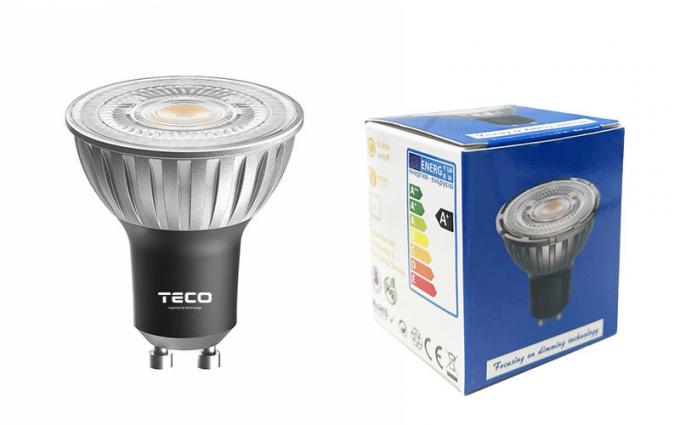
    In the vast world of lighting, GU10 LED bulbs have emerged as a true powerhouse, illuminating countless homes, offices, and commercial spaces with their efficiency and versatility. These distinct bulbs, easily recognized by their twin-pin, twist-and-lock base, are a global standard, operating directly on mains voltage (typically 220–240V in many regions, and 110–120V elsewhere). This direct-to-mains operation simplifies installation, eliminating the need for bulky transformers and making them a popular choice for recessed spotlights, track lighting, and display fixtures.

    Understanding the nuances of GU10 LED bulb types — from how their light is created to the various shades of white they can produce, their dimming capabilities, and their long-term energy savings — is key to making the best choice for your specific lighting needs. This comprehensive guide will illuminate every aspect, helping you transform any space with the perfect light.

    Decoding the GU10: What It Is and Why It’s Superior

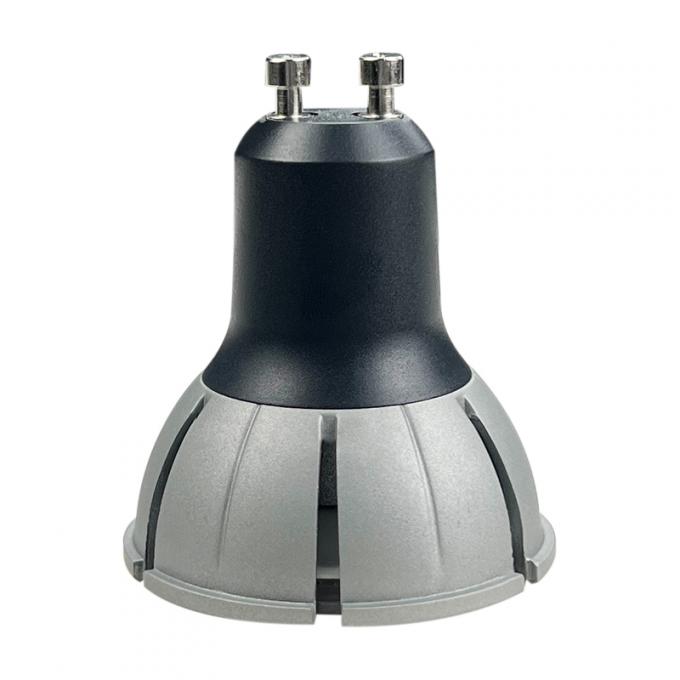
    The term “GU10” isn’t just a random code; it’s a precise identifier for the lamp’s base design. The “G” signifies a “bi-pin” connection, the “U” indicates the U-shape of the ceramic or plastic base, and “10” refers to the 10-millimeter distance between the centers of the two pins. These pins feature a small “foot” that twists into place, securely locking the bulb into its compatible lampholder.

    But beyond their unique base, GU10 LEDs offer a wealth of advantages that make them a superior alternative to their outdated halogen predecessors:

    • Exceptional Lifespan: While traditional halogen GU10s might flicker out after a mere 2,000 hours, LED equivalents boast an impressive lifespan, typically ranging from 15,000 to 50,000 hours. This translates to years, even decades, of maintenance-free illumination, drastically reducing replacement frequency and associated costs.

    • Unrivaled Energy Efficiency: This is where LEDs truly shine. A typical GU10 LED consumes a mere 4 to 8 watts (W) of power to produce the same light output as a 35-50W halogen bulb. This staggering reduction in power consumption leads to significant savings on your electricity bill, often paying for themselves within a year or two.

    • Minimal Heat Emission: Unlike halogens, which convert a substantial portion of their energy into heat (making them hot to the touch and contributing to room temperature), LEDs emit very little heat. This not only makes them safer to handle but also reduces the load on air conditioning systems, further saving energy, especially in commercial environments.

    • Versatile Beam Angle Options: From focused spotlights to wide floodlights, GU10 LEDs come in a wide array of beam angles, allowing you to tailor your lighting precisely to the application.

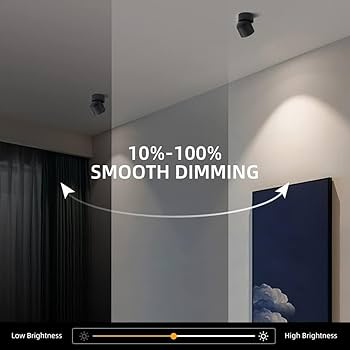
    • Flexible Dimming Capabilities: Many GU10 LED bulbs are designed to be dimmable, providing you with the power to adjust light intensity and create different moods or conserve even more energy.

    • Eco-Friendly Choice: With their long lifespan and lower energy consumption, GU10 LEDs reduce your carbon footprint and contribute to a more sustainable environment. They also contain no mercury, unlike some older CFL bulbs.

    GU10 LED Bulbs: Your Ultimate Guide to Brilliant Lighting  0

    Illuminating Technologies: COB vs. SMD GU10 LEDs

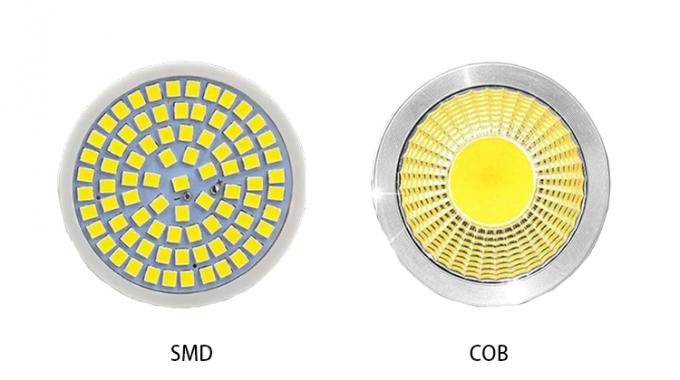
    Beneath the lens of a GU10 LED bulb, you’ll find different configurations of LED chips, each designed for specific lighting effects. The two most common technologies are Chip-on-Board (COB) and Surface-Mounted Device (SMD). Understanding their differences will help you select the ideal bulb for your intended application.

    • COB (Chip-on-Board) GU10 LEDs:

    Construction: COB technology involves mounting multiple small LED chips directly onto a single substrate, creating a compact, powerful light source.

    • Light Output: These bulbs typically produce a highly focused, intense beam with a very bright central spot. Think of it as a concentrated point of light.

    • Best For: Accent lighting and task lighting. They are excellent for highlighting specific objects like artwork, retail displays, architectural features, or for providing focused illumination over a workspace. Their crisp, defined beam makes details pop.

    • SMD (Surface-Mounted Device) GU10 LEDs:

    Construction: SMD bulbs feature several individual, smaller LED chips mounted separately on a circuit board, often arranged in a ring or cluster.

    • Light Output: These bulbs are designed to provide a wider, more diffused light spread. The light is generally more even and less concentrated than a COB bulb.

    • Best For: General illumination and ambient lighting. They are ideal for lighting larger areas evenly, such as living rooms, kitchens, hallways, or offices, where you need widespread, uniform light.

    GU10 LED Bulbs: Your Ultimate Guide to Brilliant Lighting  1

    The Art of Ambiance: Mastering Color Temperature

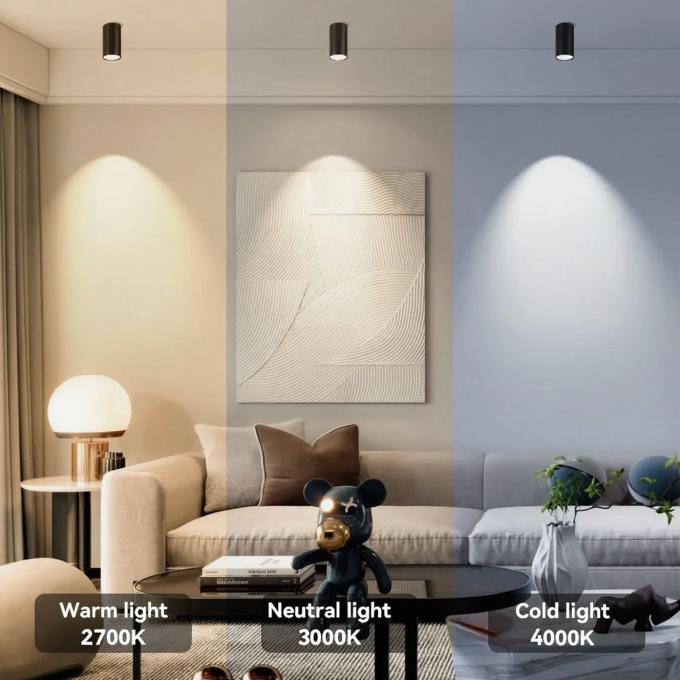
    The color temperature of a light bulb, measured in Kelvin (K), profoundly influences the mood and perception of a space. It describes the “warmth” or “coolness” of the light, ranging from a cozy orange glow to a crisp, icy blue.

    • Warm White (2700K – 3000K):

    Appearance: Mimics the soft, inviting glow of traditional incandescent bulbs or candlelight. It has a distinct yellowish hue.

    • Feel: Creates a cozy, relaxed, and intimate atmosphere. It’s perfect for unwinding and encourages comfort.

    • Applications: Ideal for living rooms, bedrooms, dining areas, restaurants, and hospitality settings where comfort and relaxation are priorities.

    • Neutral White (3500K – 4000K):

    Appearance: A balanced white light, neither too yellow nor too blue. It’s often described as a crisp, clean white.

    • Feel: Promotes alertness and clarity without being overly stimulating. It’s good for focused tasks.

    • Applications: Excellent for kitchens, bathrooms, offices, retail spaces, and hallways where clear visibility and a natural appearance are important.

    • Cool White / Daylight (5000K – 6500K):

    Appearance: A bright, bluish-white light that closely resembles natural daylight on a clear, sunny day.

    • Feel: Energizing and stimulating, enhancing concentration and visual acuity.

    • Applications: Best suited for workshops, garages, basements, utility rooms, hospitals, retail showrooms, and any area requiring high visibility and attention to detail.

    GU10 LED Bulbs: Your Ultimate Guide to Brilliant Lighting  2

    Shaping Light: Understanding Beam Angles

    The beam angle of a GU10 LED bulb dictates how spread out or concentrated the light output will be. This choice is critical for achieving your desired lighting effect, whether you’re highlighting a feature or illuminating an entire room.

    • Narrow Beam Angles (15° – 30°):

    Effect: Produces a tightly focused, intense beam of light.

    • Use Cases: Perfect for accent lighting to draw attention to specific objects like artwork, sculptures, product displays in retail, or architectural details. They create a dramatic and precise lighting effect.

    • Medium Beam Angles (35° – 45°):

    Effect: Offers a good balance between focus and spread, creating a more general spotlight effect.

    • Use Cases: Ideal for general spotlighting in areas where you want to highlight zones or provide more directed light than a flood, but not as intensely as a narrow beam. Often used in residential downlights.

    • Wide Beam Angles (60°+):

    Effect: Emits a broad, diffused wash of light, covering a larger area more uniformly.

    • Use Cases: Best for floodlighting or general ambient lighting in larger rooms, hallways, open-plan offices, or where you need widespread, even illumination without harsh shadows.

    GU10 LED Bulbs: Your Ultimate Guide to Brilliant Lighting  3

    The Power of Control: Dimmable vs. Non-Dimmable GU10s

    The ability to control light intensity adds immense flexibility to any lighting scheme.

    • Dimmable GU10 LEDs:

    Functionality: These bulbs are designed to work with compatible dimmer switches, allowing you to seamlessly adjust their brightness from full intensity down to a soft glow.

    • Benefits: Offers unparalleled flexibility for mood setting, adapting lighting for different activities, and can even lead to additional energy savings as less power is consumed when dimmed.

    • Compatibility is Key: Crucially, not all dimmers work with all LED bulbs. Traditional dimmers designed for incandescent or halogen bulbs can cause flickering or buzzing. Always check the bulb manufacturer’s specifications for recommended dimmer types to ensure smooth, flicker-free dimming.

    • Non-Dimmable GU10 LEDs:

    Functionality: These bulbs operate at a fixed brightness level and cannot be dimmed.

    • Benefits: Generally more cost-effective upfront than their dimmable counterparts.

    • Best For: Areas where adjustable brightness isn’t necessary, such as utility rooms or commercial spaces with fixed lighting requirements.

    GU10 LED Bulbs: Your Ultimate Guide to Brilliant Lighting  4

    Built for the Elements: Indoor vs. Outdoor GU10 LEDs

    Where your GU10 LED bulb will be installed dictates its necessary protection level against environmental factors. This is typically indicated by an IP (Ingress Protection) rating.

    • Indoor-Rated GU10 LEDs:

    Protection: These bulbs are designed for dry, indoor environments. They offer basic protection against dust but no specific resistance to water.

    • Applications: Perfect for ceiling spotlights, recessed downlights, track lighting, and display cabinets within homes and offices.

    • Outdoor-Rated (IP65/IP67) GU10 LEDs:

    Protection: These bulbs feature enhanced sealing and construction to withstand moisture and dust. IP65 is “dust tight” and protected against water jets, while IP67 offers protection against temporary submersion.

    • Applications: Essential for garden lighting, pathway lights, outdoor security lighting, and bathroom zones. Always ensure the fixture itself also has the appropriate IP rating.

    GU10 LED Bulbs: Your Ultimate Guide to Brilliant Lighting  5

    Beyond the Basics: Advanced Considerations for GU10 LEDs

    For those seeking optimal lighting performance, especially in professional or specialized settings, a few more metrics come into play:

    • Colour Rendering Index (CRI):

    What it is: CRI measures how accurately a light source renders the true colors of objects compared to natural daylight, on a scale of 0 to 100.

    • Why it matters: A high CRI (≥90) is crucial in environments where color accuracy is vital, such as retail stores, art galleries, museums, and photography studios.

    • Lumen Output (Brightness):

    What it is: Lumens (lm) are the true measure of a bulb’s brightness.

    • Why it matters: When replacing an old bulb, compare the lumen output of your old bulb to the LED equivalent to ensure you get comparable brightness. A 50W halogen might be replaced by an LED with 350-400 lumens.

    • Energy Labeling and Efficiency:

    EU Energy Label: The latest EU energy label scale (A–G) sets stricter standards for energy efficiency.

    • What to Look For: Aim for A or B class LEDs for maximum efficiency and minimal heat output.

    GU10 LED Bulbs: Your Ultimate Guide to Brilliant Lighting  6

    Real-World Impact: GU10 LED Use Cases

    GU10 LEDs are incredibly adaptable, making them suitable for a vast array of applications:

    • Retail Store: 3000K (warm white) COB GU10, 25° beam angle — to precisely highlight merchandise and create a welcoming atmosphere.

    • Hotel Lobby: 4000K (neutral white) SMD GU10, 60° wide beam angle — provides clear, even, general illumination across the space.

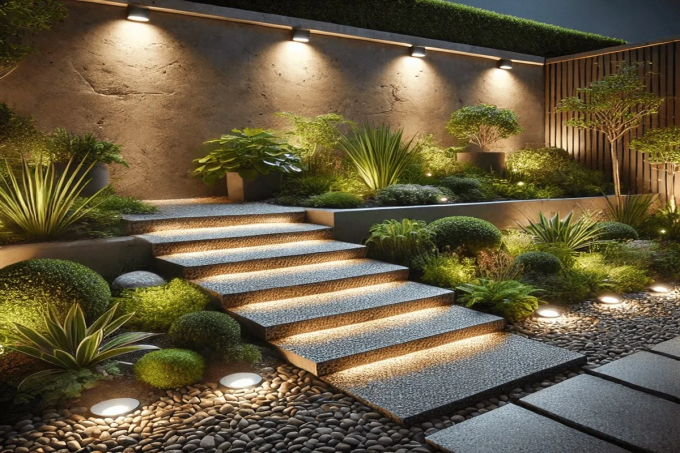
    • Garden Pathway: IP65-rated cool white (5000K) GU10 — improves visibility and safety while withstanding the elements.

    GU10 LED Bulbs: Your Ultimate Guide to Brilliant Lighting  7

    Conclusion: Empowering Your Lighting Choices

    Selecting the right GU10 LED bulb goes far beyond merely choosing a bright light. It’s about crafting an environment, enhancing functionality, and achieving significant long-term savings. By thoroughly understanding the differences in beam angle, color temperature, dimming capabilities, and essential efficiency ratings, you are empowered to make informed, intelligent choices.

  • LED Bulb Energy Ratings: Explained & What You Need to Know

    LED Bulb Energy Ratings: Explained & What You Need to Know

    Why Energy Ratings on LED Bulbs Matter

    Understanding LED bulb energy rating is essential for anyone aiming to reduce electricity consumption without compromising lighting performance. With growing attention on LED energy efficiency, energy labels have become the go-to reference for buyers comparing products for home, office, and industrial use.

    Fact: Lighting accounts for around 15% of global electricity use. Switching to efficient bulbs like LED can cut lighting energy use by up to 80%.
    Source – International Energy Agency

    What Does an Energy Rating Mean on LED Bulbs?

    The energy class for light bulbs (A to G, under the new EU scale) reflects how effectively a bulb converts electrical power (watts) into visible light (lumens). A higher rating, such as Class A, means higher efficiency and lower environmental impact.

    Understanding LED energy labels helps consumers and businesses make cost-effective, sustainable choices.

    Understanding the New EU Energy Label for LED Lighting

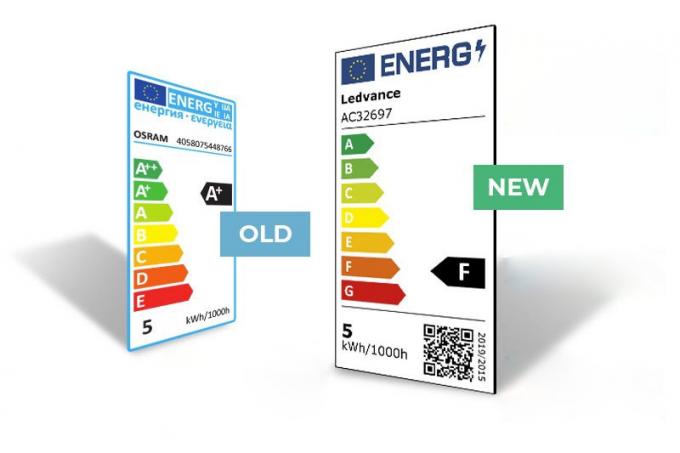
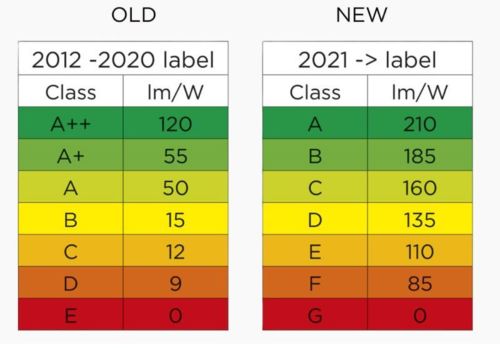
    Since March 2021, the EU introduced a rescaled energy label ranging from A (most efficient) to G (least efficient), replacing the old A++/A+/A system.

    What Changed?

    • The scale is now stricter: old A+ LEDs may now be rated B or even C.

    • The aim is to leave room for future technological improvements.

    Read more at the official EU Energy Label site

    LED Bulb Energy Ratings: Explained & What You Need to Know  0

    How to Read LED Bulb Energy Labels Correctly

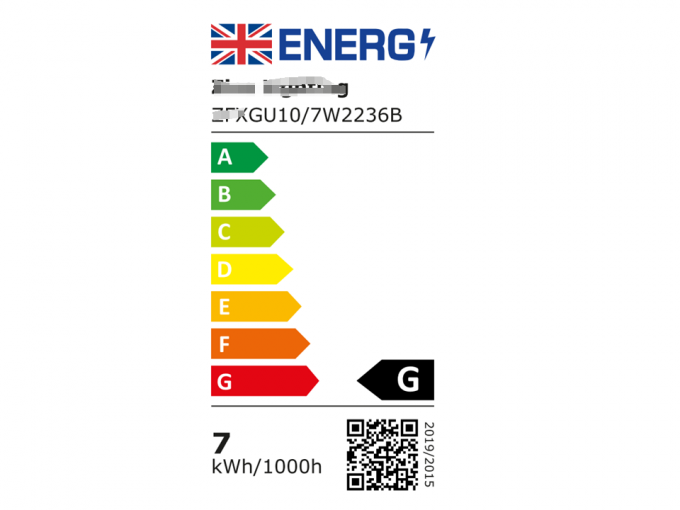
    Key Elements on the Label:

    Label Section Description
    Energy Class (A–G) Indicates overall efficiency
    Lumens (lm) Brightness level; higher means brighter light
    Watts (W) Power consumption
    kWh/1000h Energy used per 1000 hours (e.g., 6kWh)
    QR Code Directs to EPREL database for product details (EPREL Info)

    LED Light Bulb Efficiency Scale Explained

    An important factor when comparing bulbs is lumens per watt (lm/W) — a direct measurement of efficiency.

    Energy Class Typical lm/W for LEDs
    A ≥ 210 lm/W
    B 185–209 lm/W
    C 160–184 lm/W
    D–F 85-159 lm/W
    G <85 lm/s

    The best energy-rated LED bulbs usually fall into Class A or B, providing strong brightness with low consumption.

    LED Bulb Energy Ratings: Explained & What You Need to Know  1

    Energy Class A vs F: What’s the Difference?

    • Class A LED Bulbs: Ultra-efficient, advanced LED chips, often higher price but long-term savings.

    • Class F LED Bulbs: Lower efficiency, may be older models or budget options; higher electricity cost over time.

    For both homes and offices, investing in Class A or B bulbs provides long-term energy and cost benefits.

    How to Compare LED Bulb Energy Labels

    When comparing bulbs, consider:

    • Brightness needs (lumens)

    • Fitting type (GU10, E27, MR16, etc.)

    • Power consumption (watts)

    • Label efficiency (Class A–G)

    • Application context (task lighting, ambient, decorative)

    For example, a 6W LED bulb producing 800 lumens is more efficient than a 9W LED doing the same.

    You can use online tools like Topten EU’s Efficiency Database to search for high-rated LED models.

    How to Choose Energy-Efficient Lighting Using Labels

    Step-by-Step Guide:

    • Check the energy class (prefer A or B)

    • Compare lumens, not watts

    • Look for low kWh/1000h consumption

    • Use the QR code to view product details

    • Select color temperature and beam angle appropriate to your use

    Best Energy-Rated LED Bulbs for Home and Office

    Some examples of high-efficiency LED models include:

    • Philips Master LED ExpertColor GU10 – Class A, ~210 lm/W

    • Osram Parathom Pro MR16 – Class B, ~190 lm/W

    • GE LED Classic Series – Class C, budget option with decent efficiency

    When choosing for offices, focus on:

    • High lumen output

    • Flicker-free drivers

    • Neutral white (4000K) or daylight (6500K)

    For homes, choose:

    • Warm white (2700K–3000K)

    • Dimmable options

    • Smart control integration for additional savings

    Energy Efficiency vs Cost: The Long-Term Perspective

    Though Class A LED bulbs might cost 20-30% more upfront, their lower power usage and longer lifespan (25,000–50,000 hours) yield significant total cost savings.

     Example: A Class A 6W LED saves up to $30 in electricity over 5 years compared to a Class F equivalent.

    Glossary of Key Terms

    • Lumen (lm): Measures light output (not power).

    • Watt (W): Power consumed by the bulb.

    • kWh (kilowatt-hour): Energy used over time.

    • Lumens per watt (lm/W): Measure of light output per power consumed.

    • Energy label (EU): Standardized label showing a bulb’s energy class and performance.

    Final Thoughts: Why Understanding LED Energy Labels Helps Everyone

    Choosing the right LED based on energy labels is more than a technical decision — it’s about cost efficiency, environmental responsibility, and better lighting quality.

    By learning how to compare LED bulb energy labels, understanding the efficiency scale, and recognizing what energy class ratings mean, buyers can make smarter, more informed decisions for homes, offices, and commercial spaces.

  • LED Bulb Energy Ratings: Explained & What You Need to Know

    LED Bulb Energy Ratings: Explained & What You Need to Know

    Why Energy Ratings on LED Bulbs Matter

    Understanding LED bulb energy rating is essential for anyone aiming to reduce electricity consumption without compromising lighting performance. With growing attention on LED energy efficiency, energy labels have become the go-to reference for buyers comparing products for home, office, and industrial use.

    Fact: Lighting accounts for around 15% of global electricity use. Switching to efficient bulbs like LED can cut lighting energy use by up to 80%.

    Source – International Energy Agency

    What Does an Energy Rating Mean on LED Bulbs?

    The energy class for light bulbs (A to G, under the new EU scale) reflects how effectively a bulb converts electrical power (watts) into visible light (lumens). A higher rating, such as Class A, means higher efficiency and lower environmental impact.

    Understanding LED energy labels helps consumers and businesses make cost-effective, sustainable choices.

    Understanding the New EU Energy Label for LED Lighting

    Since March 2021, the EU introduced a rescaled energy label ranging from A (most efficient) to G (least efficient), replacing the old A++/A+/A system.

    What Changed?

    - The scale is now stricter: old A+ LEDs may now be rated B or even C.
    
    - The aim is to **leave room for future technological improvements**.
    

    Read more at the official EU Energy Label site

    Image Placeholder

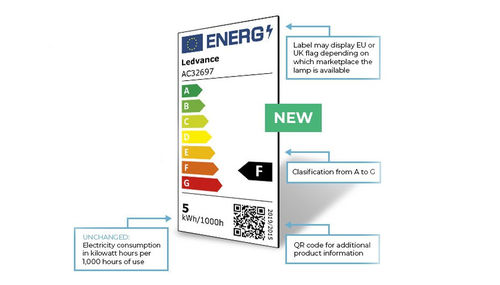
    Alt text: Example of new EU energy label for an LED bulb

    Caption: The updated EU label shows the energy efficiency class, lumens, and QR code for product info.

    How to Read LED Bulb Energy Labels Correctly

    Key Elements on the Label:

    Label Section Description
    Energy Class (A–G) Indicates overall efficiency
    Lumens (lm) Brightness level; higher means brighter light
    Watts (W) Power consumption
    kWh/1000h Energy used per 1000 hours (e.g., 6kWh)
    QR Code Directs to EPREL database for product details (EPREL Info)

    LED Light Bulb Efficiency Scale Explained

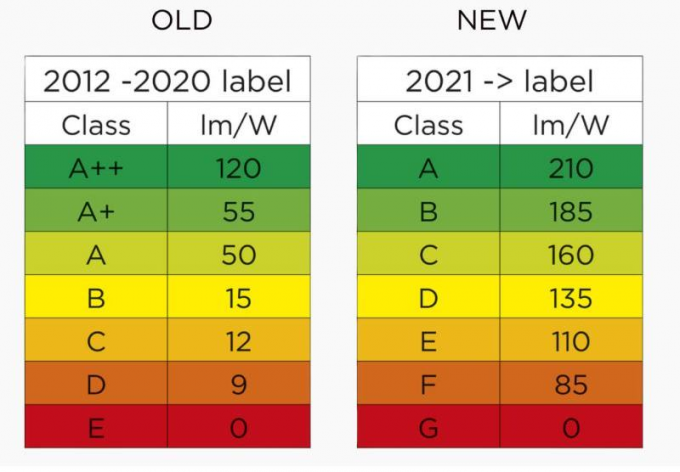
    An important factor when comparing bulbs is lumens per watt (lm/W) — a direct measurement of efficiency.

    Energy Class Typical lm/W for LEDs
    A ≥ 210 lm/W
    B 185–209 lm/W
    C 160–184 lm/W
    D–F Below 160 lm/W

    The best energy-rated LED bulbs usually fall into Class A or B, providing strong brightness with low consumption.

    Image Placeholder

    Alt text: Comparison chart of LED bulb energy classes

    Caption: New energy classes for LEDs reflect stricter standards than the older system.

    Energy Class A vs F: What’s the Difference?

    - **Class A LED Bulbs**: Ultra-efficient, advanced LED chips, often higher price but long-term savings.
    
    - **Class F LED Bulbs**: Lower efficiency, may be older models or budget options; higher electricity cost over time.
    

    For both homes and offices, investing in Class A or B bulbs provides long-term energy and cost benefits.

    How to Compare LED Bulb Energy Labels

    When comparing bulbs, consider:

    - **Brightness needs** (lumens)
    
    - **Fitting type** (GU10, E27, MR16, etc.)
    
    - **Power consumption** (watts)
    
    - **Label efficiency** (Class A–G)
    
    - **Application context** (task lighting, ambient, decorative)
    

    For example, a 6W LED bulb producing 800 lumens is more efficient than a 9W LED doing the same.

    You can use online tools like Topten EU’s Efficiency Database to search for high-rated LED models.

    How to Choose Energy-Efficient Lighting Using Labels

    Step-by-Step Guide:

    - **Check the energy class** (prefer A or B)
    
    - **Compare lumens**, not watts
    
    - Look for **low kWh/1000h consumption**
    
    - Use the **QR code** to view product details
    
    - Select **color temperature** and **beam angle** appropriate to your use
    

    Image Placeholder

    Alt text: Home lighting plan using energy-efficient LED bulbs

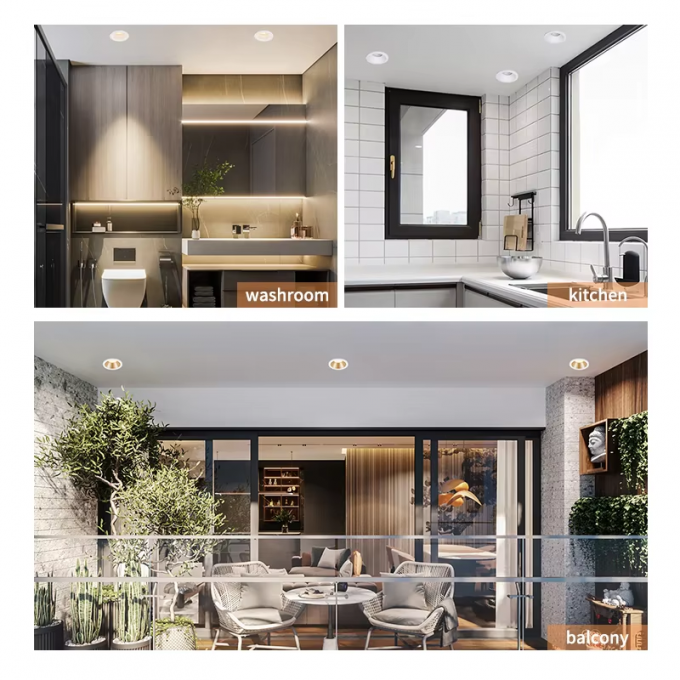
    Caption: Energy-efficient LED bulbs used in different rooms with suitable brightness and temperature.

    Best Energy-Rated LED Bulbs for Home and Office

    Some examples of high-efficiency LED models include:

    - **Philips Master LED ExpertColor GU10** – Class A, ~210 lm/W
    
    - **Osram Parathom Pro MR16** – Class B, ~190 lm/W
    
    - **GE LED Classic Series** – Class C, budget option with decent efficiency
    

    When choosing for offices, focus on:

    - High lumen output
    
    - Flicker-free drivers
    
    - Neutral white (4000K) or daylight (6500K)
    

    For homes, choose:

    - Warm white (2700K–3000K)
    
    - Dimmable options
    
    - Smart control integration for additional savings
    

    Energy Efficiency vs Cost: The Long-Term Perspective

    Though Class A LED bulbs might cost 20-30% more upfront, their lower power usage and longer lifespan (25,000–50,000 hours) yield significant total cost savings.

    Example: A Class A 6W LED saves up to $30 in electricity over 5 years compared to a Class F equivalent.

    Glossary of Key Terms

    - **Lumen (lm):** Measures light output (not power).
    
    - **Watt (W):** Power consumed by the bulb.
    
    - **kWh (kilowatt-hour):** Energy used over time.
    
    - **Lumens per watt (lm/W):** Measure of light output per power consumed.
    
    - **Energy label (EU):** Standardized label showing a bulb’s energy class and performance.
    

    Final Thoughts: Why Understanding LED Energy Labels Helps Everyone

    Choosing the right LED based on energy labels is more than a technical decision — it’s about cost efficiency, environmental responsibility, and better lighting quality.

    By learning how to compare LED bulb energy labels, understanding the efficiency scale, and recognizing what energy class ratings mean, buyers can make smarter, more informed decisions for homes, offices, and commercial spaces.

    Image Placeholder

    Alt text: Comparing energy savings between LED bulbs of different energy classes

    Caption: LED energy ratings help identify long-term savings across lighting environments.

  • Beam Angles Explained: Applications of Spotlights for Different Scenarios

    Beam Angles Explained: Applications of Spotlights for Different Scenarios

    In lighting design, beam angle is a critical yet often overlooked specification that directly impacts visual comfort, brightness distribution, and space ambiance. Whether for commercial, hospitality, or retail use, choosing the correct LED spotlight beam angle can dramatically enhance the lighting effect.

    This article breaks down beam angles explained in simple terms and explores how different spotlight beam angles serve varied lighting needs.

    What Is a Beam Angle?

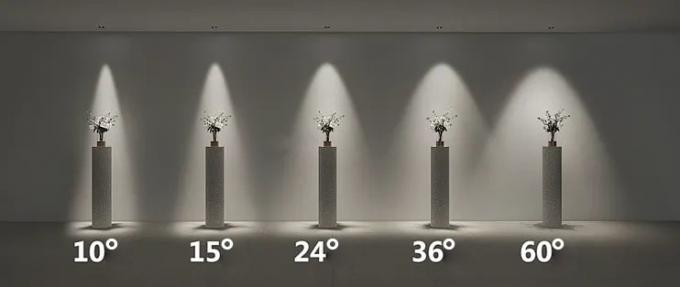
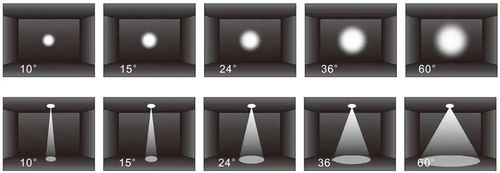
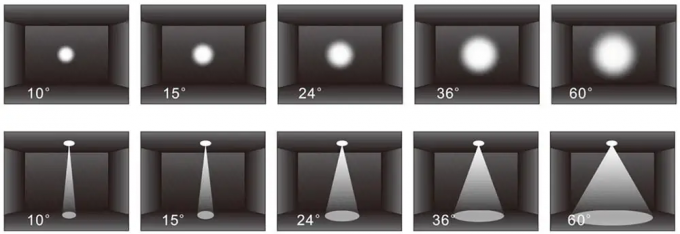
    The beam angle of a light source refers to the spread of light emitted. It is measured in degrees and defines how wide or narrow the light is dispersed from the center of the beam.

    • Narrow beam angles (e.g., 10°–24°) produce focused, intense light.

    • Wide beam angles (e.g., 36°–60° and beyond) offer broader, softer light coverage.

    Beam Angles Explained: Applications of Spotlights for Different Scenarios  0

    Beam angle determines the spread and intensity of a spotlight’s illumination.

    Understanding the types of beam angles helps ensure the lighting performs optimally for its intended function.

    Common Types of Beam Angles in Spotlights

    Spotlights and directional LEDs come in various beam spreads. Here’s a breakdown:

    Beam Angle Classification Light Spread Best Use
    10°–15° Very Narrow Spot (VNSP) Very focused beam Accent lighting, gallery artwork
    24°–30° Narrow Spot (NSP) Moderate focus Retail shelving, feature lighting
    36°–40° Spot (SP) Balanced Task lighting, offices
    60°–90° Flood (FL) Wide coverage General room lighting, lobbies

    Beam Angles Explained: Applications of Spotlights for Different Scenarios  1

    Different beam angles create varying light patterns suitable for different environments.

    How Beam Angle Affects Lighting Design

    Intensity and Brightness

    Smaller beam angles concentrate light into a smaller area, resulting in greater intensity. Wider beam angles spread light over a larger space, reducing glare but also intensity.

    Visual Focus

    In retail and museums, narrow beams are used to highlight specific objects or focal points without flooding the surroundings with excess light.

    Mood and Ambiance

    Wide beam angles help create a soft, inviting feel—ideal for hospitality environments like lounges or hotel lobbies.

    Applications of Narrow Beam Angles

    Retail Display and Accent Lighting

    Narrow beams (10°–24°) are perfect for drawing attention to product features on shelves or in showcases. They isolate the illuminated area and enhance color contrast.

    Galleries and Museums

    Artworks benefit from very narrow spotlights to prevent light spill and maintain viewer focus.

    Beam Angles Explained: Applications of Spotlights for Different Scenarios  2

    Applications of Wide Beam Angles

    General Commercial Lighting

    Wide beams (36°–60°) are ideal for illuminating large open spaces like offices or conference rooms. They ensure even light distribution and reduce harsh shadows.

    Hospitality Lighting

    Lobbies, restaurants, and lounges benefit from wide-angle lighting to create a welcoming and visually soft environment.

    Beam Angles Explained: Applications of Spotlights for Different Scenarios  3

    How to Choose the Right Beam Angle for Spotlights

    Step 1: Identify the Application

    • Task lighting (e.g., counters, desks): 24°–36°

    • Accent lighting (e.g., artwork, displays): 10°–24°

    • Ambient lighting (e.g., room-wide): 60°+

    Step 2: Evaluate Ceiling Height and Distance

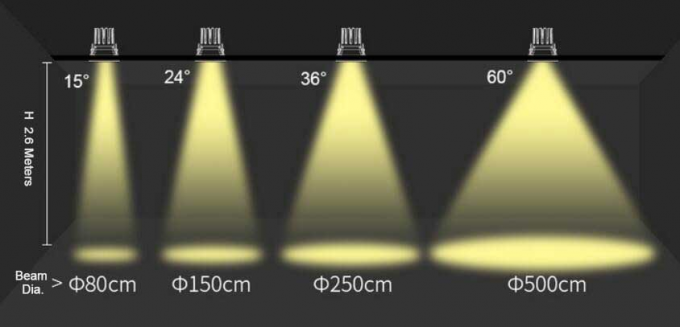
    The greater the distance from the surface, the wider the light spreads. For higher ceilings, a narrower beam may be required to maintain focus.

    Step 3: Determine Desired Visual Impact

    • Focused and dramatic effect: Choose narrower beams

    • Soft and diffuse effect: Use wider beams

    Spotlight Beam Angle Guide for Commercial Lighting

    Environment Recommended Beam Angle Purpose
    Retail shelves 10°–24° Highlight products
    Office workspace 36°–40° Balanced illumination
    Hotel lobby 60°+ Warm ambient lighting
    Art gallery 10°–15° Focused artwork lighting
    Warehouse aisle 24°–36° Directional task lighting

    Impact of Beam Angles on Energy Efficiency

    Choosing the right beam angle reduces unnecessary energy usage:

    • Narrow beams reduce wattage needed for focused lighting

    • Wide beams eliminate the need for excessive fixture count

    • Correct matching avoids overlighting and glare

    This directly supports better lighting design and lower operating costs.

    Conclusion

    Beam angles are more than technical data—they are a fundamental tool in creating effective lighting environments. From enhancing merchandise visibility to building relaxing atmospheres in hotels, understanding and applying the right spotlight beam angles ensures optimal lighting performance and user satisfaction.

    Whether you’re planning for retail, commercial, or hospitality use, this spotlight beam angle guide for commercial lighting serves as a practical foundation for smarter lighting design.

  • Complete Guide to LED Bulb Types for Commercial and Industrial Lighting

    Complete Guide to LED Bulb Types for Commercial and Industrial Lighting

    Lighting plays a central role in shaping the efficiency, safety, and overall cost-effectiveness of commercial and industrial spaces. Understanding the different LED bulb types is essential before choosing the right solution for offices, warehouses, factories, or retail environments.

    This guide covers everything professionals need to know about the types of LED bulbs for commercial use, their applications, and key specifications.

    Why LED Bulbs Are Essential in Commercial and Industrial Settings

    In large-scale applications, lighting consumes a significant share of operational energy. That’s why switching to commercial LED bulbs not only improves energy efficiency but also reduces long-term maintenance costs.

    Benefits of LED lighting in business environments:

    • Reduced energy consumption

    • Lower heat output

    • Longer service life

    • Instant start with no flickering

    • Better brightness and color rendering

    • Available in a wide range of form factors

    Whether you’re lighting an open office space or a high-ceiling warehouse, selecting the proper LED bulb types directly influences employee comfort, productivity, and safety.

    Common LED Bulb Types for Commercial Use

    Let’s explore the most widely used LED bulb types for commercial and industrial environments, along with their features and use cases.

    1. LED A-Type Bulbs

    Complete Guide to LED Bulb Types for Commercial and Industrial Lighting  0

    These are traditional-shaped bulbs commonly used in office desk lamps, ceiling fixtures, and break rooms.

    Feature Description
    Base Type E26 / E27
    Light Output 800–1600 lumens
    Common Applications Small offices, restrooms, general-purpose fixtures

    2. LED PAR and BR Bulbs

    Complete Guide to LED Bulb Types for Commercial and Industrial Lighting  1

    PAR (Parabolic Aluminized Reflector) and BR (Bulged Reflector) bulbs are used for directional lighting in commercial displays or accent lighting.

    Feature Description
    Beam Angle Narrow (PAR) or wide (BR)
    Applications Retail lighting, display shelves, conference rooms
    Compatibility Track lighting, recessed can lighting

    3. LED T8 and T5 Tubes

    Complete Guide to LED Bulb Types for Commercial and Industrial Lighting  2

    Linear LED tubes are a staple in office ceilings and industrial high bays.

    Feature Description
    Size T8 (1 inch), T5 (5/8 inch)
    Wattage 9–25W
    Lengths 2ft, 4ft, 8ft
    Use Case Warehouses, offices, parking garages

    UL-listed and DLC-certified T8 tubes are generally preferred in commercial projects.

    4. LED High Bay Bulbs and Fixtures

    Complete Guide to LED Bulb Types for Commercial and Industrial Lighting  3

    Used in warehouses and manufacturing plants where ceiling height exceeds 20 feet.

    Feature Description
    Output 10,000–60,000 lumens
    Mounting Pendant or ceiling hook
    Options UFO style, linear high bays
    Applications Logistics centers, production lines

    5. LED Corn Bulbs

    Complete Guide to LED Bulb Types for Commercial and Industrial Lighting  4

    Named for their appearance, corn bulbs are retrofitting solutions for traditional high-intensity discharge (HID) bulbs.

    Feature Description
    Power Up to 150W
    Replaces Metal halide, sodium vapor bulbs
    Use Case Outdoor post tops, industrial facilities

    Choosing the Right LED Bulb Type Based on Application

    The correct LED bulb selection depends on the environment and task. Here’s a reference table:

    Application Area Suggested LED Type Notes
    General Office A19, BR30, T8 Color temp 4000K-5000K
    Conference Room PAR30, BR40 Dimmable preferred
    Retail Display PAR38 Focused beam angle
    Warehouse High bay, T8 tubes Lumens >20,000
    Parking Garage T5, LED panels Motion sensor integration recommended
    Outdoor Area Corn bulbs, Floods IP65-rated

    Energy Efficiency and Cost Considerations

    Energy costs are a top concern for building managers. Commercial LED bulbs are up to 80% more efficient than traditional incandescent or fluorescent options.

    Key metrics to evaluate:

    • Luminous efficacy (lm/W): Higher values mean better energy output per watt.

    • L70 rating: Predicts the number of hours until brightness drops to 70%.

    • Power factor: A power factor >0.9 is recommended for industrial applications.

    Most industrial LED bulbs offer 40,000+ hour lifespans and quick ROI in high-usage environments.

    Color Temperature and CRI

    Color temperature and Color Rendering Index (CRI) impact worker comfort and visibility.

    Metric Ideal Range Usage
    CCT (Correlated Color Temperature) 4000K–5000K Neutral white for productivity
    CRI (Color Rendering Index) 80+ Higher CRI for visual clarity

    For precision work, such as in laboratories or packaging lines, CRI above 90 is advisable.

    Smart Features and Controls

    Modern commercial LED bulbs can include:

    • Dimming capability

    • Motion sensors

    • Daylight harvesting

    • Zoning and scheduling

    Using LED lighting with smart controls helps align with green building certifications like LEED.

    Installation and Maintenance Best Practices

    Consider these tips:

    • Match base and voltage to existing fixtures

    • Use surge protection in areas prone to power spikes

    • Select IP-rated bulbs for dusty or wet environments

    • Clean diffusers and covers regularly

    Working with a certified installer ensures compliance with local safety codes and optimizes performance.

    Sourcing and Standards

    Reliable LED bulb suppliers should offer products certified under:

    • CE, RoHS, and ERP in the EU

    • UL, DLC, and ETL in North America

    • SASO in Saudi Arabia and Middle East

    Make sure to check product datasheets and warranty terms. Also, request IES photometric files for large-scale installations.

    Conclusion

    Choosing the right LED bulb type for commercial or industrial use requires understanding light output, form factor, color temperature, and efficiency. With the right lighting strategy, businesses can reduce costs and improve productivity for years to come.

  • Commercial-Grade Rechargeable GU10 LED Bulb – Emergency & Portable Lighting

    Commercial-Grade Rechargeable GU10 LED Bulb – Emergency & Portable Lighting

    In environments where reliability and flexibility are crucial, lighting solutions need to go beyond conventional options. One such innovation is the rechargeable GU10 LED bulb—a versatile solution that bridges the gap between portability, emergency readiness, and energy efficiency. Designed for commercial, industrial, and outdoor maintenance use, these battery-powered GU10 LED bulbs provide dependable lighting when it matters most.

    Let’s explore the features, advantages, and applications of these commercial rechargeable LED lighting products and how they serve as effective backup lighting solutions.

    What Is a Rechargeable GU10 LED Bulb?

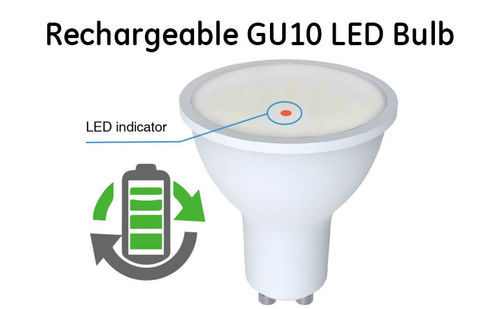
    A rechargeable GU10 LED bulb is a spotlight-style lamp that operates using a built-in battery. It fits standard GU10 sockets and functions normally when powered by mains electricity. However, in the event of a power outage or when detached from a fixture, it can continue to operate using stored battery power.

    Image Placeholder

    • Alt Text: A GU10 LED bulb charging on a docking station

    • Image Caption: Rechargeable GU10 LED bulbs include internal batteries and can operate during power failures or in off-grid situations.

    These bulbs are especially valuable in commercial environments such as maintenance areas, warehouses, retail spaces, and outdoor setups where portable and emergency lighting is essential.

    Key Features of Commercial-Grade Rechargeable GU10 LED Bulbs

    Not all LED bulbs are created equal. When choosing a lighting solution for professional use, features like reliability, battery life, and durability become critical.

    Long Battery Runtime

    Most commercial-grade units provide 2 to 5 hours of illumination on a full charge, depending on power output and usage. Some models even allow dimming functions to extend battery life.

    Dual-Mode Operation

    These bulbs can switch automatically between grid-powered and battery-powered modes. This makes them ideal as emergency GU10 LED bulbs, automatically lighting up during outages.

    Fast Charging Capabilities

    Charging via dedicated docks or standard GU10 fixtures ensures quick turnaround between uses—essential in time-sensitive maintenance or retail operations.

    Energy Efficiency

    As energy-efficient rechargeable LED bulbs for commercial lighting, they consume less electricity and offer consistent brightness, even when running on battery power.

    Commercial-Grade Rechargeable GU10 LED Bulb – Emergency & Portable Lighting  0

    Why Choose a Rechargeable GU10 LED Bulb for Commercial Use?

    In professional environments, lighting failure is more than an inconvenience—it can cause safety issues, delay operations, or reduce productivity. Rechargeable GU10 bulbs offer significant advantages:

    Instant Backup Lighting

    During power loss, these bulbs instantly switch to battery mode, maintaining safety and visibility. No manual intervention is required.

    Maintenance Flexibility

    Facilities management teams often use portable GU10 LED bulbs with rechargeable battery features for inspections or temporary setups, especially in areas without wired lighting access.

    Outdoor Portability

    Whether you’re working in landscaping, construction, or event setups, having portable LED spotlights that don’t require generators or cabling is a game-changer.

    Environmental Benefits

    As part of energy-efficient commercial lighting, these bulbs help reduce carbon footprint through low power consumption and long operational life.

    Image Placeholder

    • Alt Text: Portable rechargeable GU10 spotlight used for outdoor event setup

    • Image Caption: Portable LED spotlights provide flexibility in off-grid commercial environments like events or construction zones.

    Applications in Different Commercial Settings

    Let’s explore where and how commercial-grade rechargeable GU10 LED bulbs for emergency use are typically applied:

    1. Retail & Supermarkets

    Used as backup lighting during power failures to prevent panic and maintain operations. Easily installed in track lighting systems.

    2. Warehouses & Workshops

    Perfect for mobile workstations or inspection points where outlets aren’t available.

    3. Property Maintenance

    Maintenance crews use these bulbs during off-hours when lighting systems are off or unavailable.

    4. Hospitality & Events

    Used in outdoor events, temporary exhibits, or emergency stairwell lighting in hotels and public spaces.

    5. Construction Sites

    Provides rugged and mobile lighting for on-site tasks after dark or in enclosed areas without installed lights.

    Image Placeholder

    • Alt Text: Technician using rechargeable GU10 LED bulb during equipment maintenance

    • Image Caption: Rechargeable LED bulbs offer consistent lighting during off-grid or after-hours maintenance.

    How to Choose the Right Rechargeable GU10 LED Bulb

    Choosing the best unit depends on the intended application. Here are some selection tips:

    Battery Capacity

    Look for bulbs with lithium-ion batteries for longer life and faster charging.

    Brightness

    Most commercial applications require 300–500 lumens. Choose higher output models for task lighting or open spaces.

    Color Temperature

    Neutral white (4000K) is preferred for general use, while warm white (2700K–3000K) is ideal for hospitality settings.

    Charging Mechanism

    Consider whether the bulb charges in standard GU10 sockets or requires a dedicated charger.

    Certifications

    Ensure CE, RoHS, or other relevant safety and environmental certifications are present.

    Image Placeholder

    • Alt Text: Comparison of GU10 LED bulbs with different brightness levels

    • Image Caption: Selecting the right brightness and battery capacity is key to optimal performance.

    Maintenance and Safety Tips

    While these bulbs are user-friendly, a few precautions ensure long-term efficiency:

    • Do not overcharge: Follow manufacturer charging instructions.

    • Store properly: Avoid extreme temperatures when not in use.

    • Inspect regularly: Check for signs of swelling, leakage, or dimming.

    • Replace when needed: Battery degradation is normal after extended use; replace units as needed.

    Image Placeholder

    • Alt Text: Hand holding a GU10 LED bulb with safety symbols printed on base

    • Image Caption: Always ensure your bulb has valid safety markings and follows proper maintenance practices.

    Final Thoughts

    The rechargeable GU10 LED bulb is more than just an emergency light—it’s a practical, efficient, and portable lighting solution built for real-world commercial applications. Whether you’re lighting up an off-grid event, maintaining critical operations during a blackout, or simply needing portable light during inspections, this bulb offers unmatched versatility.

    With the right commercial rechargeable LED lighting, you ensure safety, reduce energy consumption, and gain flexibility in both planned and unexpected scenarios.

    For businesses seeking backup lighting solutions with rechargeable GU10 LED bulbs, this is one investment that continues to shine—literally and figuratively.

  • OEM vs. ODM LED Bulbs: The Complete Procurement & Customization Guide

    OEM vs. ODM LED Bulbs: The Complete Procurement & Customization Guide

    In the world of commercial LED lighting, the demand for customized solutions has grown rapidly. As companies seek to align their lighting systems with branding, performance standards, and energy goals, many are turning to OEM and ODM LED bulbs to meet their needs.

    But what do OEM and ODM really mean? What’s the difference between the two models? And how do you know which one is right for your project?

    This guide breaks down the difference between OEM vs. ODM LED lighting, and offers insight into how each model works in practice — from product customization to supply chain integration.

    What Are OEM and ODM LED Bulbs?

    Understanding the terms is the first step in making an informed procurement decision.

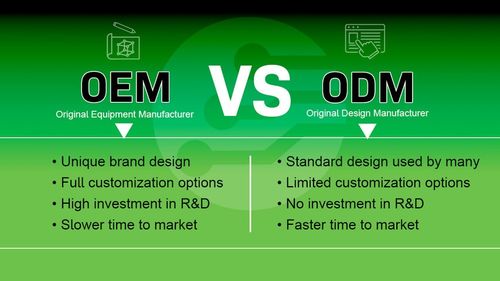
    OEM LED Bulbs (Original Equipment Manufacturer)

    OEM LED bulbs are manufactured by a supplier based on the buyer’s specifications. The buyer provides the design, performance requirements, and even packaging details. The factory is responsible for producing and assembling the product as instructed.

    OEM vs. ODM LED Bulbs: The Complete Procurement & Customization Guide  0

    Key Features:

    • Full control over product design and branding

    • Best suited for companies with existing lighting specs or brands

    • Often involves NDAs and intellectual property protection

    • Ideal for retailers, project integrators, and established brands

    ODM LED Bulbs (Original Design Manufacturer)

    In the ODM model, the manufacturer provides pre-developed product designs that buyers can choose from, customize slightly, and sell under their own brand.

    OEM vs. ODM LED Bulbs: The Complete Procurement & Customization Guide  1

    Key Features:

    • Quicker time to market

    • Factory handles the technical specifications and design

    • Buyer selects from existing molds, finishes, and features

    • Lower development costs compared to OEM

    • Good for distributors or startups launching new lines

    OEM vs ODM LED Lighting: Key Differences

    Category OEM LED Bulbs ODM LED Bulbs
    Product Design Provided by the buyer Provided by the manufacturer
    Customization Level Fully customizable (CCT, CRI, beam angle, etc.) Semi-custom (color, label, small modifications)
    Speed to Market Longer lead time (4–8 weeks or more) Shorter lead time (2–4 weeks)
    Upfront Investment Higher (may require new tooling or testing) Lower (existing molds and components used)
    Ownership Buyer owns the product design/IP Manufacturer owns the core product structure

    LED Bulb Customization Options in OEM/ODM Projects

    Whether you choose OEM LED bulb manufacturing or ODM LED bulb supply, several parameters can be adjusted to fit your application.

    Common Customization Features:

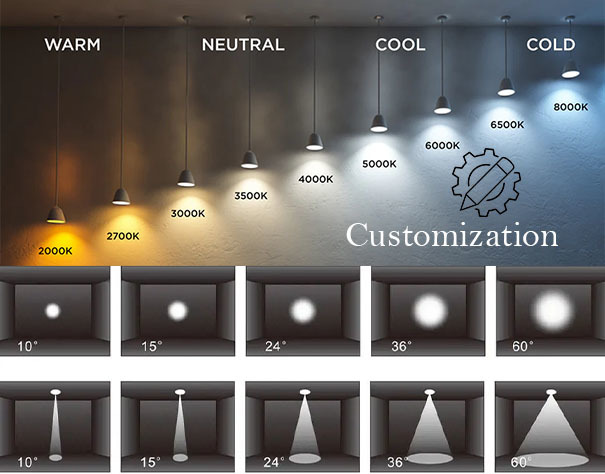
    • Color Temperature (CCT): 2700K–6500K

    • Beam Angle: 10°–120°, depending on lens

    • CRI (Color Rendering Index): 80+, 90+, or 95+

    • Housing Material: Die-cast aluminum, thermoplastic, glass

    • Smart Compatibility: Tuya, Zigbee, Bluetooth, DALI

    • Logo Printing & Packaging: OEM/private label support

    • Certifications: CE, RoHS, CB, UL, SAA, etc.

    • Voltage Support: 110V/220V

    OEM vs. ODM LED Bulbs: The Complete Procurement & Customization Guide  2

    Working with a LED Bulb Manufacturer: OEM/ODM Process

    Step 1: Define Your Requirements

    Before reaching out to a custom LED bulb supplier, clarify:

    • Target markets and certifications required

    • Application environment (indoor/outdoor, IP rating)

    • Fixture type and socket compatibility (GU10, MR16, E27, etc.)

    • Product dimensions, performance specs, and branding

    Step 2: Select OEM or ODM Path

    Situation Suggested Path
    You already have designs and specs ✅ OEM
    You need quick market entry ✅ ODM
    You want to build a long-term brand line ✅ OEM
    You’re testing a market with low volume ✅ ODM

    Step 3: Request Samples and Test Reports

    A quality LED bulb manufacturer (OEM/ODM) should be able to provide:

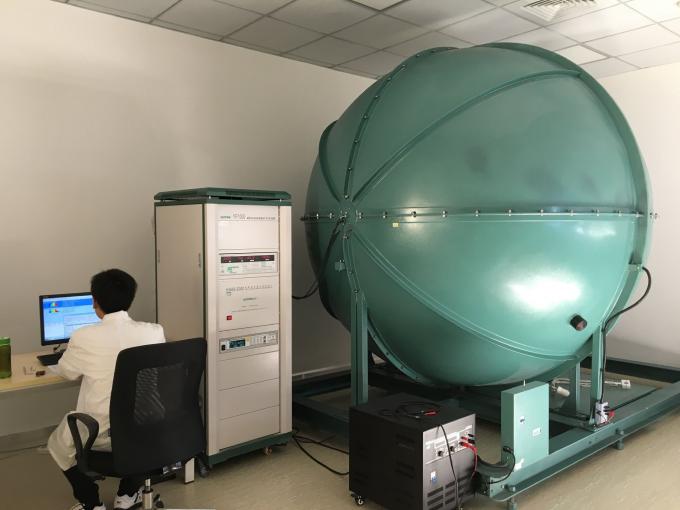
    • Physical samples

    • LM-80 photometric reports

    • Driver efficiency specs

    • Thermal testing reports

    OEM vs. ODM LED Bulbs: The Complete Procurement & Customization Guide  3

    Use Cases for OEM and ODM LED Bulbs

    1. OEM LED Lighting for Brands

    A European lighting brand needed high-efficiency GU10 LED spotlights with 95+ CRI for art galleries. They provided specifications, packaging designs, and photometric goals.

    Result:

    • Custom beam angle: 24°

    • Housing: Matte black, die-cast aluminum

    • Branding: Printed on housing and box

    • Warranty: 3 years

    OEM vs. ODM LED Bulbs: The Complete Procurement & Customization Guide  4

    2. ODM LED Bulbs for Distributors

    A Latin American distributor wanted to launch a line of energy-saving bulbs with minimal development time.

    Result:

    • Selected from ODM catalog

    • Chose 3 CCT options

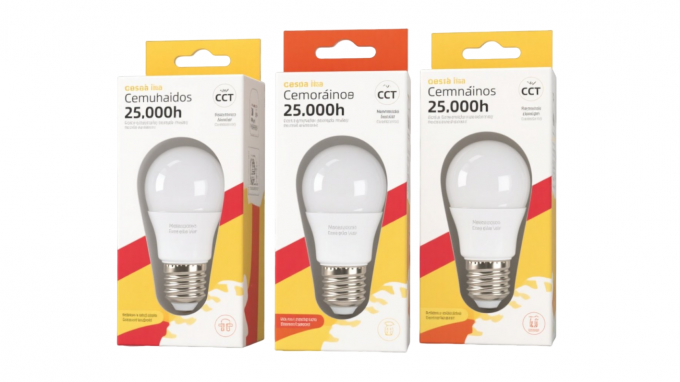
    • Customized packaging in Spanish

    • 25,000-hour rated lifespan

    OEM vs. ODM LED Bulbs: The Complete Procurement & Customization Guide  5

    Pros and Limitations of Each Model

    Model Key Advantages Limitations
    OEM Full control, strong branding, IP ownership Longer lead time, higher development cost
    ODM Speed, cost-effective, low MOQ Less unique, limited customization

    Reminder: Choose the model that best fits your current growth phase, project scope, and resource level.

    Tips to Choose the Right LED Bulb Supplier

    • Verify Experience in OEM/ODM Projects

    Ask for project references or portfolio

    • Check Certification Coverage

    Ensure access to region-specific compliance (e.g., CE, UL)

    • Evaluate Engineering Capability

    Do they have R&D, mold development, or rapid prototyping?

    • Clarify After-Sales and Warranty

    Discuss repair, replacement, or refund policies

    • Inspect or Audit If Needed

    Video factory tours or third-party audits are common in B2B

    OEM vs. ODM LED Bulbs: The Complete Procurement & Customization Guide  6

    Conclusion: Which Is Right for Your Project?

    When evaluating OEM vs. ODM LED bulbs, there is no one-size-fits-all answer. Instead, ask yourself:

    • Do I want a fully branded and unique product? → Go OEM

    • Do I need to launch fast with lower investment? → Go ODM

    Whether you’re sourcing for retail, hospitality, industrial lighting, or smart home markets, both models can offer efficient and scalable solutions—if paired with the right LED bulb manufacturer (OEM ODM).

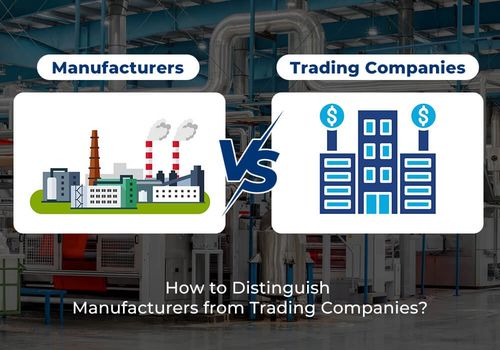
  • LED Bulb Supply Chains: Understanding Direct Factories vs. Trading Companies

    LED Bulb Supply Chains: Understanding Direct Factories vs. Trading Companies

    In the global LED lighting industry, buyers are often faced with a key decision when sourcing products: Should you work with a direct LED bulb factory, or go through a trading company?

    This question matters—especially for procurement teams, project contractors, importers, and brand owners who care about cost control, product consistency, communication efficiency, and delivery timelines.

    This article provides a practical, unbiased look at the differences between LED bulb factories and trading companies. We’ll cover how each operates, what their strengths and limitations are, and which factors to consider when choosing the right partner for your project or supply chain.

    What Is a Direct LED Bulb Factory?

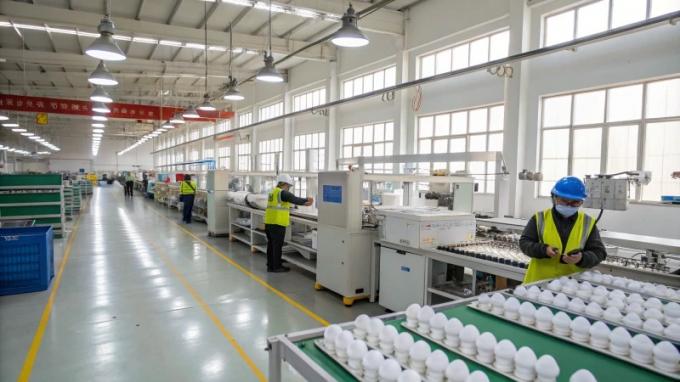
    A LED bulb factory refers to a manufacturing facility that produces LED lighting products on-site. These factories may operate under their own brand or manufacture bulbs for other businesses under OEM agreements.

    Key characteristics:

    • In-house production lines

    • Control over materials, components, and processes

    • Capability to support custom orders (OEM & ODM)

    • Direct pricing without intermediaries

    LED Bulb Supply Chains: Understanding Direct Factories vs. Trading Companies  0

    What Is a Trading Company in LED Lighting?

    A trading company does not produce LED bulbs itself. Instead, it sources products from one or more manufacturers and resells them.

    Trading companies often serve as intermediaries for international buyers by offering:

    • Multilingual communication

    • Simplified logistics

    • Product bundling across different factories

    • Value-added services (inspection, branding, etc.)

    LED Bulb Supply Chains: Understanding Direct Factories vs. Trading Companies  1

    Comparing the Two Models: Factory vs. Trading Company

    To help clarify the differences, here’s a detailed comparison between a LED lighting factory direct supplier and a trading company:

    1. Product Quality & Control

    Category LED Bulb Factory Trading Company
    Quality oversight Direct control of materials and production Relies on factory partners
    Testing In-house labs & QA teams May outsource or skip on-site testing
    Traceability Transparent sourcing and batch tracking Often unclear, especially if sourcing shifts

    Summary: If consistent quality is important—especially in large commercial projects—a factory offers more transparency and control.

    2. Pricing and Cost Transparency

    Category LED Bulb Manufacturer Trading Company
    Pricing Direct pricing, fewer middle layers Adds margin or markup
    Hidden costs Fewer surprises (factory invoice + freight) Potential add-ons (agency, service fees)

    Image Placeholder
    Alt Text: LED bulb pricing comparison between factory and trading partner
    Image Caption: Direct factory pricing usually results in more predictable cost structures.

    3. Customization and OEM/ODM Support

    Category OEM LED Bulb Manufacturer Trading Company
    Product engineering Offers OEM/ODM design, CCT, CRI, logo Relays request to third-party factory
    Lead time for custom Often shorter due to direct control May be longer due to indirect channels

    Tip: If you require specific lumen output, housing material, beam angles, or dimming protocols, an OEM LED bulb factory is generally more flexible and capable.

    4. Communication and Technical Support

    Category LED Factory Direct Trading Partner
    Communication speed May vary depending on language Typically smoother in English/Spanish
    Technical knowledge Deep knowledge from engineers May rely on product brochures or 3rd party info

    Image Placeholder
    Alt Text: Engineer assisting buyer with LED bulb technical parameters
    Image Caption: Factories have direct access to engineering teams who can answer detailed technical questions.

    5. Risk, Flexibility, and Responsiveness

    Category LED Lighting Factory Trading Company
    Responsiveness Direct response from production team Coordination delays may occur
    Flexibility in MOQ More flexible for long-term clients May have stricter MOQ based on partner

    Note: If a production issue arises, factories can directly address it. In contrast, trading companies must negotiate with third parties, which could extend resolution time.

    When Is a Factory the Better Fit?

    You may benefit more from working with a direct LED bulb manufacturer in China if:

    • You need OEM LED bulb manufacturing or private labeling

    • You’re managing bulk or long-term procurement

    • Product consistency across batches is critical

    • You require technical support during project execution

    • You want to optimize costs over volume

    LED Bulb Supply Chains: Understanding Direct Factories vs. Trading Companies  2

    When Is a Trading Company the Better Fit?

    A trading company may be more suitable if:

    • You need small quantities from multiple sources

    • You’re purchasing a mixed product portfolio (e.g., LED bulbs, fixtures, power supplies)

    • You require third-party QC, documentation assistance, or export consolidation

    • You are new to China sourcing and want a managed relationship

    LED Bulb Supply Chains: Understanding Direct Factories vs. Trading Companies  3

    Common Misunderstandings About LED Factories vs. Traders

    Myth Clarification
    Factories are cheaper, always. Not always true—some traders negotiate lower prices via volume bundling
    Trading companies don’t do customization. Many trading firms can arrange customization, but through partner factories
    Factories are hard to communicate with. True in some cases, but many have export sales teams with multilingual staff

    Factory or Trader: What Should You Ask Before Choosing?

    LED Bulb Supply Chains: Understanding Direct Factories vs. Trading Companies  4

    Before deciding, here are essential questions to ask both parties:

    • Are you the actual LED bulb factory or a reseller?

    • Can I visit your production line (in person or video)?

    • Do you offer OEM LED bulb manufacturing?

    • What is your lead time for repeat orders?

    • Can you provide references or case studies?

    • Who handles after-sales service or warranty claims?

    Conclusion: Making the Right Decision for Your Lighting Needs

    Whether you choose a direct LED lighting factory or a trading company, the right choice depends on your business model, volume, customization needs, and level of support required.

    Direct factories offer a clear advantage in customization, pricing transparency, and engineering support. Trading companies offer flexibility, convenience, and access to multiple products through a single source.
    When evaluating LED bulb suppliers in China, it’s less about which is better—and more about which is better for your situation.